Cuneiform tablet sumerian
1344×768 · AVIF · CC BY 4.0
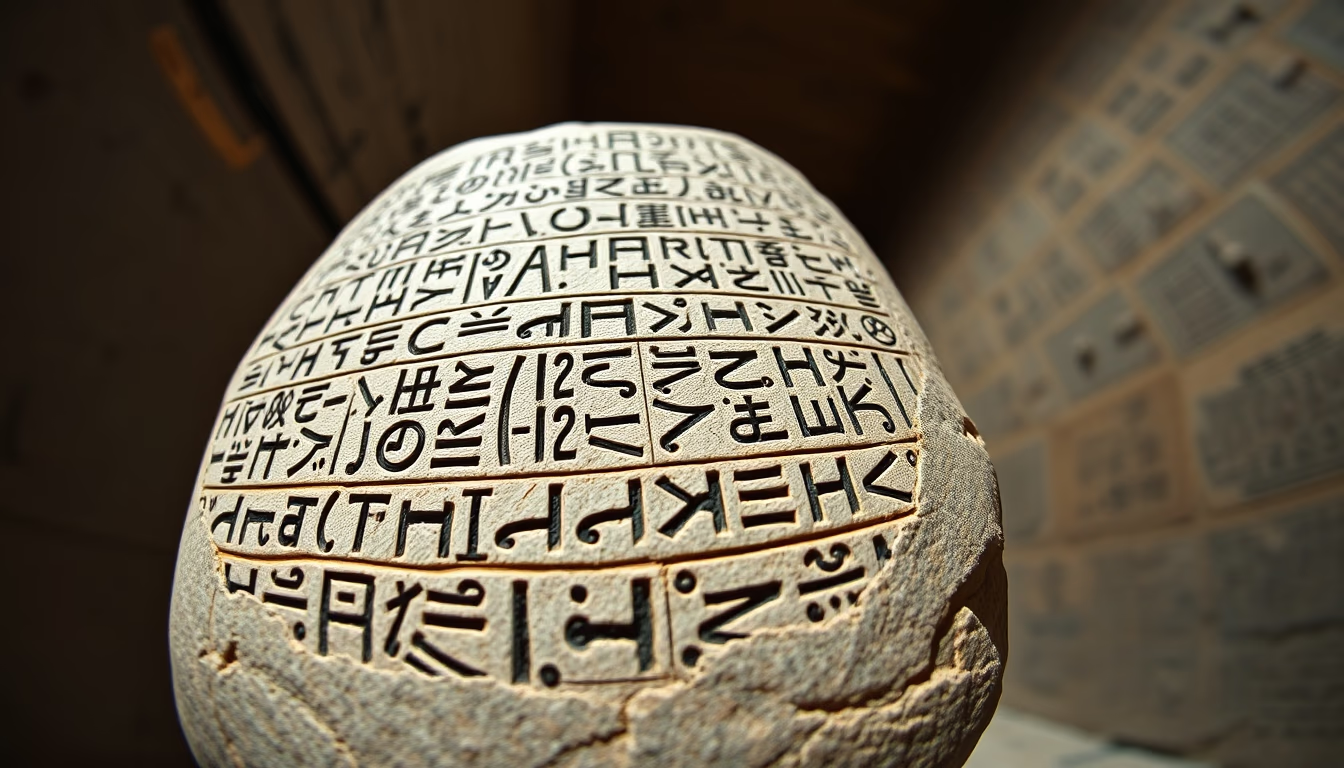
Clay tablet with Sumerian cuneiform inscription, one of the earliest writing systems, used in ancient Mesopotamia to record trade, laws, and literature.
About this subject
Sumerian cuneiform tablets are among the earliest known writing systems, developed around 3400 BCE in the region of Sumer, modern-day southern Iraq. Initially pictographic, the script evolved into abstract wedge-shaped signs impressed into soft clay with a reed stylus. These records were vital for temple and palace administration, documenting trade transactions, harvests, taxes, and literary works such as the Epic of Gilgamesh.
The term cuneiform derives from Latin cuneus, meaning wedge, describing the shape of the marks. Tablets were typically palm-sized but could vary. After inscription, they were left to dry in the sun or baked in kilns for preservation. Thousands have survived, offering an invaluable window into daily life, religion, and government in Mesopotamia.
Cuneiform writing was adopted by many cultures including Akkadians, Babylonians, and Assyrians, adapting the system to different languages. Knowledge of this script was lost for centuries until deciphered in the 19th century, notably by Henry Rawlinson using the Behistun Inscription. Today, Sumerian tablets are housed in museums worldwide, such as the British Museum and the Louvre, studied by archaeologists and linguists.
Their historical importance is immense: they document the rise of bureaucracy, law (e.g., the Code of Ur-Nammu), and epic literature. Preserving these artifacts faces challenges from conflict and looting in the region. Each tablet contains fragments of a civilization that laid the foundations for urbanization and writing that shaped the modern world.
Frequently Asked Questions
What is cuneiform writing?
Cuneiform is a writing system developed by the Sumerians around 3400 BCE, characterized by wedge-shaped marks on clay tablets. It was used by various Mesopotamian civilizations to record languages such as Sumerian, Akkadian, and Babylonian.
How were cuneiform tablets made?
Tablets were made from moist clay, shaped into a flat slab. A reed stylus cut into a wedge shape was used to press signs into the surface. The tablet was then dried in the sun or baked to harden.
Why are cuneiform tablets historically important?
They provide detailed records of life in ancient Mesopotamia, including economic transactions, laws, literature, and religious practices. They help understand the evolution of writing and administration, serving as primary sources for studying early civilizations.
Direct URL
https://pub-c7d6a6ea828543ac903a74a341ccb2e1.r2.dev/imagens/cuneiform-tablet-sumerian-fish-eye-wide-angle-p10.avifHow to credit
Include a visible link back to UtilizAí. Copy one of the snippets below:
<a href="https://xn--utiliza-eza.com/en/midia/imagens/cuneiform-tablet-sumerian-fish-eye-wide-angle-p10">Cuneiform tablet sumerian</a> by <a href="https://xn--utiliza-eza.com">UtilizAí</a>, licensed under <a href="https://creativecommons.org/licenses/by/4.0/">CC BY 4.0</a>.
[Cuneiform tablet sumerian](https://xn--utiliza-eza.com/en/midia/imagens/cuneiform-tablet-sumerian-fish-eye-wide-angle-p10) by [UtilizAí](https://xn--utiliza-eza.com), CC BY 4.0
License: CC-BY-4.0