Cuneiform tablet sumerian
1344×768 · AVIF · CC BY 4.0
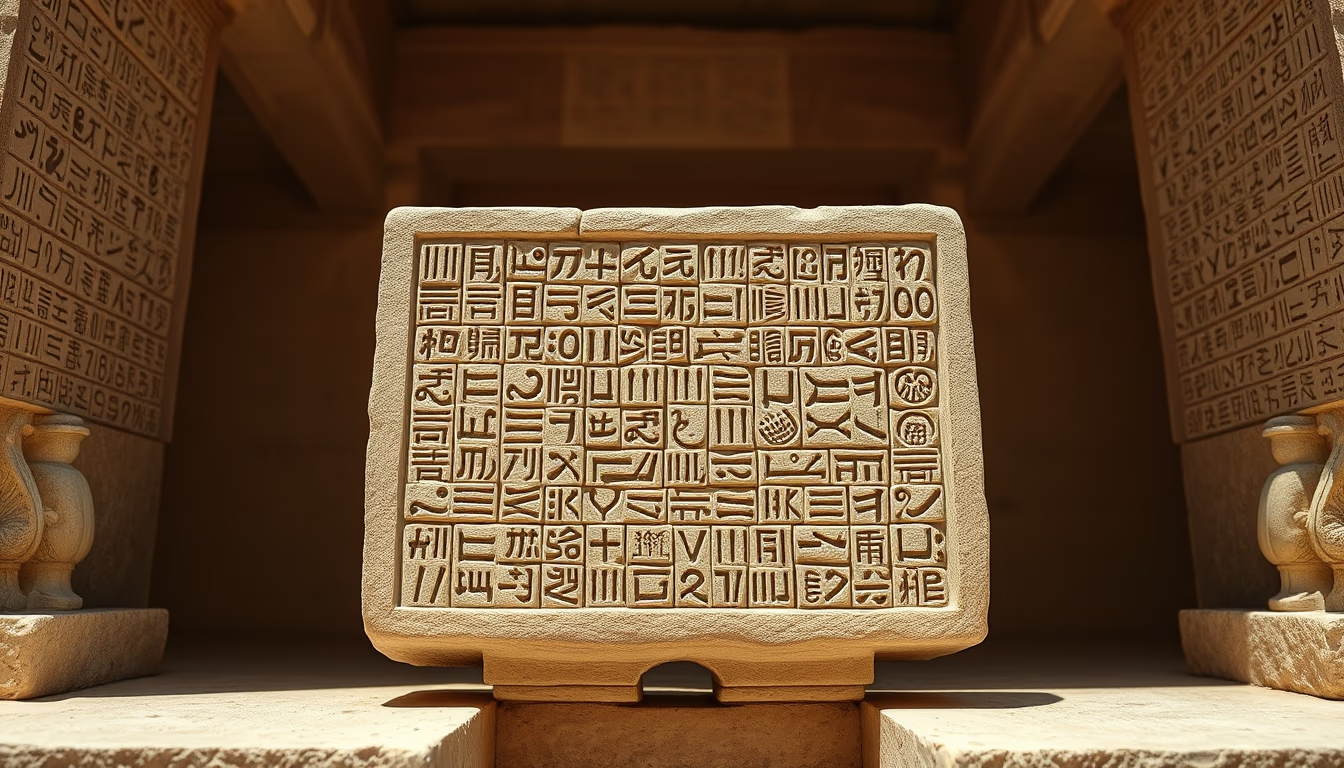
Clay tablet with Sumerian cuneiform inscription, one of humanity's earliest writing systems, dating back over 5,000 years.
About this subject
Sumerian cuneiform tablets are clay records produced in ancient Mesopotamia, particularly in the region of Sumer (modern-day southern Iraq). Around 3400 BCE, the Sumerians developed a writing system using reed styluses to imprint wedge-shaped marks on moist clay tablets. These tablets were then sun-dried or fired to preserve the text.
Most discovered cuneiform tablets are administrative and economic in nature: livestock lists, harvest records, commercial transactions, and temple inventories. However, there are also literary tablets, such as the Epic of Gilgamesh, and legal texts, including the famous Code of Ur-Nammu. Cuneiform was later adapted by other peoples, such as the Akkadians, Babylonians, and Assyrians.
The decipherment of cuneiform script began in the 19th century, with scholars like Henry Rawlinson and Edward Hincks. The Behistun Inscription, with trilingual texts, was crucial for deciphering Persian cuneiform, and then Elamite and Akkadian. Today, thousands of tablets are held in museums worldwide, providing a window into life in ancient Sumer, including daily aspects such as agriculture, trade, and religion.
Tablets vary in size and shape, from small fragments the size of a seal to large plaques with hundreds of lines. The clay used was generally of good quality, hand-molded or shaped in molds. Writing was done from left to right and top to bottom. Many tablets were preserved because they were accidentally fired in fires, becoming durable over millennia.
Frequently Asked Questions
How were Sumerian cuneiform tablets made?
Tablets were made from moist clay, hand-shaped or molded. Using a reed stylus, the scribe pressed wedge-shaped marks into the surface. The tablet was then sun-dried or fired to harden.
What did cuneiform tablets record?
Most tablets recorded administrative and economic information, such as commercial transactions, temple inventories, and harvest lists. There are also literary, epic, mythological, and legal texts, like the Code of Ur-Nammu.
Where were the first cuneiform tablets found?
The first tablets were found in excavations in Mesopotamia, especially in Sumerian cities like Uruk, Ur, and Lagash. Many date from between 3400 and 3000 BCE.
Direct URL
https://pub-c7d6a6ea828543ac903a74a341ccb2e1.r2.dev/imagens/cuneiform-tablet-sumerian-architectural-photography-p4.avifHow to credit
Include a visible link back to UtilizAí. Copy one of the snippets below:
<a href="https://xn--utiliza-eza.com/en/midia/imagens/cuneiform-tablet-sumerian-architectural-photography-p4">Cuneiform tablet sumerian</a> by <a href="https://xn--utiliza-eza.com">UtilizAí</a>, licensed under <a href="https://creativecommons.org/licenses/by/4.0/">CC BY 4.0</a>.
[Cuneiform tablet sumerian](https://xn--utiliza-eza.com/en/midia/imagens/cuneiform-tablet-sumerian-architectural-photography-p4) by [UtilizAí](https://xn--utiliza-eza.com), CC BY 4.0
License: CC-BY-4.0