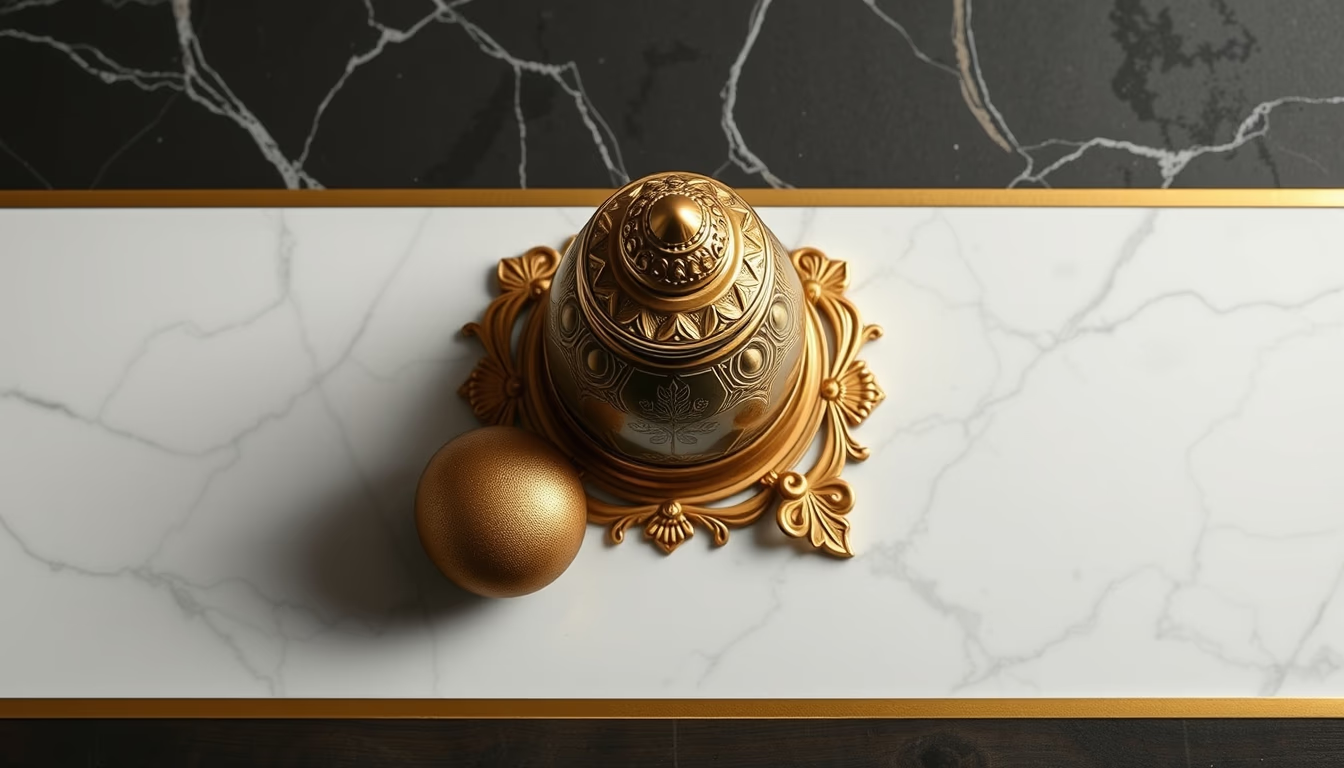
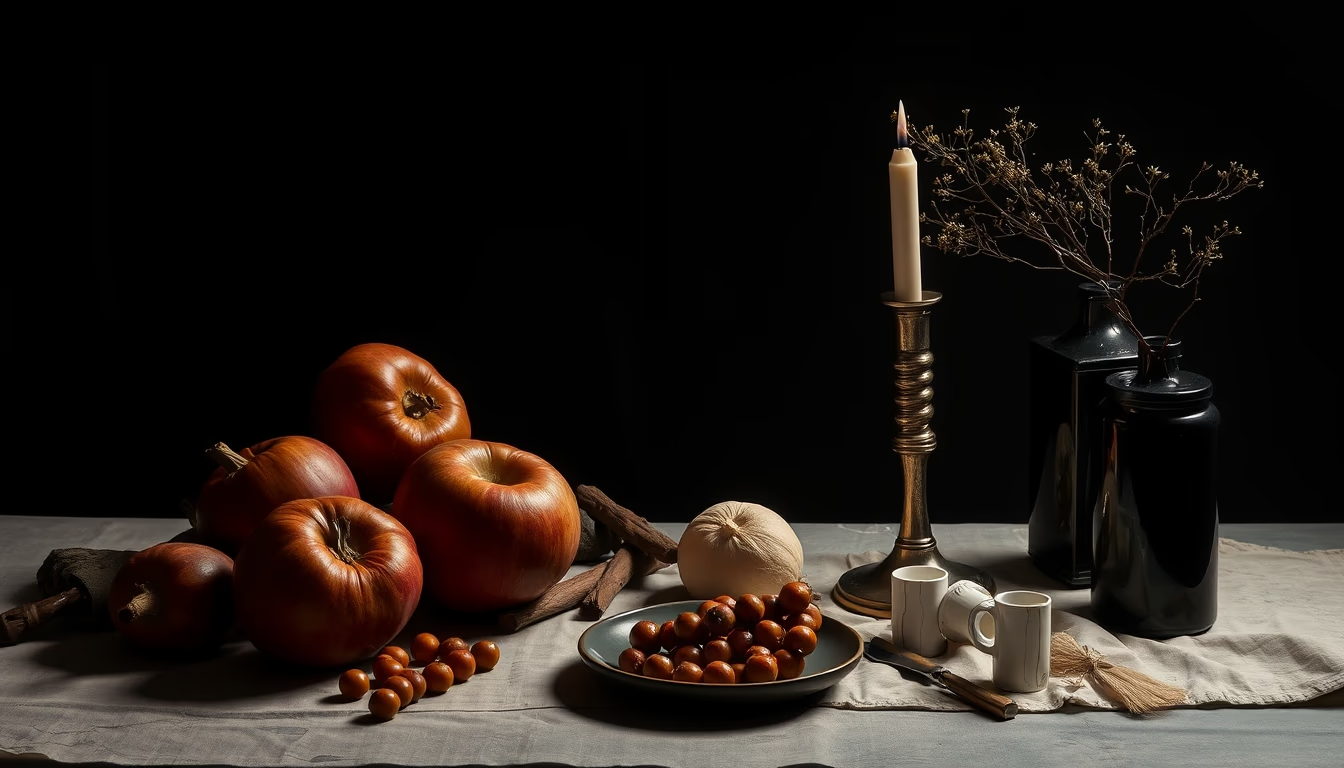
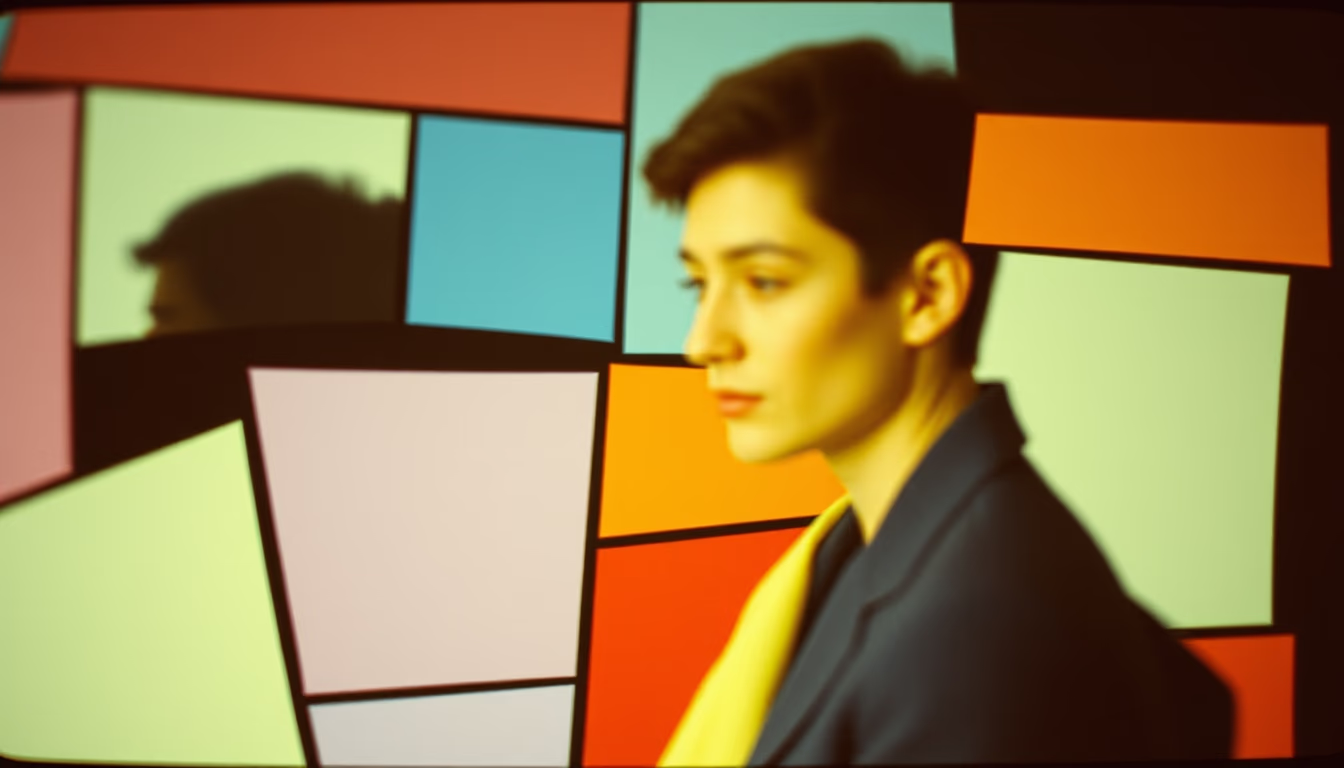
Cubist abstract picasso style
1344×768 · AVIF · CC BY 4.0

Cubism, a revolutionary art movement led by Pablo Picasso, fragmented reality into geometric forms and multiple perspectives.
About this subject
Cubism emerged in the early 20th century, primarily between 1907 and 1914, developed by Pablo Picasso and Georges Braque in Paris. Inspired by African art and the works of Paul Cézanne, the movement abandoned traditional Renaissance perspective to depict objects from multiple angles simultaneously. This approach resulted in abstract, fragmented compositions where geometric forms such as cubes, cones, and cylinders replaced naturalistic representation.
Cubism is divided into two main phases: Analytical Cubism (1909, 1912), which deconstructed objects into monochromatic facets, and Synthetic Cubism (1912, 1914), which introduced collages and more vibrant colors. Paintings like "Les Demoiselles d'Avignon" (1907) marked the beginning of this aesthetic revolution, influencing not only painting but also sculpture, architecture, and design.
Although Cubism is often associated with angular forms and sober colors, some artists explored dramatic contrasts of light and shadow, reminiscent of the Baroque chiaroscuro of Rembrandt. This combination of cubist fragmentation with dramatic lighting created visual tension and depth, even on abstract surfaces. The movement left a lasting legacy, paving the way for abstraction, Surrealism, and modern art as a whole.
Frequently Asked Questions
What is Cubism?
Cubism is a modernist art movement that emerged in the early 20th century, characterized by the fragmented and geometric representation of objects, showing multiple perspectives simultaneously.
Who were the main artists of Cubism?
The main artists were Pablo Picasso and Georges Braque, who developed the movement in Paris. Other important figures include Juan Gris, Fernand Léger, and Robert Delaunay.
What are the characteristics of Synthetic Cubism?
Synthetic Cubism (1912-1914) used collage, brighter colors, and simplified forms. It incorporated materials like newspaper clippings and paper, creating more decorative and less abstract compositions than Analytical Cubism.
Direct URL
https://pub-c7d6a6ea828543ac903a74a341ccb2e1.r2.dev/imagens/cubist-abstract-picasso-style-rembrandt-lighting-dramatic-shadows-fresh3.avifHow to credit
Include a visible link back to UtilizAí. Copy one of the snippets below:
<a href="https://xn--utiliza-eza.com/en/midia/imagens/cubist-abstract-picasso-style-rembrandt-lighting-dramatic-shadows-fresh3">Cubist abstract picasso style</a> by <a href="https://xn--utiliza-eza.com">UtilizAí</a>, licensed under <a href="https://creativecommons.org/licenses/by/4.0/">CC BY 4.0</a>.
[Cubist abstract picasso style](https://xn--utiliza-eza.com/en/midia/imagens/cubist-abstract-picasso-style-rembrandt-lighting-dramatic-shadows-fresh3) by [UtilizAí](https://xn--utiliza-eza.com), CC BY 4.0
License: CC-BY-4.0