Cubist abstract picasso style
1344×768 · AVIF · CC BY 4.0
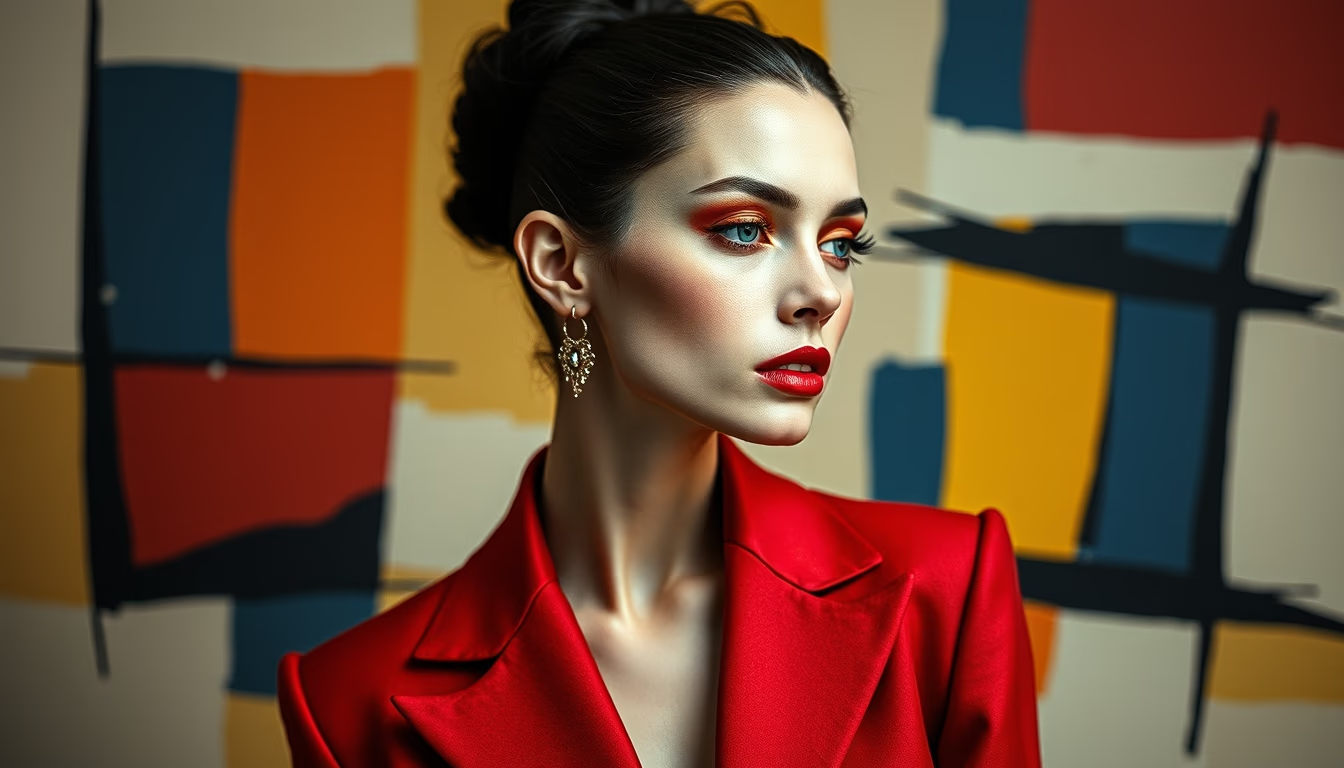
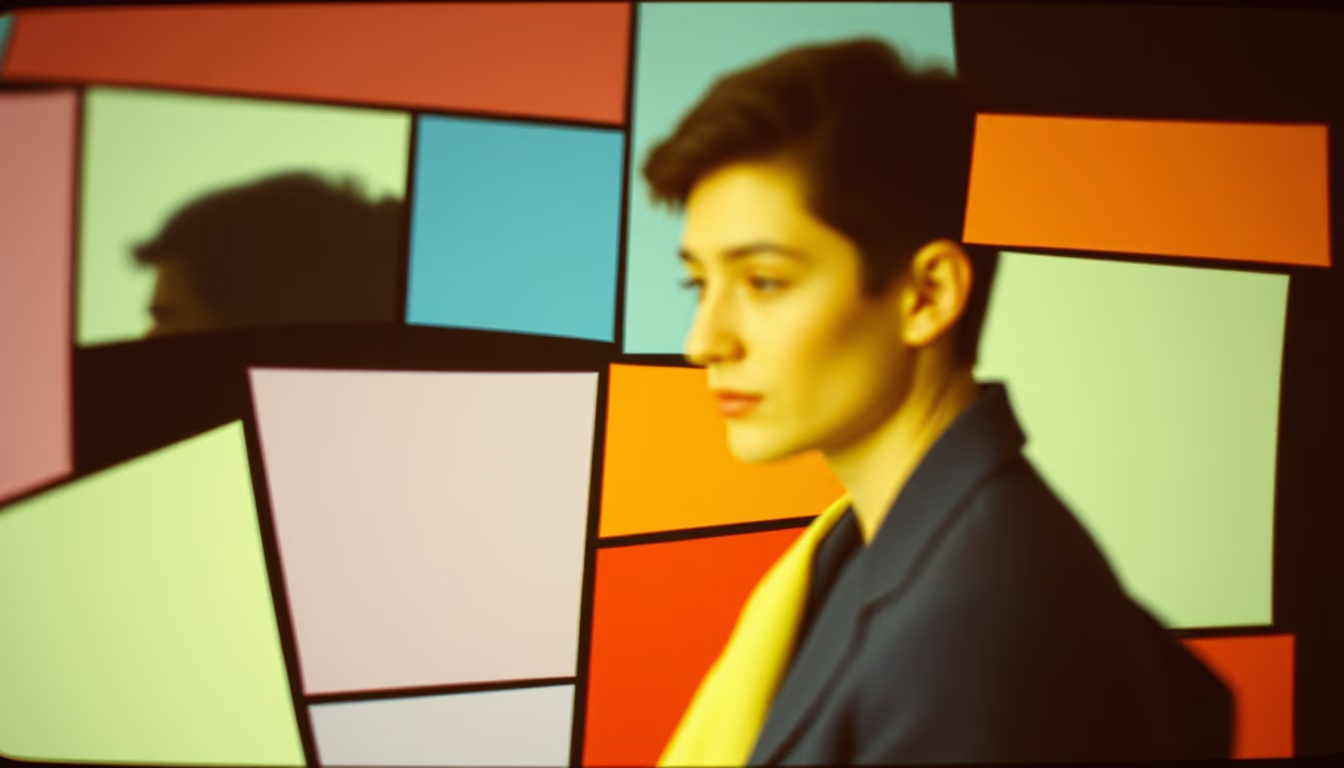
Cubism, the revolutionary art movement pioneered by Picasso and Braque, fractures reality into geometric forms and multiple perspectives, influencing contemporary fashion editorials.
About this subject
Cubism emerged between 1907 and 1914, led by Pablo Picasso and Georges Braque. Inspired by Paul Cézanne's paintings, the movement proposed a new way of representing reality, abandoning Renaissance perspective in favor of a multiple, simultaneous view of objects. In the analytical phase (1909, 1912), forms were deconstructed into geometric planes and monochromatic tones; later, synthetic cubism (1912, 1914) introduced collages and more vibrant colors, incorporating everyday elements.
Key features of cubism include geometrization of forms, overlapping planes, representation of multiple viewpoints on the same canvas, and an initially restricted palette of grays, ochres, and greens. This abstract approach broke with figurative tradition and paved the way for 20th-century abstract art. Picasso and Braque pushed so far that their works often challenged viewers to mentally reconstruct the depicted object.
Cubism's influence extended beyond painting into fashion, especially in high-fashion editorials. Designers like Yves Saint Laurent, with his Mondrian collection (1965), and Alexander McQueen, who incorporated cubist references in his runway shows, used fragmentation and juxtaposition of forms to create avant-garde looks. In contemporary fashion editorials, cubist aesthetics appear in asymmetrical cuts, geometric prints, and photographic compositions that play with multiple angles, resulting in dynamic and conceptual images.
Interestingly, Picasso produced over 50,000 works during his career, and cubism is regarded as one of the most influential movements of the 20th century. Its analytical approach to form continues to inspire designers, photographers, and artists, remaining relevant in fashion and contemporary visual culture. Cubism's ability to deconstruct and reconstruct reality offers a rich aesthetic vocabulary for editorials seeking innovation and disruption.
Frequently Asked Questions
What is Cubism?
Cubism is an early 20th-century modernist art movement characterized by the representation of objects from multiple simultaneous viewpoints, using geometric forms and overlapping planes, often resulting in abstraction.
Who were the main artists of Cubism?
The main artists of Cubism were Pablo Picasso and Georges Braque, who developed the movement in Paris. Other prominent figures include Juan Gris, Fernand Léger, and Robert Delaunay.
How does Cubism influence fashion editorials?
Cubism influences fashion editorials through the use of geometry, fragmentation of silhouettes, layering of fabrics, and abstract prints. This aesthetic creates avant-garde looks and dynamic photographic editorials that explore deconstruction and simultaneity of perspectives.
Direct URL
https://pub-c7d6a6ea828543ac903a74a341ccb2e1.r2.dev/imagens/cubist-abstract-picasso-style-high-fashion-editorial-fresh14.avifHow to credit
Include a visible link back to UtilizAí. Copy one of the snippets below:
<a href="https://xn--utiliza-eza.com/en/midia/imagens/cubist-abstract-picasso-style-high-fashion-editorial-fresh14">Cubist abstract picasso style</a> by <a href="https://xn--utiliza-eza.com">UtilizAí</a>, licensed under <a href="https://creativecommons.org/licenses/by/4.0/">CC BY 4.0</a>.
[Cubist abstract picasso style](https://xn--utiliza-eza.com/en/midia/imagens/cubist-abstract-picasso-style-high-fashion-editorial-fresh14) by [UtilizAí](https://xn--utiliza-eza.com), CC BY 4.0
License: CC-BY-4.0