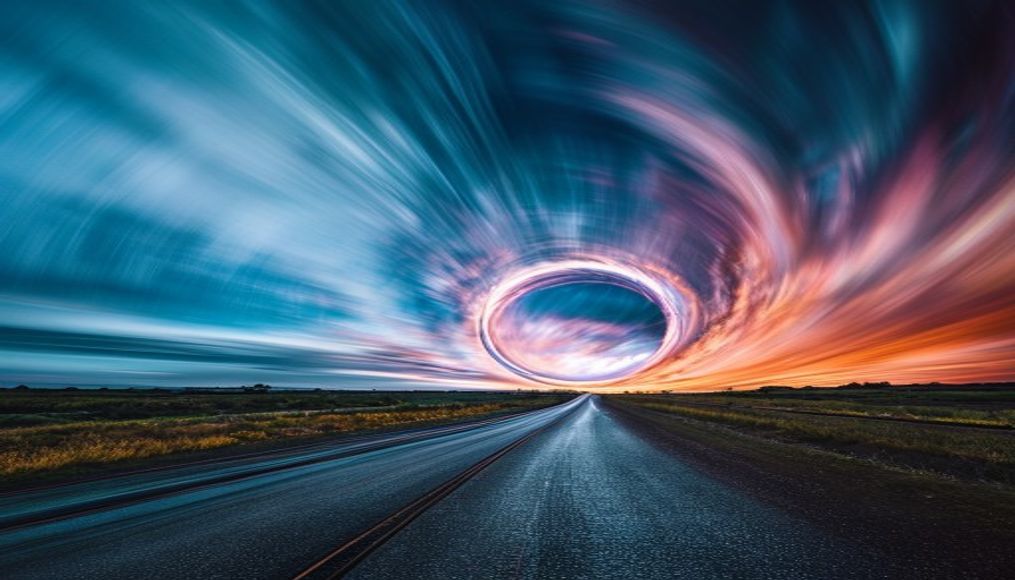
Crab nebula supernova
1344×768 · AVIF · CC BY 4.0

The Crab Nebula, a supernova remnant observed in 1054, is one of the most studied objects in the sky, featuring a pulsar at its core.
About this subject
The Crab Nebula (M1, NGC 1952) is a supernova remnant located in the constellation Taurus, approximately 6,500 light-years from Earth. Its origin traces back to a stellar explosion recorded by Chinese and Arab astronomers in 1054 AD, who described it as a 'guest star' visible during the day for 23 days. The object was later cataloged by Charles Messier in 1758, becoming the first entry in his famous catalog of non-cometary objects.
At the center of the nebula lies the Crab Pulsar, a neutron star that rotates about 30 times per second. This pulsar emits regular pulses of radiation, from radio waves to gamma rays. The nebula itself is powered by the pulsar's relativistic wind, creating a complex structure of filaments and ionized gas expanding at roughly 1,500 km/s. Multi-wavelength observations, including X-ray and radio, have revealed features such as emission rings and polar jets.
The Crab Nebula is a crucial source for studying high-energy astrophysics, particle acceleration mechanisms, and the evolution of supernova remnants. Its proximity and brightness make it a natural laboratory for testing theories about neutron stars and shock waves. Additionally, it was the first astronomical object confirmed to be associated with a historical supernova, validating models of stellar death.
Interestingly, the nebula emits synchrotron radiation, first detected in 1957, which helped establish the theory that relativistic particles are accelerated in magnetic fields. The Crab Pulsar has also been key for testing general relativity, particularly through indirect gravitational wave detections via studies of its spin-down.
Frequently Asked Questions
What caused the formation of the Crab Nebula?
The nebula is the remnant of a Type II supernova, resulting from the core collapse of a massive star that exploded in 1054 AD. The ejected material formed the filamentary structure we observe today.
Why is the Crab Pulsar important?
The pulsar is a rapidly rotating neutron star that emits regular pulses of radiation. It serves as a laboratory for studying high-energy physics, general relativity, and particle acceleration.
Is the Crab Nebula still expanding?
Yes, the nebula is expanding at a velocity of about 1,500 km/s. Measurements of its size over time allow calculation of the expansion rate and estimation of its distance.
Direct URL
https://pub-c7d6a6ea828543ac903a74a341ccb2e1.r2.dev/imagens/crab-nebula-supernova-long-exposure-p4.avifHow to credit
Include a visible link back to UtilizAí. Copy one of the snippets below:
<a href="https://xn--utiliza-eza.com/en/midia/imagens/crab-nebula-supernova-long-exposure-p4">Crab nebula supernova</a> by <a href="https://xn--utiliza-eza.com">UtilizAí</a>, licensed under <a href="https://creativecommons.org/licenses/by/4.0/">CC BY 4.0</a>.
[Crab nebula supernova](https://xn--utiliza-eza.com/en/midia/imagens/crab-nebula-supernova-long-exposure-p4) by [UtilizAí](https://xn--utiliza-eza.com), CC BY 4.0
License: CC-BY-4.0