Cpu socket lga
1344×768 · AVIF · CC BY 4.0
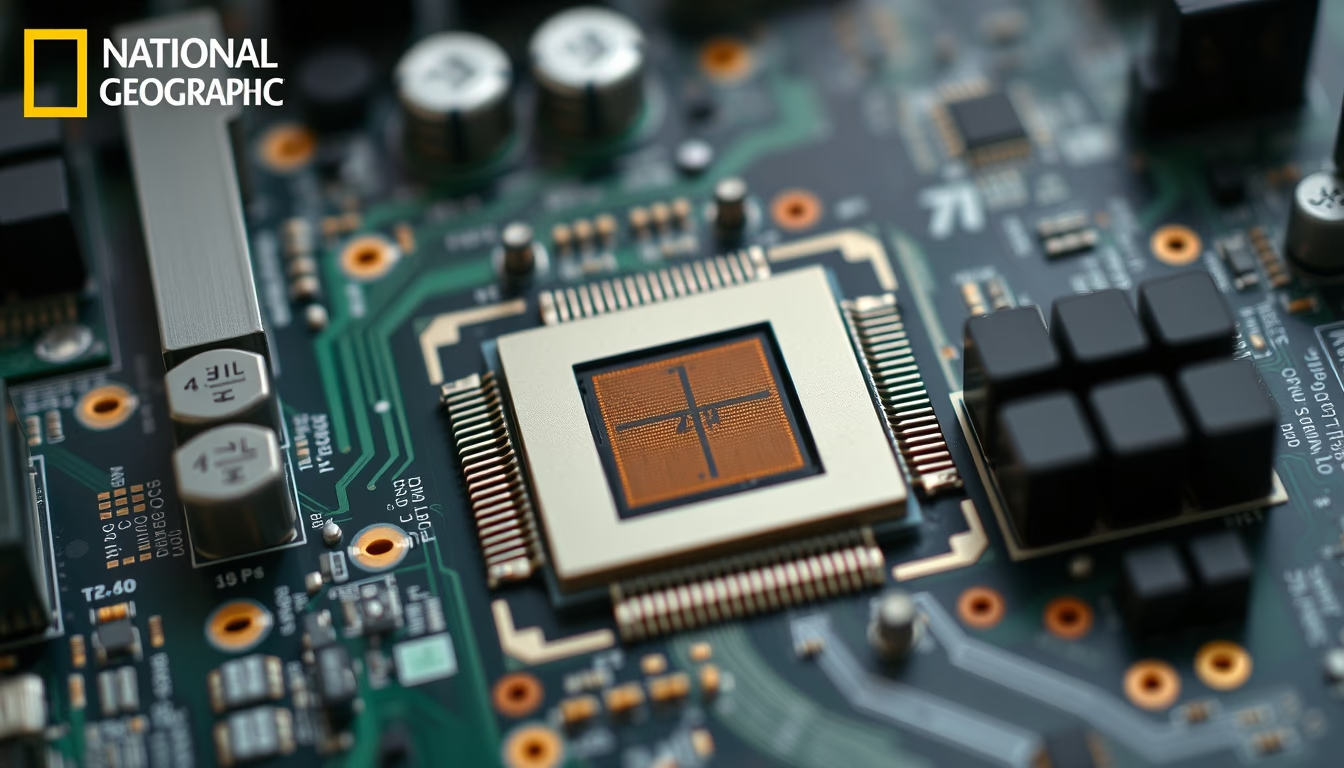
The LGA (Land Grid Array) socket is the standard connection for modern processors to motherboards, using gold contacts instead of pins on the CPU.
About this subject
The LGA (Land Grid Array) socket revolutionized processor mounting by moving the delicate pins from the CPU to the motherboard. Unlike the older PGA (Pin Grid Array) standard, where the processor had pins that fit into holes, LGA places gold contacts on the motherboard socket while the CPU has flat pads. This reduces physical damage during handling and allows higher connection density.
Intel introduced LGA in 2004 with the LGA 775 socket (also known as Socket T), replacing PGA for its desktop processors. AMD adopted LGA years later, starting with the AM4 and TR4 sockets. The number in the socket name indicates the pin count: for example, LGA 1151 has 1151 pins, LGA 1200 has 1200, and the recent LGA 1700 features 1700 contacts for Intel Core 12th to 14th generation processors.
Each new processor generation typically requires a different LGA socket, as the electrical layout and pin count evolve to support higher bus speeds, more memory channels, and new technologies like PCIe 5.0 or DDR5. This means the motherboard must match the specific socket, limiting upgrades without replacing the board. On the upside, LGA allows better thermal distribution and supports higher currents, essential for high-performance processors.
Interestingly, the gold contacts on LGA sockets are extremely sensitive to bending and dirt. Therefore, protective covers on motherboards must remain until CPU installation, and any damaged contact can render the socket unusable. Manufacturers like Intel and AMD use lever mechanisms to secure the processor with uniform pressure, ensuring reliable electrical contact.
Frequently Asked Questions
What is the difference between LGA and PGA?
In LGA, the pins are on the motherboard socket, while in PGA the pins are on the processor. LGA reduces pin damage during handling and allows higher connection density, making it the current standard for modern processors.
Why do LGA sockets change so often between generations?
Each new processor generation requires more pins to support new technologies like PCIe 5.0, DDR5, and higher bandwidth. The electrical layout is also optimized, requiring a new socket that is not backward-compatible with older motherboards.
What does the number in an LGA socket, such as LGA 1700, mean?
The number indicates the total electrical contacts in the socket. For example, LGA 1700 has 1700 pins. A higher number generally means greater data and power transfer capacity, but also more complexity in the socket design.
Direct URL
https://pub-c7d6a6ea828543ac903a74a341ccb2e1.r2.dev/imagens/cpu-socket-lga-national-geographic-style-p5.avifHow to credit
Include a visible link back to UtilizAí. Copy one of the snippets below:
<a href="https://xn--utiliza-eza.com/en/midia/imagens/cpu-socket-lga-national-geographic-style-p5">Cpu socket lga</a> by <a href="https://xn--utiliza-eza.com">UtilizAí</a>, licensed under <a href="https://creativecommons.org/licenses/by/4.0/">CC BY 4.0</a>.
[Cpu socket lga](https://xn--utiliza-eza.com/en/midia/imagens/cpu-socket-lga-national-geographic-style-p5) by [UtilizAí](https://xn--utiliza-eza.com), CC BY 4.0
License: CC-BY-4.0