Cpu chip pin grid
1344×768 · AVIF · CC BY 4.0
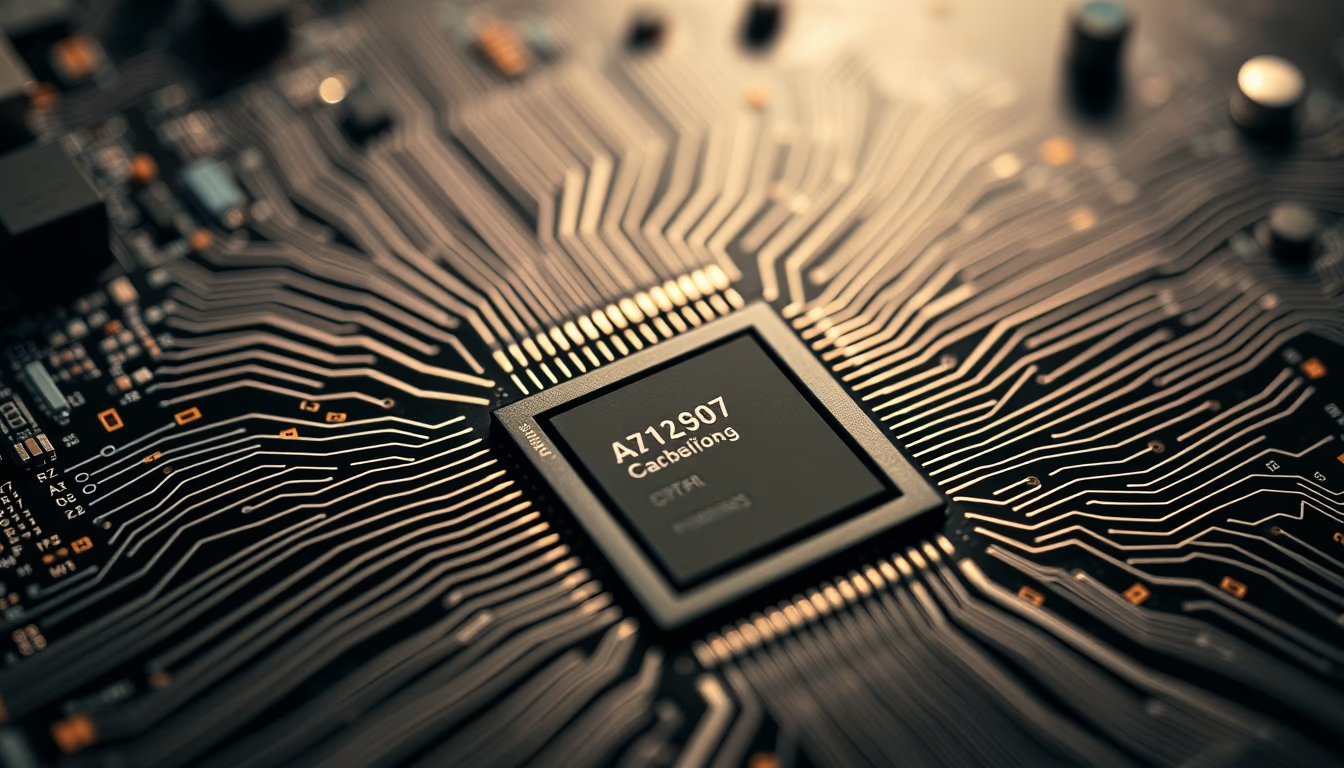
CPU chip with PGA (Pin Grid Array) packaging: structure, history, and use in classic and modern processors.
About this subject
The PGA (Pin Grid Array) package is one of the earliest and most durable types of CPU chip packaging, featuring a matrix of metal pins on the underside that connect to a socket on the motherboard. It emerged in the 1980s with processors like the Intel 80386, which used a 132-pin PGA, and became the standard for high-performance CPUs throughout the 1990s and early 2000s.
The main advantage of PGA is ease of installation and removal, allowing upgrades and replacements without special tools. The pins are made of copper or phosphor bronze alloy, plated with gold or tin to prevent oxidation. Pin counts vary by model: the original Intel Pentium had 296 pins, while the AMD Ryzen 5 5600X uses a 1331-pin PGA.
As connection density increased, manufacturers shifted to LGA (Land Grid Array) and BGA (Ball Grid Array) for high-performance processors. Intel abandoned PGA with the transition to LGA starting from the Pentium 4, while AMD retained PGA through its Ryzen 5000 series (socket AM4). With the Ryzen 7000 series, AMD also moved to LGA (socket AM5), making PGA increasingly rare in modern processors.
A technical curiosity: PGA pins are extremely fragile and can bend easily if mishandled. This led to the development of guides and levers in sockets to ensure correct alignment. In embedded systems, PGA is still used for its mechanical reliability in vibration-prone environments.
Frequently Asked Questions
What does PGA stand for in processors?
PGA stands for Pin Grid Array. It is a packaging type where the electrical connection pins are on the bottom of the chip, arranged in a grid, and fit into a socket on the motherboard.
Why do some processors use PGA and others LGA?
PGA is easier to install and replace, but the pins are fragile. LGA (Land Grid Array) puts the pins on the socket, protecting the chip, and allows higher connection density, making it preferred for modern high-performance processors.
How are PGA pins manufactured?
Pins are stamped from a thin sheet of copper or phosphor bronze, then bent into a needle shape and finally plated with gold or tin to prevent corrosion. Manufacturing requires high precision to ensure a perfect fit in the socket.
Direct URL
https://pub-c7d6a6ea828543ac903a74a341ccb2e1.r2.dev/imagens/cpu-chip-pin-grid-magazine-editorial-p0.avifHow to credit
Include a visible link back to UtilizAí. Copy one of the snippets below:
<a href="https://xn--utiliza-eza.com/en/midia/imagens/cpu-chip-pin-grid-magazine-editorial-p0">Cpu chip pin grid</a> by <a href="https://xn--utiliza-eza.com">UtilizAí</a>, licensed under <a href="https://creativecommons.org/licenses/by/4.0/">CC BY 4.0</a>.
[Cpu chip pin grid](https://xn--utiliza-eza.com/en/midia/imagens/cpu-chip-pin-grid-magazine-editorial-p0) by [UtilizAí](https://xn--utiliza-eza.com), CC BY 4.0
License: CC-BY-4.0