Corn cob fresh harvest in farmer hands
1344×768 · AVIF · CC BY 4.0
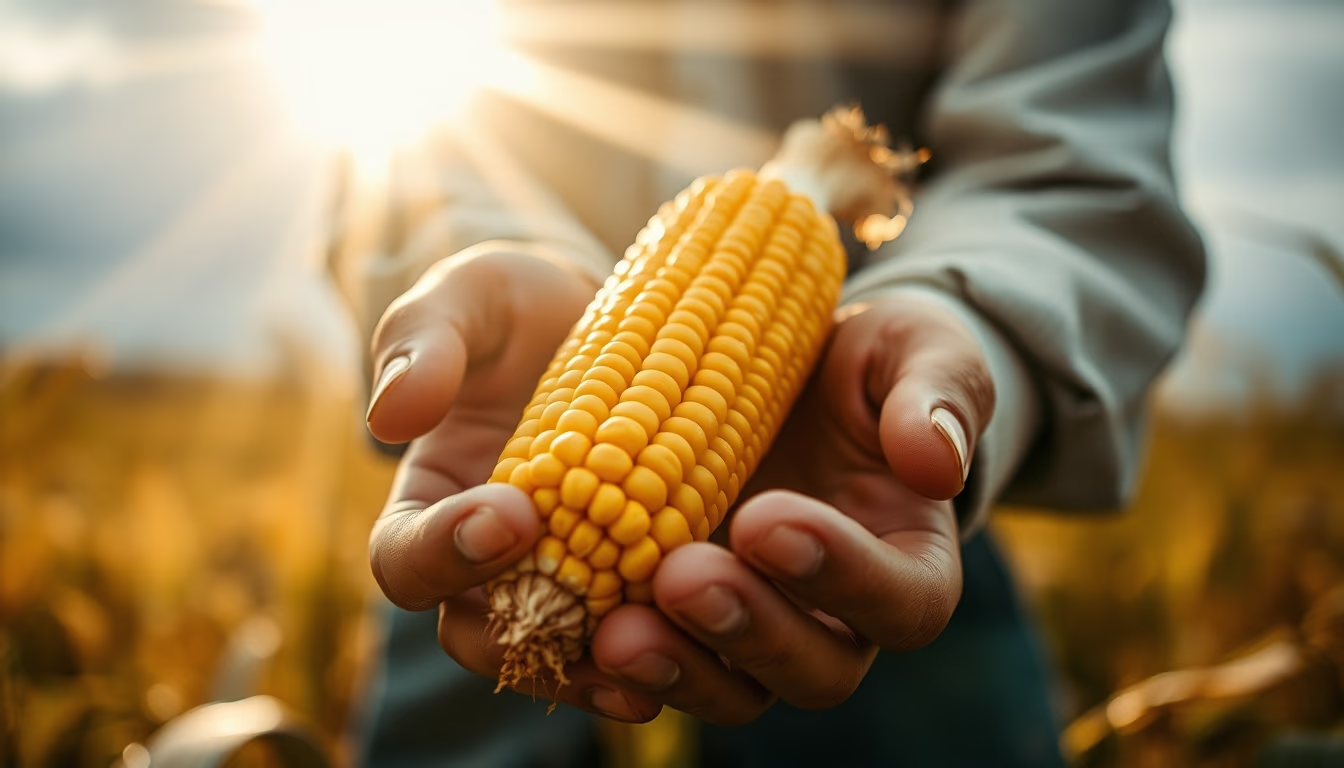
Farmer hands hold a freshly harvested corn cob, a symbol of the harvest that drives Brazil's rural economy.
About this subject
Corn is one of the pillars of Brazilian agribusiness. Brazil is the world's third largest corn producer, behind only the United States and China, with an annual harvest exceeding 100 million tons. The crop is grown in virtually all states, with Mato Grosso, Paraná, and Goiás accounting for more than half of national production. Corn has a dual purpose: human food (as green corn, flour, oil) and animal feed (for pigs, poultry, and cattle), making it essential for the country's protein chain.
Manual harvesting, as depicted in the image, is still common on small farms and in family agriculture, which supplies about 70% of the food that reaches Brazilian tables. The farmer holds the cob with calloused hands, highlighting the direct contact with the land. Corn harvesting typically occurs between January and April for the summer crop and between June and September for the second crop (safrinha), depending on the region. The overcast daytime weather is favorable for fieldwork, as it reduces sun incidence and prevents rapid grain drying.
Corn originated in Central America and was domesticated about 9,000 years ago. In Brazil, it was cultivated by indigenous peoples before the arrival of the Portuguese. Today, the country is also a major exporter, with China as the main buyer in recent years. Brazil's average corn yield is approximately 5.5 tons per hectare, but in high-tech areas it can reach 12 tons. This editorial image captures a moment of connection between the worker and the food, highlighting the origin of production.
Frequently Asked Questions
How important is corn for the Brazilian economy?
Corn is crucial for agribusiness, generating jobs and income in rural areas. Besides being used for human and animal food, Brazil exports a large share of its production, contributing to the trade balance.
How is manual corn harvesting done?
Manual harvesting involves twisting or cutting the cob from the stalk, removing the husk, and separating the kernels. It requires strength and care to avoid damaging the grains, and is common on small farms.
Which are the main corn-producing regions in Brazil?
Mato Grosso, Paraná, and Goiás lead national production. Other important states include Minas Gerais, São Paulo, and Rio Grande do Sul. The Central-West region concentrates most of the production.
Direct URL
https://pub-c7d6a6ea828543ac903a74a341ccb2e1.r2.dev/imagens/corn-cob-fresh-harvest-in-farmer-hands-editorial-overcast-daytime-3.avifHow to credit
Include a visible link back to UtilizAí. Copy one of the snippets below:
<a href="https://xn--utiliza-eza.com/en/midia/imagens/corn-cob-fresh-harvest-in-farmer-hands-editorial-overcast-daytime-3">Corn cob fresh harvest in farmer hands</a> by <a href="https://xn--utiliza-eza.com">UtilizAí</a>, licensed under <a href="https://creativecommons.org/licenses/by/4.0/">CC BY 4.0</a>.
[Corn cob fresh harvest in farmer hands](https://xn--utiliza-eza.com/en/midia/imagens/corn-cob-fresh-harvest-in-farmer-hands-editorial-overcast-daytime-3) by [UtilizAí](https://xn--utiliza-eza.com), CC BY 4.0
License: CC-BY-4.0