Concrete texture grey
1344×768 · AVIF · CC BY 4.0
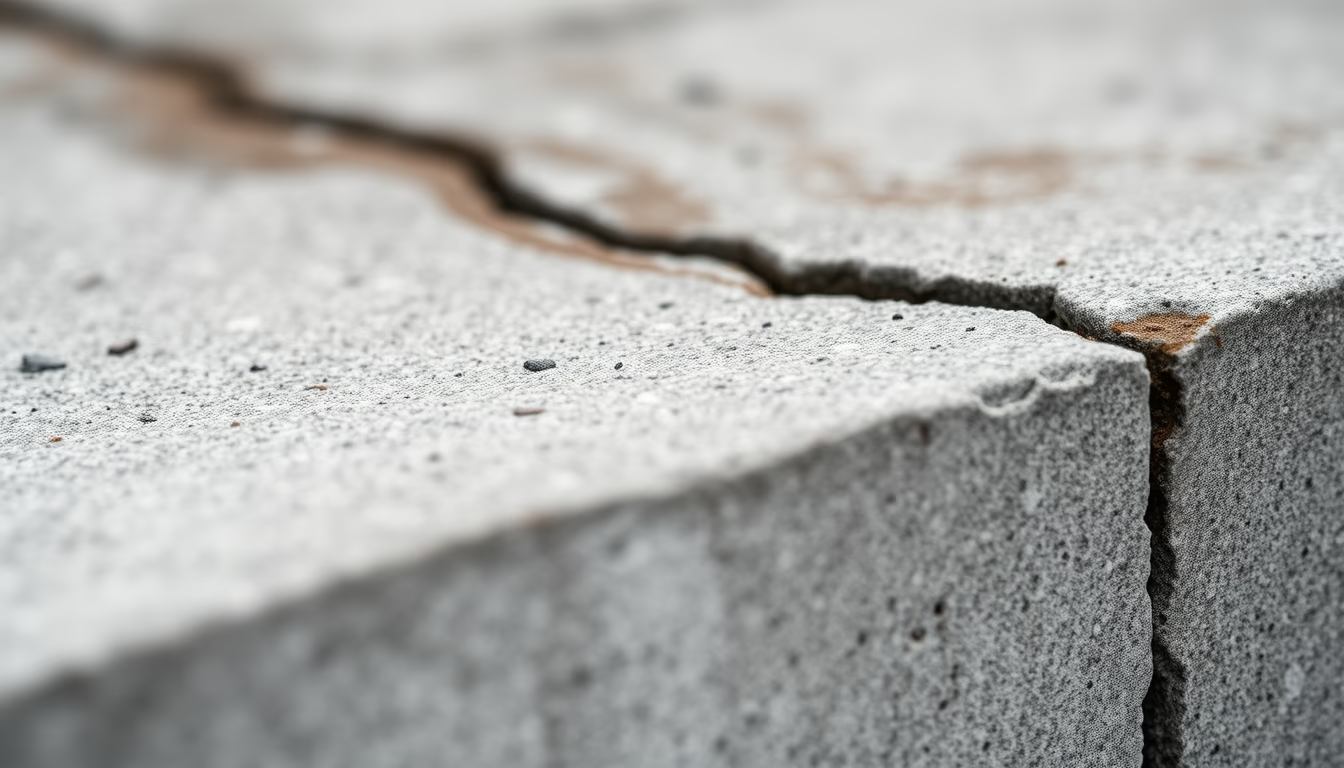
Grey concrete texture macro reveals irregularities, porosity, and cracks typical of this ubiquitous construction material.
About this subject
Concrete is one of the most widely used materials in the world, second only to water in per capita consumption. Its characteristic grey texture results from a mixture of Portland cement, aggregates (sand and gravel), and water, which hydrates and forms a paste that hardens over time. At the macro scale, the concrete surface reveals a complex topography: entrapped air voids, shrinkage microcracks, exposed aggregate grains, and roughness variations due to the curing process and formwork type.
The greyish color of conventional concrete comes mainly from Portland cement, whose gray tone is due to iron and manganese oxides in the clinker. However, the final color can vary with the water/cement ratio, aggregate type, and admixtures. Textures like the one shown are common in building walls, sidewalks, bridges, and exposed structural elements, where concrete is left uncoated, emphasizing the raw aesthetic of the material.
In Brazil, exposed concrete gained prominence from the 1960s onward with works by architects such as Oscar Niemeyer and João Filgueiras Lima (Lelé), who explored its plastic and structural possibilities. Macrophotography of concrete texture allows appreciating details invisible to the naked eye, such as pore distribution (which ranges from 0.5% to 2% of volume) and capillary microcracks, essential for understanding the material's durability against weather and chemical attacks.
A curious fact: Roman concrete, used in structures like the Pantheon, has a different texture and composition from modern concrete but has withstood millennia. Contemporary concrete can receive surface treatments such as water repellents, which alter its texture and permeability. The macro image of grey concrete is often used in interior design, architecture, and construction materials to simulate industrial surfaces, as well as serving as a technical reference for engineers and restorers.
Frequently Asked Questions
Why does concrete have a grey color?
The grey color of concrete comes mainly from Portland cement, which contains iron and manganese oxides in the clinker. The shade intensity depends on the proportion of these minerals and the water/cement ratio.
What factors influence the surface texture of concrete?
Texture depends on aggregate type, curing process, formwork used, and admixtures. Concrete cured with more water tends to be more porous, while smooth forms produce more uniform surfaces.
Is exposed concrete common in Brazil?
Yes, since the 1960s architects like Oscar Niemeyer popularized exposed concrete in iconic works, valuing its texture and structural capacity.
Direct URL
https://pub-c7d6a6ea828543ac903a74a341ccb2e1.r2.dev/imagens/concrete-texture-grey-macro-closeup-p3.avifHow to credit
Include a visible link back to UtilizAí. Copy one of the snippets below:
<a href="https://xn--utiliza-eza.com/en/midia/imagens/concrete-texture-grey-macro-closeup-p3">Concrete texture grey</a> by <a href="https://xn--utiliza-eza.com">UtilizAí</a>, licensed under <a href="https://creativecommons.org/licenses/by/4.0/">CC BY 4.0</a>.
[Concrete texture grey](https://xn--utiliza-eza.com/en/midia/imagens/concrete-texture-grey-macro-closeup-p3) by [UtilizAí](https://xn--utiliza-eza.com), CC BY 4.0
License: CC-BY-4.0