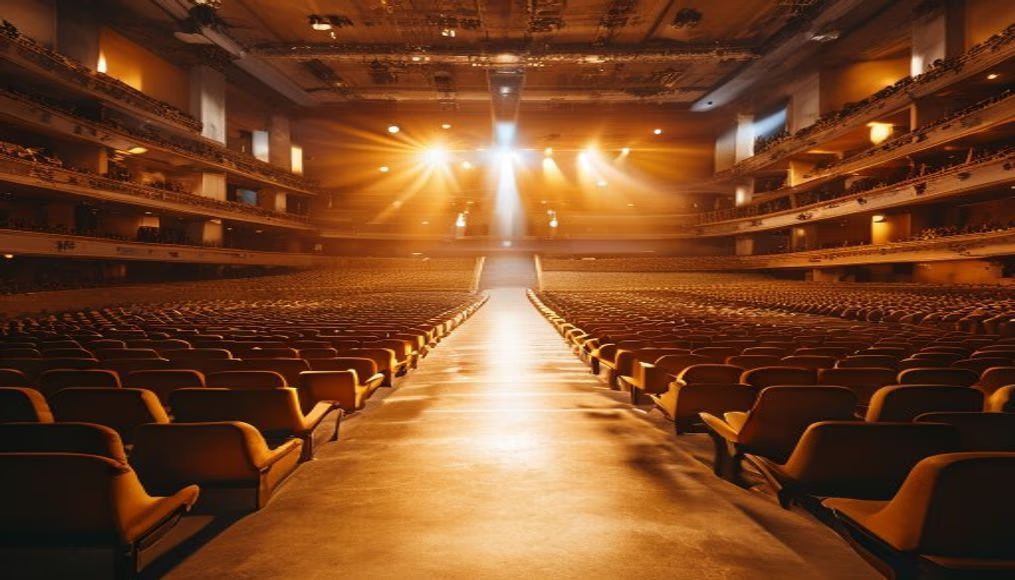
Concert hall empty seats
1344×768 · AVIF · CC BY 4.0
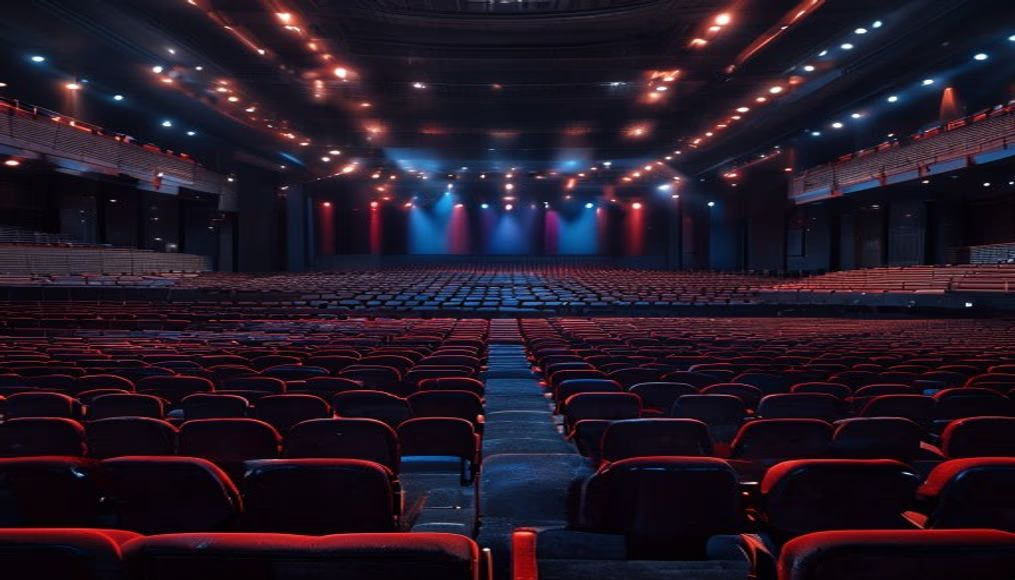
Concert halls are architectural spaces designed for live musical performances, with a focus on acoustics and visual comfort for the audience.
About this subject
A concert hall is an architectural space dedicated to musical performances, designed to provide the best acoustic and visual experience for the audience. The dimensions, materials, and shape of the venue are calculated to ensure that sound propagates evenly and clearly, without echoes or distortions. Iconic examples include the Sala São Paulo in Brazil, home to the OSESP and renowned for its exceptional acoustics, and the Theatro Municipal in Rio de Janeiro, one of the country's most important venues.
The history of concert halls dates back to the 19th century, with the construction of theaters and opera houses in Europe. The modern design of these spaces considers not only acoustics but also visibility, thermal comfort, and accessibility. In Brazil, there is a diversity of halls, from traditional ones like the Theatro São Pedro in Porto Alegre to contemporary ones like Sala São Paulo, which was adapted from a railway station.
The presence of empty seats in a concert hall can occur for several reasons: capacity exceeding demand for certain performances, weekday events with lower turnout, or even maintenance issues that require isolated seats. In large centers like São Paulo and Rio de Janeiro, occupancy varies according to the programming and audience profile. Major halls often sell out for premieres or concerts by renowned artists, but may have lower occupancy for less popular repertoire performances.
Acoustics is the most critical element in the design of these spaces. Acoustic engineers use materials such as wood, plaster, and special fabrics to absorb or reflect sound in a controlled manner. The fan or shell shape common in many halls helps direct sound to all seats. Maintaining these properties requires constant care, including preserving original materials and periodic adjustments, which impacts scheduling and seat availability.
Frequently Asked Questions
Why might a concert hall have empty seats?
Empty seats can occur due to capacity exceeding demand for certain performances, weekday events with lower attendance, specific seat maintenance, or less popular repertoire. In renowned halls, occupancy is higher during premieres and concerts by famous artists.
How is the acoustics of a concert hall designed?
Acoustic engineers calculate dimensions, shapes, and materials to control sound reflection and absorption. Fan or shell shapes direct sound evenly. Materials like wood and plaster are common, and periodic maintenance is essential to preserve acoustic quality.
What is the largest concert hall in Brazil?
Sala São Paulo, with a capacity of about 1,500 people, is one of the largest and most important in the country. Other large halls include the Theatro Municipal in Rio de Janeiro (1,700 seats) and Teatro Cláudio Santoro in Brasília (1,200 seats).
Direct URL
https://pub-c7d6a6ea828543ac903a74a341ccb2e1.r2.dev/imagens/concert-hall-empty-seats-commercial-product-photography-v9.avifHow to credit
Include a visible link back to UtilizAí. Copy one of the snippets below:
<a href="https://xn--utiliza-eza.com/en/midia/imagens/concert-hall-empty-seats-commercial-product-photography-v9">Concert hall empty seats</a> by <a href="https://xn--utiliza-eza.com">UtilizAí</a>, licensed under <a href="https://creativecommons.org/licenses/by/4.0/">CC BY 4.0</a>.
[Concert hall empty seats](https://xn--utiliza-eza.com/en/midia/imagens/concert-hall-empty-seats-commercial-product-photography-v9) by [UtilizAí](https://xn--utiliza-eza.com), CC BY 4.0
License: CC-BY-4.0