Compost bin kitchen
1344×768 · AVIF · CC BY 4.0
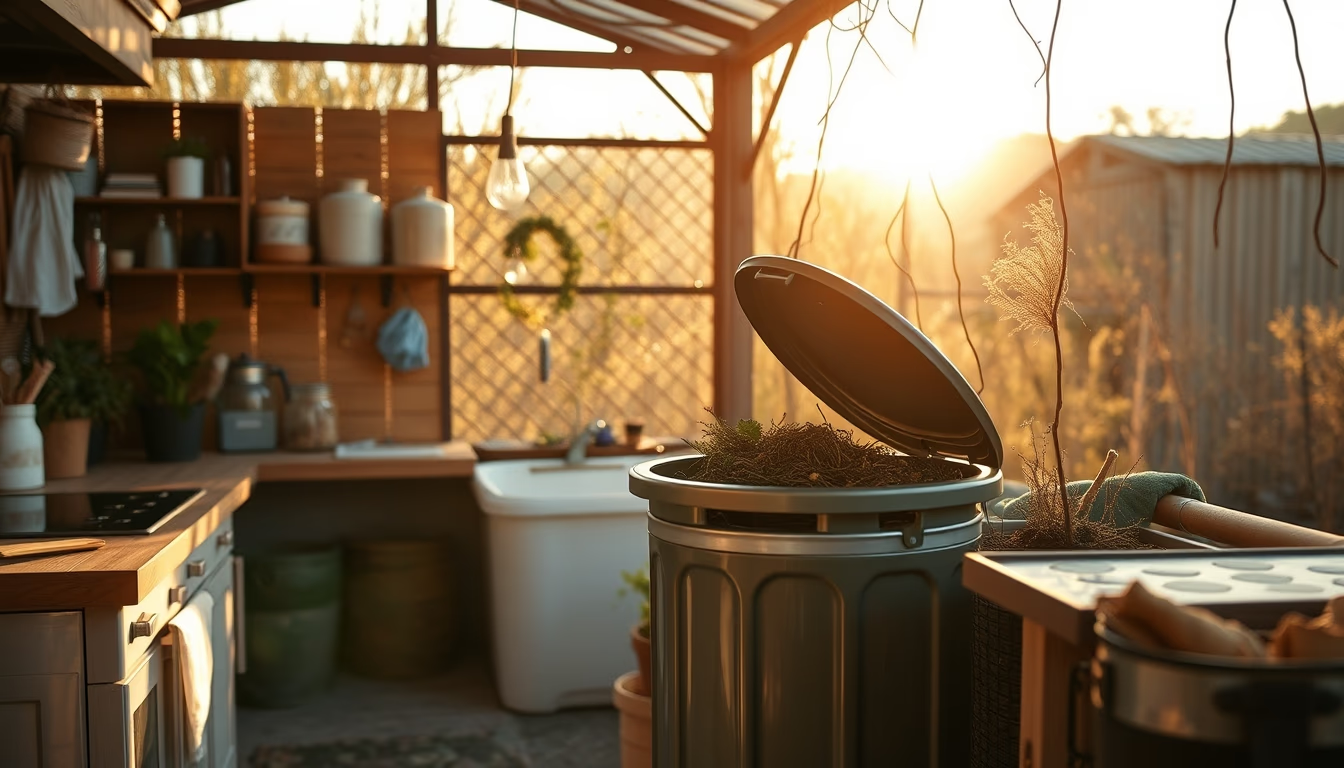
A kitchen compost bin turns organic waste into fertilizer, reducing household trash and contributing to urban sustainability.
About this subject
Home composting is an increasingly adopted practice for those looking to reduce the volume of waste sent to landfills. A kitchen compost bin, typically small in size, is designed to process food scraps such as fruit peels, coffee grounds, and vegetable leftovers. The process turns these residues into nutrient-rich organic compost, which can be used in gardens, pots or vegetable patches.
In Brazil, home composting has gained traction, especially in urban areas where selective waste collection is still limited. Compared to outdoor composting, the kitchen version is usually compact and sealed, preventing odors and insect attraction. Models with lids and a drainage system for the liquid (leachate) are common, allowing it to be reused as liquid fertilizer.
The technique relies on aerobic decomposition, which requires oxygen for microorganisms to break down organic matter. It is recommended to balance carbon-rich materials (dry leaves, cardboard) and nitrogen-rich materials (food scraps), while maintaining adequate moisture. Studies indicate that a family can divert up to 50% of its household waste through composting, significantly reducing methane emissions from landfills.
Interesting fact: in countries like South Korea, mandatory composting is already in place, with fees proportional to the volume of organic waste. In Brazil, initiatives such as the Composta SP program by the city of São Paulo encourage the practice with discounts on water bills. A well-maintained kitchen compost bin can produce fertilizer in about 2 to 3 months, depending on temperature and maintenance.
Frequently Asked Questions
What can be put into a kitchen compost bin?
Fruit and vegetable scraps, eggshells, coffee grounds, tea bags, leaves, and grass clippings. Avoid meat, dairy, oils, and cooked foods, which can attract pests.
How to prevent odors and flies in the compost bin?
Keep the lid closed at all times and add dry materials like sawdust or dry leaves to cover fresh waste. Proper drainage of leachate also helps avoid bad smells.
How long does it take for compost to be ready?
On average 2 to 3 months, depending on temperature, moisture, and turning frequency. When the material is dark, smells like earth, and has no identifiable scraps, it is ready to use.
Direct URL
https://pub-c7d6a6ea828543ac903a74a341ccb2e1.r2.dev/imagens/compost-bin-kitchen-travel-photography-p3.avifHow to credit
Include a visible link back to UtilizAí. Copy one of the snippets below:
<a href="https://xn--utiliza-eza.com/en/midia/imagens/compost-bin-kitchen-travel-photography-p3">Compost bin kitchen</a> by <a href="https://xn--utiliza-eza.com">UtilizAí</a>, licensed under <a href="https://creativecommons.org/licenses/by/4.0/">CC BY 4.0</a>.
[Compost bin kitchen](https://xn--utiliza-eza.com/en/midia/imagens/compost-bin-kitchen-travel-photography-p3) by [UtilizAí](https://xn--utiliza-eza.com), CC BY 4.0
License: CC-BY-4.0