Comic books silver age
1344×768 · AVIF · CC BY 4.0
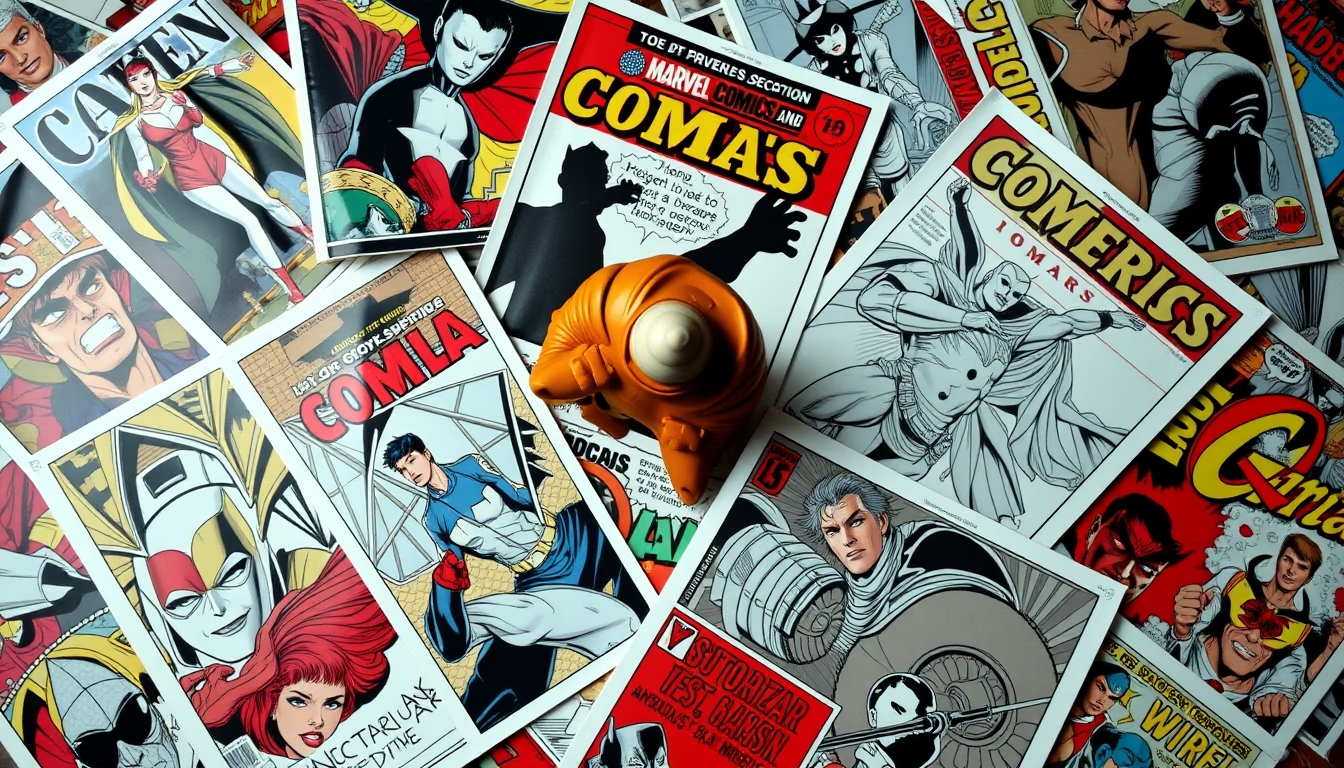
The Silver Age of comic books (1956-1970) revolutionized the superhero genre, reintroducing classic characters with new origins and narrative complexity.
About this subject
The Silver Age of American comic books, roughly from 1956 to 1970, marked a creative rebirth after the decline of the Golden Age. The starting point is generally considered Barry Allen's debut as the new Flash in Showcase #4 (1956), published by DC Comics. This period was characterized by a more scientific and realistic approach to superhero origins, replacing magic and vague accidents with explanations like cosmic rays or genetic mutations.
DC Comics led the movement, reinventing heroes such as Green Lantern (Hal Jordan), Flash (Barry Allen), and the Justice League. Marvel Comics, under Stan Lee, Steve Ditko, and Jack Kirby, responded with a line of more human and flawed characters, like Spider-Man, X-Men, Fantastic Four, and Hulk. These heroes faced personal problems and moral dilemmas, attracting an older and more diverse audience. The rivalry between publishers drove innovation and artistic quality.
The Silver Age also saw the rise of the Comics Code Authority, implemented in 1954, which censored violent and sexual content. Writers bypassed restrictions with more sophisticated plots and subtext. Art evolved with artists like Carmine Infantino, Gil Kane, and John Romita Sr., who brought dynamism and expressiveness. The period ended in the early 1970s as the darker Bronze Age began to dominate.
Notably, many story arcs and characters created in the Silver Age remain iconic, such as Spider-Man's origin (bitten by a radioactive spider) and DC's multiverse (introduced in Flash of Two Worlds). The era also popularized crossover stories and annual issues. Collectors value comics from this time, with copies like Amazing Fantasy #15 (first appearance of Spider-Man) fetching millions at auction.
Frequently Asked Questions
What are the most important comic books from the Silver Age?
Key issues include Showcase #4 (Flash debut), Amazing Fantasy #15 (first Spider-Man), Fantastic Four #1 (start of Marvel universe), and Flash of Two Worlds (introduction of DC multiverse).
How did the Silver Age influence modern superhero movies?
Many Marvel and DC films directly adapt Silver Age concepts, such as scientific origins of heroes, team dynamics (Avengers, Justice League), and characters' personal struggles.
What distinguishes the Silver Age from the Golden Age of comics?
The Golden Age (1938-1950) featured patriotic, simple heroes, while the Silver Age introduced psychological complexity, scientific origins, and a Comics Code that limited explicit violence.
Direct URL
https://pub-c7d6a6ea828543ac903a74a341ccb2e1.r2.dev/imagens/comic-books-silver-age-isometric-flat-lay-fresh11.avifHow to credit
Include a visible link back to UtilizAí. Copy one of the snippets below:
<a href="https://xn--utiliza-eza.com/en/midia/imagens/comic-books-silver-age-isometric-flat-lay-fresh11">Comic books silver age</a> by <a href="https://xn--utiliza-eza.com">UtilizAí</a>, licensed under <a href="https://creativecommons.org/licenses/by/4.0/">CC BY 4.0</a>.
[Comic books silver age](https://xn--utiliza-eza.com/en/midia/imagens/comic-books-silver-age-isometric-flat-lay-fresh11) by [UtilizAí](https://xn--utiliza-eza.com), CC BY 4.0
License: CC-BY-4.0