Comic books silver age
1344×768 · AVIF · CC BY 4.0
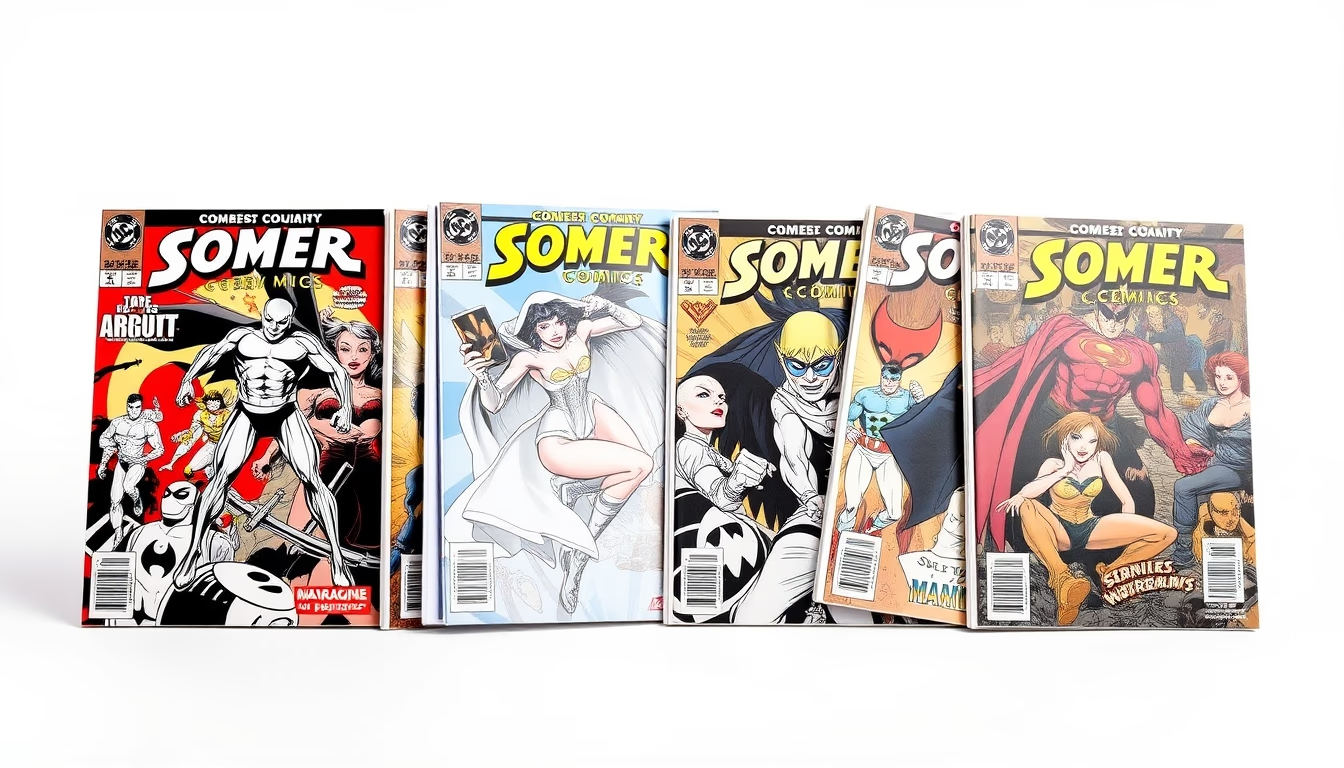
The Silver Age of comic books (1956-1970) marked the rebirth of superheroes, introducing iconic characters from Marvel and DC.
About this subject
The Silver Age of American comic books began in 1956 with the debut of the Flash in DC's Showcase #4. This era was defined by the resurgence of superheroes after the decline of the Golden Age, driven by new creators at Marvel Comics such as Stan Lee, Jack Kirby, and Steve Ditko. Iconic characters emerged: the Fantastic Four (1961), Spider-Man (1962), X-Men (1963), and the Avengers (1963), who brought personal conflicts and moral dilemmas, humanizing heroes.
DC also innovated by reinventing heroes like Green Lantern and creating the Justice League (1960). Stories shifted toward science fiction and scientific origins, contrasting with the magical roots of the Golden Age. The Silver Age ended around 1970, transitioning to the Bronze Age, known for darker and more complex narratives.
Culturally, this period solidified comics as a mass entertainment medium and influenced generations of readers. Stan Lee's approach of creating flawed heroes dealing with everyday problems became a milestone in superhero storytelling. The rivalry between Marvel and DC elevated artistic and writing quality, with artists like Carmine Infantino and John Buscema leaving their mark.
Interestingly, the Silver Age also saw the implementation of the Comics Code Authority in 1954, which censored certain themes. Despite this, creators found creative ways to address social issues like racism and war, albeit allegorically. This era is widely regarded by fans as the most creative and innovative period of superhero comics.
Frequently Asked Questions
What key events marked the beginning and end of the Silver Age of comics?
The beginning is widely associated with Showcase #4 (1956), reintroducing the Flash. The end is less precise, but often placed around 1970, with Gwen Stacy's death in The Amazing Spider-Man #121 (1973) as a symbolic transition to the Bronze Age.
How does the Silver Age differ from the Golden Age of comics?
In the Golden Age (1938-1950), heroes were simpler and patriotic, with magical or accidental origins. The Silver Age introduced heroes with scientific origins, personal conflicts, and moral dilemmas, along with a focus on science fiction and character development.
Did the Silver Age influence media beyond comics?
Yes. Many Silver Age characters and storylines were adapted into cartoons, films, and TV series. The narrative style and character depth influenced modern superhero cinema, especially from the 2000s onward.
Direct URL
https://pub-c7d6a6ea828543ac903a74a341ccb2e1.r2.dev/imagens/comic-books-silver-age-commercial-product-photography-fresh3.avifHow to credit
Include a visible link back to UtilizAí. Copy one of the snippets below:
<a href="https://xn--utiliza-eza.com/en/midia/imagens/comic-books-silver-age-commercial-product-photography-fresh3">Comic books silver age</a> by <a href="https://xn--utiliza-eza.com">UtilizAí</a>, licensed under <a href="https://creativecommons.org/licenses/by/4.0/">CC BY 4.0</a>.
[Comic books silver age](https://xn--utiliza-eza.com/en/midia/imagens/comic-books-silver-age-commercial-product-photography-fresh3) by [UtilizAí](https://xn--utiliza-eza.com), CC BY 4.0
License: CC-BY-4.0