Comic book art board
1344×768 · AVIF · CC BY 4.0
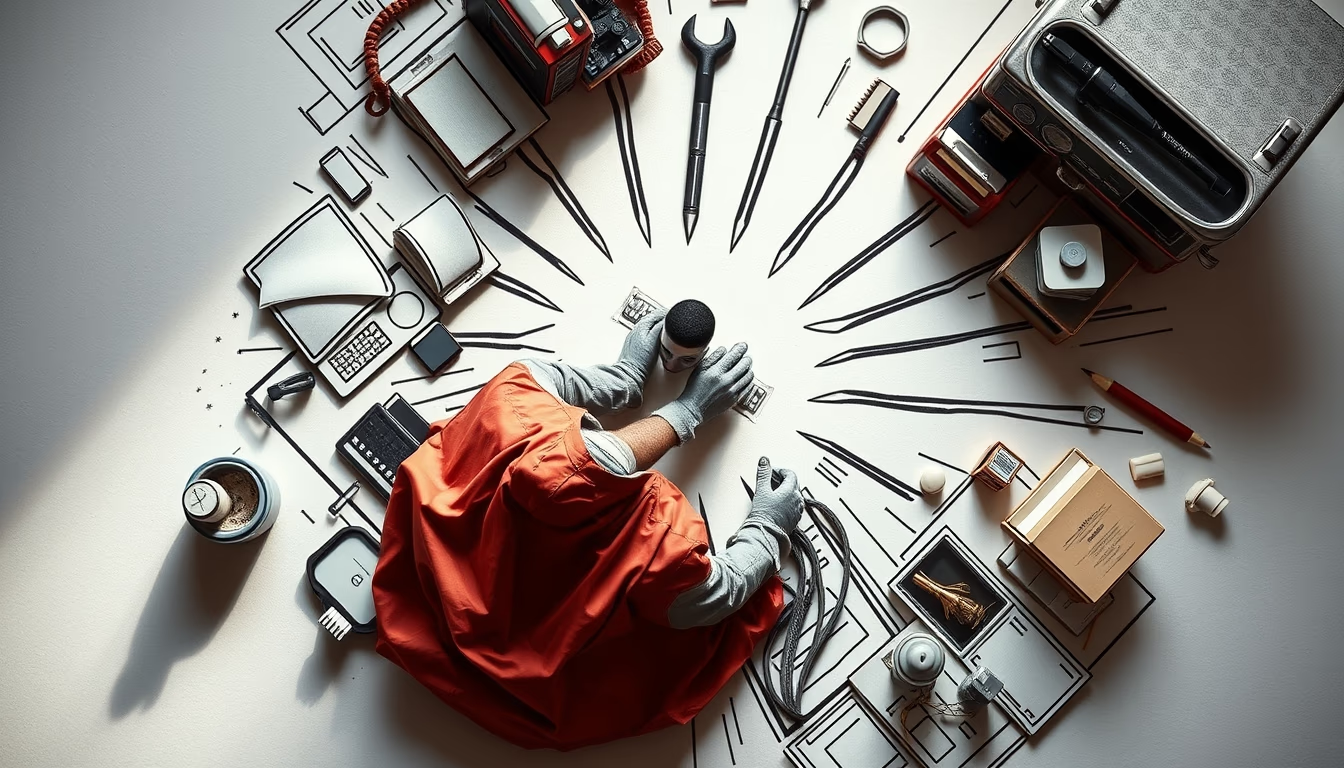
Isometric flat lay of a comic book art board featuring tools and sketches, showcasing the creative process of comic artists.
About this subject
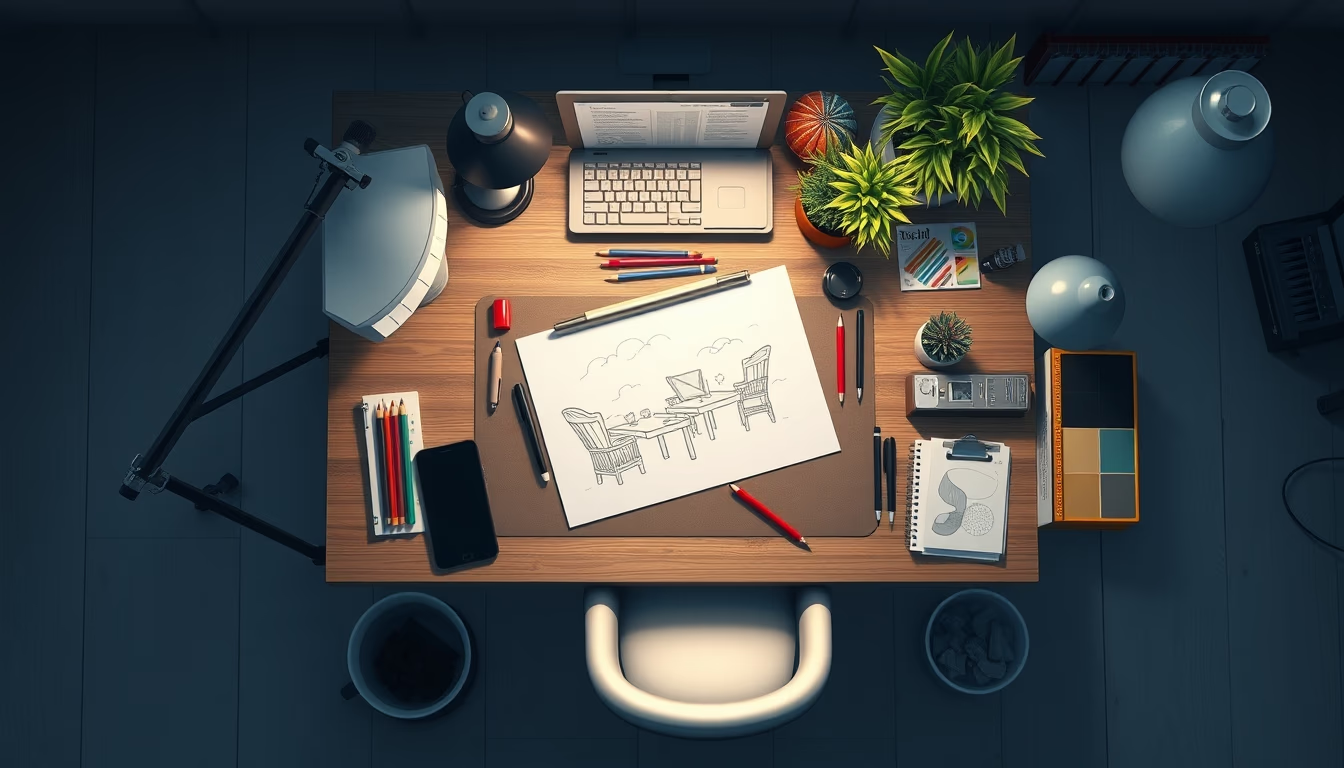
A comic book art board is the primary surface where artists create comic pages, from initial pencil sketches to final ink outlines. Typically made of high-quality Bristol paper (300 gsm or more), standard dimensions are 11x17 inches (approx. 28x43 cm), allowing for detailed work and reproduction. Artists often use tilted drafting tables to maintain proper perspective.
In the global comic industry, legendary artists like Jack Kirby and Steve Ditko relied on similar boards, often larger for splash pages. The tools shown in a flat lay arrangement include graphite pencils (HB, 2B), erasers, rulers, technical pens (e.g., Micron or Rotring), and brushes for India ink. The isometric perspective emphasizes the spatial organization of the workspace, a practice taught in sequential art schools such as the Kubert School.
Historically, art boards evolved from cardboard to Bristol paper in the 1960s, with the latter offering better ink absorption and durability. Modern digital tablets attempt to replicate the tactile feedback, yet many professionals maintain analog workflows for the unique line quality. The Brazilian comic scene, with artists like Mike Deodato, uses identical boards, reflecting the global standardization of comic production.
The image’s flat lay composition provides insight into the artist's creative process, showcasing the transition from rough sketches to refined lines. This method is fundamental to narrative art, where page composition and panel flow are meticulously planned.
Frequently Asked Questions
What is the standard size of a comic book art board?
The most common size is 11x17 inches (approximately 28x43 cm), known as a 'two-page spread'. Artists may use larger boards for splash pages.
What type of paper is used for comic book art boards?
High-quality Bristol paper (300 gsm or more) is standard due to its durability, smooth surface, and ability to absorb India ink without bleeding or feathering.
Do digital artists still use physical art boards?
Yes, many artists start with pencil sketches on paper before scanning, or use digital boards that mimic paper texture, such as Wacom Cintiq tablets.
Direct URL
https://pub-c7d6a6ea828543ac903a74a341ccb2e1.r2.dev/imagens/comic-book-art-board-isometric-flat-lay-fresh3.avifHow to credit
Include a visible link back to UtilizAí. Copy one of the snippets below:
<a href="https://xn--utiliza-eza.com/en/midia/imagens/comic-book-art-board-isometric-flat-lay-fresh3">Comic book art board</a> by <a href="https://xn--utiliza-eza.com">UtilizAí</a>, licensed under <a href="https://creativecommons.org/licenses/by/4.0/">CC BY 4.0</a>.
[Comic book art board](https://xn--utiliza-eza.com/en/midia/imagens/comic-book-art-board-isometric-flat-lay-fresh3) by [UtilizAí](https://xn--utiliza-eza.com), CC BY 4.0
License: CC-BY-4.0