Cold storage device on slate
1344×768 · AVIF · CC BY 4.0
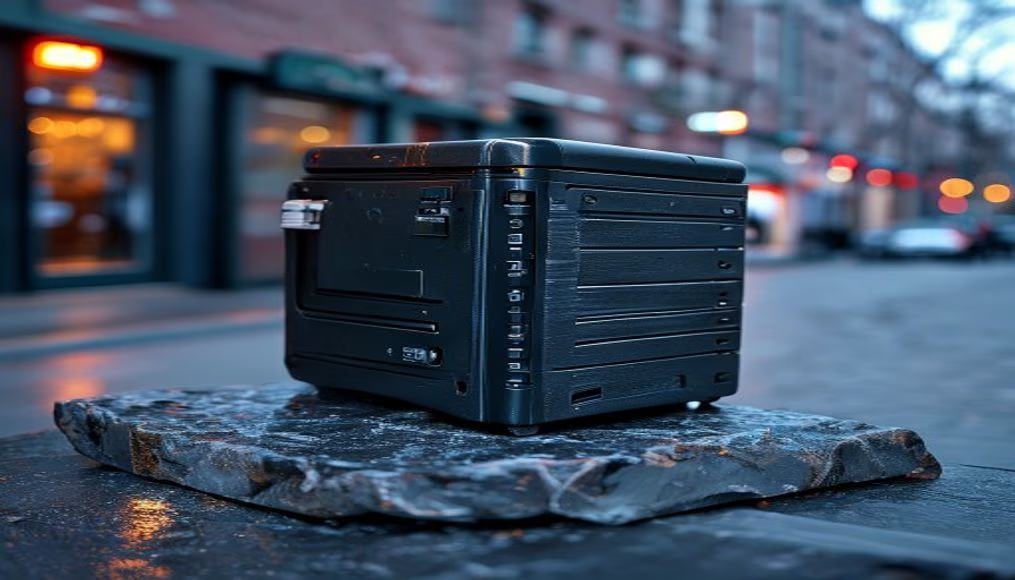
A cold storage device on a slate surface, captured in street photography that contrasts modern and ancient elements in the urban landscape.
About this subject
Slate is a metamorphic rock formed from clay or volcanic ash, known for its thin, durable sheets. Historically used in roofing, flooring, and chalkboards, here it serves as the base for a cold storage device, possibly a freezer or refrigerated display case. This combination highlights the juxtaposition between ancient natural materials and modern food preservation technology, common in open-air markets, street vendors, and commercial sidewalks.
Cold storage devices, such as freezers and refrigerated cabinets, revolutionized the food supply chain by enabling large-scale transport and sale of perishable goods. In Brazil, the first ice factory was established in Rio de Janeiro in 1834, and industrial refrigeration became vital for the economy, especially in the North and Northeast regions for preserving fish and fruits.
Street photography often captures these contrasts: a metallic, humming appliance resting on a slate slab, which itself may be set into a Portuguese stone sidewalk. The cool, dark texture of the slate contrasts with the stainless steel gleam, while natural light highlights condensation droplets. Such scenes are typical in supply centers like Ceagesp in São Paulo or the Ver-o-Peso Market in Belém.
Interestingly, slate is also used for school chalkboards, evoking the idea of “writing” or “recording” cold in the landscape. In historic cities like Ouro Preto (MG), slate appears in colonial buildings, while modern freezers are recent additions. This encounter between old and new is a recurring theme in documentary urban photography.
Frequently Asked Questions
What is the difference between slate and granite?
Slate is a fine-grained metamorphic rock that splits into thin layers, while granite is igneous, harder, and more scratch-resistant. Slate is more porous and used for roofing and flooring.
How do cold storage devices work in public spaces?
They use compressors and thermal insulation to maintain low temperatures, typically between 0°C and 8°C. They require constant electricity and may have backup batteries to prevent thawing during power outages.
Why does street photography capture common objects like freezers?
Street photography aims to document everyday life and urban transformations. Freezers and other objects reflect consumption habits, technology, and contrasts between old and new, enriching the documentary record.
Direct URL
https://pub-c7d6a6ea828543ac903a74a341ccb2e1.r2.dev/imagens/cold-storage-device-on-slate-street-photography-v11.avifHow to credit
Include a visible link back to UtilizAí. Copy one of the snippets below:
<a href="https://xn--utiliza-eza.com/en/midia/imagens/cold-storage-device-on-slate-street-photography-v11">Cold storage device on slate</a> by <a href="https://xn--utiliza-eza.com">UtilizAí</a>, licensed under <a href="https://creativecommons.org/licenses/by/4.0/">CC BY 4.0</a>.
[Cold storage device on slate](https://xn--utiliza-eza.com/en/midia/imagens/cold-storage-device-on-slate-street-photography-v11) by [UtilizAí](https://xn--utiliza-eza.com), CC BY 4.0
License: CC-BY-4.0