Coffee plantation worker picking ripe coffee cherries by hand
1344×768 · AVIF · CC BY 4.0
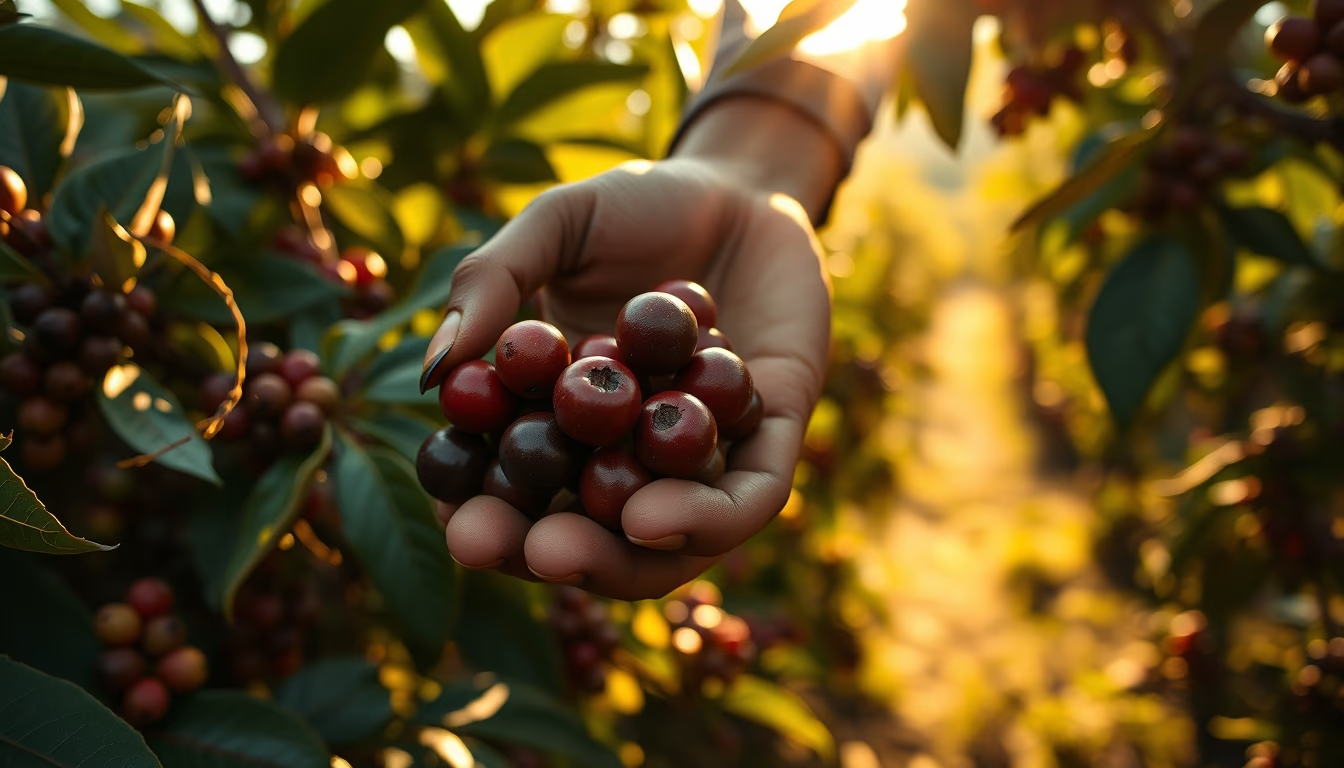
Rural worker hand-picks ripe coffee cherries on a Brazilian plantation, a practice that ensures selection of the best beans.
About this subject
Manual coffee harvesting is a tradition dating back to the 18th century, when cultivation became established in Brazil, now the world's largest producer and exporter of the commodity. Unlike mechanical harvesting, which strips all fruits at once, hand selection allows picking only fruits at the ideal ripeness point, the so-called red or yellow cherries. This care is essential for specialty coffees, which represent about 10% of national production and fetch prices up to 30% higher on the international market.
The worker depicted operates in a typical farm in the Minas Gerais cerrado or the Alta Mogiana region of São Paulo, areas recognized for altitudes between 800 and 1,200 meters, ideal for developing complex aromas. Manual harvesting requires quick, precise movements: each basket can accumulate 15 to 20 kilos per day, depending on plantation density and the picker's experience. Despite growing mechanization, about 30% of Brazilian production still relies on manual labor, especially in mountainous areas or properties focused on quality certification.
The labor force in coffee farming faces historical challenges: the activity is seasonal, concentrated between May and September, attracting temporary workers from neighboring regions. It is estimated that over 300,000 people are involved in manual harvesting each harvest season in Brazil. Mechanization, although reducing costs, cannot replicate the selectivity of human hands for high-scoring coffees (above 80 points on the Specialty Coffee Association scale).
Beyond the economic aspect, selective harvesting has a positive environmental impact: by avoiding the stripping of green fruits, the plant's natural cycle is preserved and waste is reduced. Pulped natural coffee, processed shortly after harvesting, results in a sweeter, less bitter beverage, valued by artisanal roasters. The image thus documents a crucial link between the field and the cup, where the worker's empirical knowledge determines the final product quality.
Frequently Asked Questions
Why is manual coffee harvesting considered superior for specialty coffees?
Manual harvesting allows selecting only ripe fruits, the red or yellow cherries, ensuring uniform ripeness. This avoids mixing with green or overripe beans, resulting in a sweeter beverage with fewer defects, essential for achieving high scores on the Specialty Coffee Association scale.
How many kilos of coffee does a worker pick per day by hand?
An experienced picker can harvest 15 to 20 kilos of coffee cherries per day, depending on plantation density, variety, and weather conditions. In highly productive farms, this number can reach 25 kilos.
What is the economic importance of coffee farming for Brazil?
Brazil is the world's largest coffee producer and exporter, accounting for about one-third of global production. The supply chain generates approximately 8 million direct and indirect jobs, with annual revenue exceeding R$ 50 billion.
Direct URL
https://pub-c7d6a6ea828543ac903a74a341ccb2e1.r2.dev/imagens/coffee-plantation-worker-picking-ripe-coffee-cherries-by-hand-wide-late-afternoon-2.avifHow to credit
Include a visible link back to UtilizAí. Copy one of the snippets below:
<a href="https://xn--utiliza-eza.com/en/midia/imagens/coffee-plantation-worker-picking-ripe-coffee-cherries-by-hand-wide-late-afternoon-2">Coffee plantation worker picking ripe coffee cherries by hand</a> by <a href="https://xn--utiliza-eza.com">UtilizAí</a>, licensed under <a href="https://creativecommons.org/licenses/by/4.0/">CC BY 4.0</a>.
[Coffee plantation worker picking ripe coffee cherries by hand](https://xn--utiliza-eza.com/en/midia/imagens/coffee-plantation-worker-picking-ripe-coffee-cherries-by-hand-wide-late-afternoon-2) by [UtilizAí](https://xn--utiliza-eza.com), CC BY 4.0
License: CC-BY-4.0