Coffee plantation worker picking ripe coffee cherries by hand
1344×768 · AVIF · CC BY 4.0
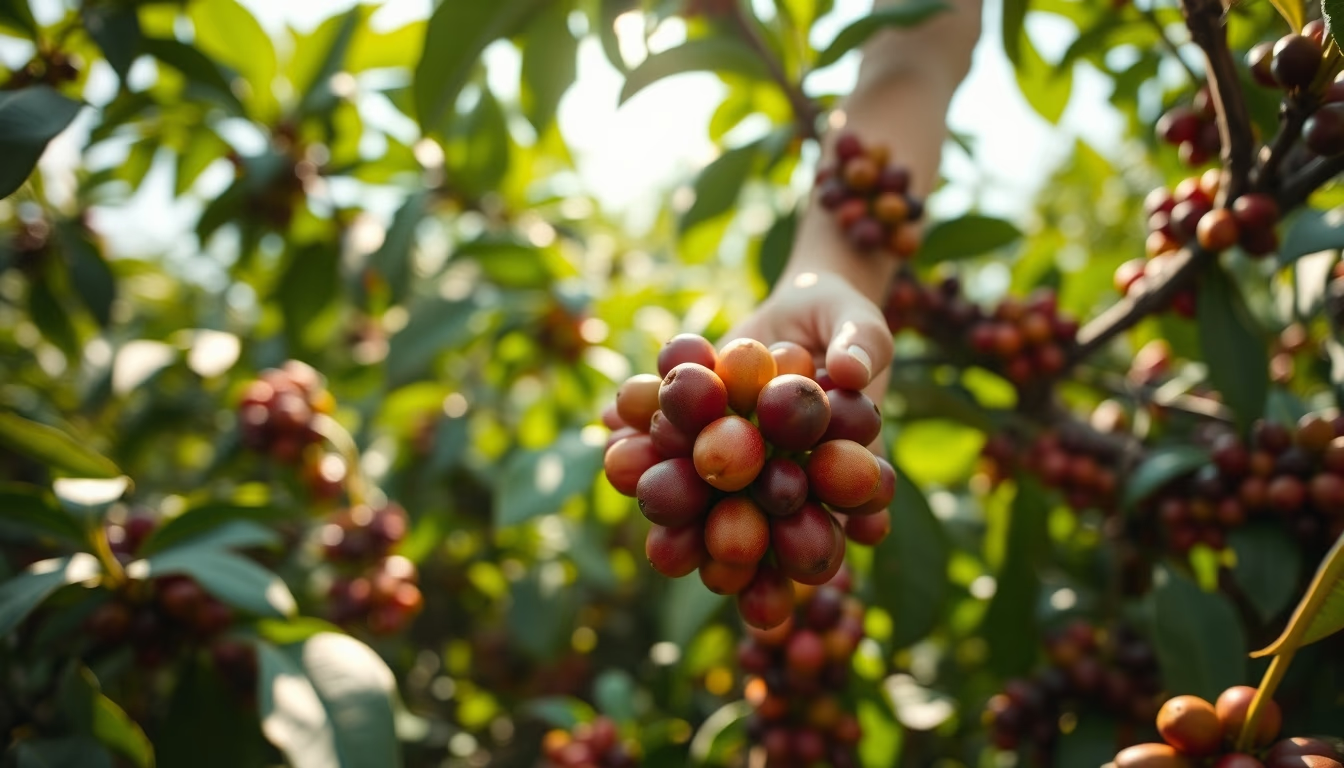
Worker hand-picks ripe coffee cherries on a Brazilian farm during the harvest season.
About this subject
Hand-picking coffee cherries is a traditional practice still prevalent in many Brazilian coffee-growing regions, especially in mountainous areas where uneven terrain makes mechanization difficult. The worker, known as a picker, carefully selects only ripe fruits, which show intense red or yellow color, ensuring the quality of the beverage. This selective harvesting process is more labor-intensive but yields beans at ideal maturity stages, highly valued in the specialty coffee market.
Brazil, the world's largest coffee producer and exporter, harvests coffee from May to September, varying by region. Minas Gerais state accounts for about half of national production, followed by Espírito Santo and São Paulo. Brazilian coffee farming employs thousands of rural workers, many temporarily during the harvest season. Despite the advance of mechanical harvesting in flat plantations, manual picking remains essential on steep slopes or for high-quality arabica coffee production.
The manual harvesting technique requires skill and rhythm: the picker uses a basket or bucket attached to the waist and, with quick movements, twists and pulls each ripe cherry without damaging the branches. An experienced picker can collect between 60 and 100 liters of coffee per day. After harvesting, the fruits undergo dry or wet processing to extract the beans, which will go to roasting. Brazilian coffee farming has invested in good labor practices and sustainability certifications, such as Rainforest Alliance and UTZ, to improve working conditions and product traceability.
Interesting fact: coffee was introduced to Brazil in the 18th century from French Guiana and adapted so well to the tropical climate that the country became the world's largest producer since the 19th century. Coffee culture influenced Brazil's economy, politics, and landscape, especially in the Paraíba Valley and Western São Paulo. Today, Brazil produces both arabica and robusta coffee, with prominent varieties including Bourbon, Catuaí, and Mundo Novo.
Frequently Asked Questions
Why is manual coffee harvesting important for quality?
Manual harvesting allows selecting only ripe fruits, ensuring uniform maturity and higher quality beans, essential for specialty coffees.
What is the average productivity of a manual coffee picker?
An experienced picker harvests between 60 and 100 liters of coffee per day, depending on crop density and the picker's skill.
Where does manual coffee harvesting occur in Brazil?
Mainly in mountainous regions of Minas Gerais, Espírito Santo, São Paulo, and other high-quality arabica coffee producing areas.
Direct URL
https://pub-c7d6a6ea828543ac903a74a341ccb2e1.r2.dev/imagens/coffee-plantation-worker-picking-ripe-coffee-cherries-by-hand-symmetric-bright-midday-6.avifHow to credit
Include a visible link back to UtilizAí. Copy one of the snippets below:
<a href="https://xn--utiliza-eza.com/en/midia/imagens/coffee-plantation-worker-picking-ripe-coffee-cherries-by-hand-symmetric-bright-midday-6">Coffee plantation worker picking ripe coffee cherries by hand</a> by <a href="https://xn--utiliza-eza.com">UtilizAí</a>, licensed under <a href="https://creativecommons.org/licenses/by/4.0/">CC BY 4.0</a>.
[Coffee plantation worker picking ripe coffee cherries by hand](https://xn--utiliza-eza.com/en/midia/imagens/coffee-plantation-worker-picking-ripe-coffee-cherries-by-hand-symmetric-bright-midday-6) by [UtilizAí](https://xn--utiliza-eza.com), CC BY 4.0
License: CC-BY-4.0