Coffee plantation worker picking ripe coffee cherries by hand
1344×768 · AVIF · CC BY 4.0
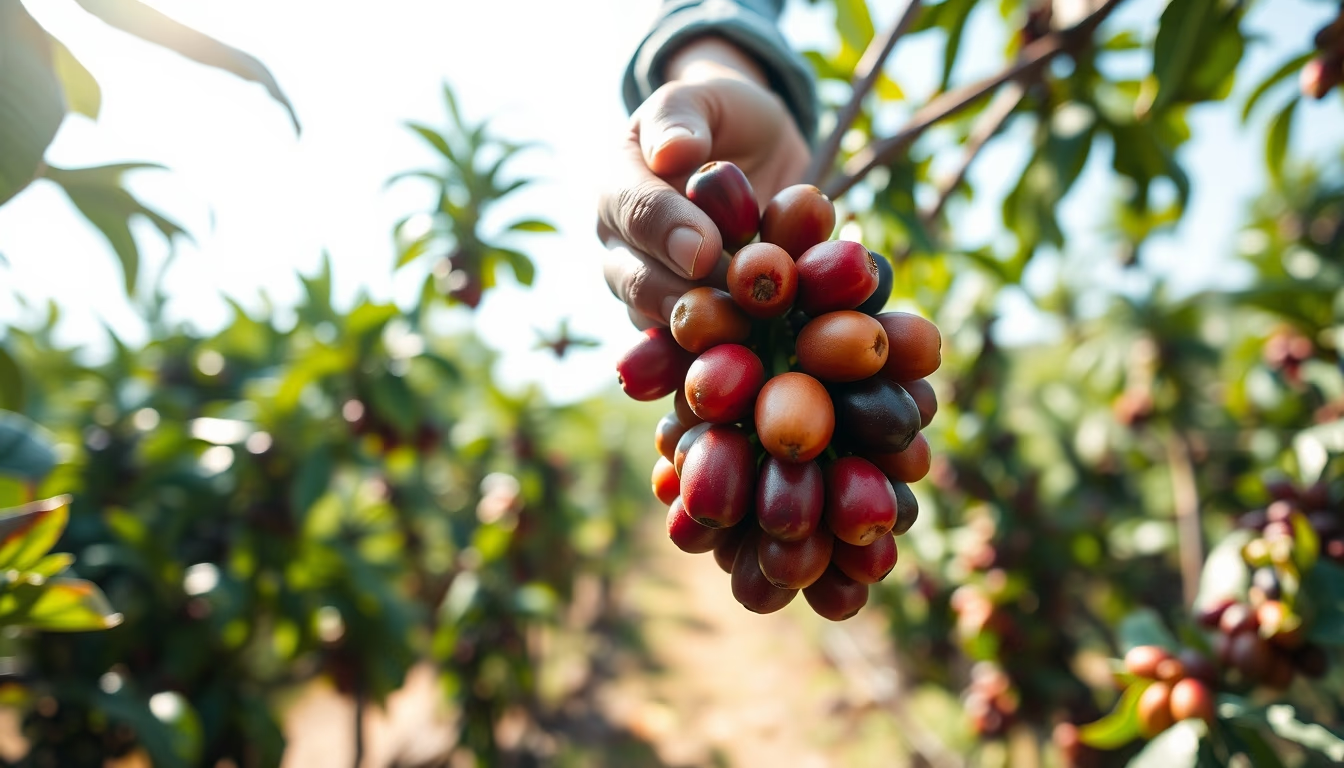
A rural worker manually harvests ripe coffee cherries on a Brazilian plantation, an essential practice to ensure superior bean quality.
About this subject
Manual coffee harvesting is a centuries-old tradition in Brazil, the world's largest coffee producer and exporter. Unlike mechanical harvesting, which collects all fruits at once, manual selection allows pickers to choose only ripe cherries, ensuring uniformity and sweetness in the batch. This method is especially valued for specialty coffees, which account for about 15% of national production and fetch prices up to 40% higher on the international market.
Labor in Brazilian coffee cultivation employs approximately 1.5 million people, according to the National Supply Company (Conab). The 2023/2024 Brazilian harvest was estimated at 54.7 million 60-kg bags, with Minas Gerais leading production, followed by Espírito Santo and São Paulo. The worker depicted likely operates on a farm in the Cerrado Mineiro or Mogiana Paulista regions, known for high-quality beans.
Manual harvesting requires technique and rhythm: the worker runs fingers through the branches, picking only red or yellow fruits (depending on the variety), while green ones remain to ripen. Each worker harvests an average of 80 to 120 liters of coffee per day, equivalent to about 50 to 70 kg of fruits. After picking, the beans undergo washing, drying, and processing before roasting.
The social and economic sustainability of manual harvesting is debated. While it creates jobs, the work is seasonal and physically demanding. Initiatives like the Rainforest Alliance seal and Fair Trade certifications aim to ensure fair conditions for workers. Meanwhile, mechanization advances on flat terrain, but on steep slopes, common in major producing regions, manual harvesting remains irreplaceable.
Frequently Asked Questions
Why is manual coffee harvesting considered better than mechanical?
Manual harvesting allows pickers to select only ripe cherries, ensuring flavor uniformity and avoiding mixing with green or overripe fruits, which boosts coffee quality. This is crucial for specialty coffees.
Which region in Brazil is the largest coffee producer?
Minas Gerais leads national production, especially the Cerrado Mineiro and Sul de Minas regions, followed by Espírito Santo and São Paulo.
How many workers are employed in coffee cultivation in Brazil?
Approximately 1.5 million people work in Brazilian coffee cultivation, according to Conab, including manual and mechanical harvesters.
Direct URL
https://pub-c7d6a6ea828543ac903a74a341ccb2e1.r2.dev/imagens/coffee-plantation-worker-picking-ripe-coffee-cherries-by-hand-symmetric-bright-midday-5.avifHow to credit
Include a visible link back to UtilizAí. Copy one of the snippets below:
<a href="https://xn--utiliza-eza.com/en/midia/imagens/coffee-plantation-worker-picking-ripe-coffee-cherries-by-hand-symmetric-bright-midday-5">Coffee plantation worker picking ripe coffee cherries by hand</a> by <a href="https://xn--utiliza-eza.com">UtilizAí</a>, licensed under <a href="https://creativecommons.org/licenses/by/4.0/">CC BY 4.0</a>.
[Coffee plantation worker picking ripe coffee cherries by hand](https://xn--utiliza-eza.com/en/midia/imagens/coffee-plantation-worker-picking-ripe-coffee-cherries-by-hand-symmetric-bright-midday-5) by [UtilizAí](https://xn--utiliza-eza.com), CC BY 4.0
License: CC-BY-4.0