Coffee plantation worker picking ripe coffee cherries by hand
1344×768 · AVIF · CC BY 4.0
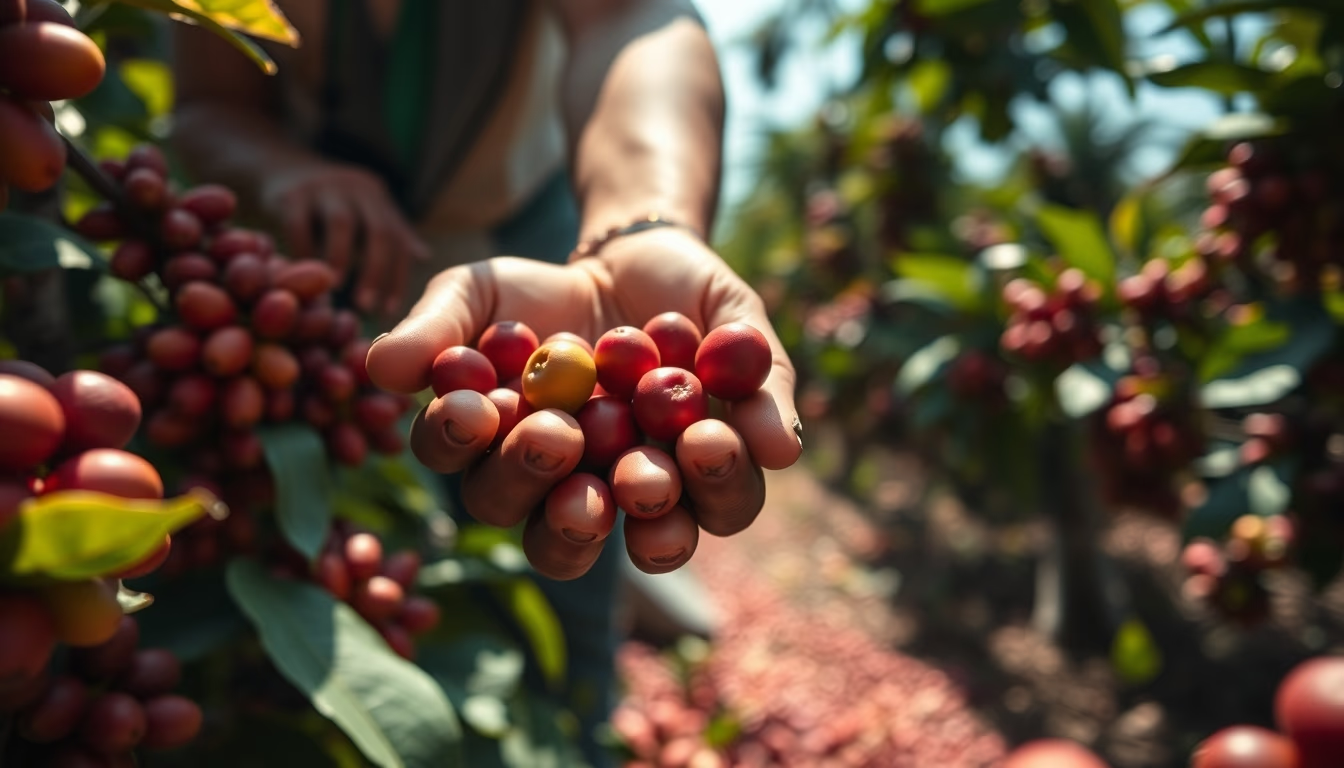
Rural worker hand-picks ripe coffee cherries on a Brazilian farm during harvest season.
About this subject
Hand-picking coffee is a traditional practice still prevalent in many regions of Brazil, especially in mountainous areas where uneven terrain hinders mechanization. The rural worker, known as a 'picker' or 'harvester', selects only ripe cherries (red or purple), ensuring bean quality. This technique, called 'selective harvesting', is essential for specialty coffee production, which requires uniform ripeness. Brazil, the world's largest coffee producer and exporter, harvests about 3 million tons annually, with the season concentrated between May and September in key producing states such as Minas Gerais, Espírito Santo, and São Paulo. Brazilian coffee cultivation dates back to the 18th century and today employs thousands of rural workers, many of whom are seasonal migrants traveling across the country during harvest. Although slower and more costly, manual picking allows better quality control and is valued in the gourmet coffee market, where defective beans can compromise an entire lot. The task also requires technical knowledge to identify the ideal harvesting point, which varies by variety (arabica or conilon) and weather conditions. The image captures a typical moment in the field under the bright midday sun, when harvesting is most intense to take advantage of daylight.
Frequently Asked Questions
Why is manual coffee harvesting still used in Brazil?
Manual harvesting is prevalent in mountainous regions where machines cannot operate, and it is essential for specialty coffees as it allows selecting only ripe fruits, ensuring higher quality.
What is the best time to harvest coffee in Brazil?
The main harvest occurs between May and September, varying by region and altitude. For example, in Minas Gerais, harvesting starts in May; in Espírito Santo, it may extend until August.
How many kilograms of coffee does a worker pick per day?
An experienced picker can harvest 60 to 120 liters of coffee cherries per day, equivalent to approximately 30 to 60 kg, depending on plantation density and the worker's skill.
Direct URL
https://pub-c7d6a6ea828543ac903a74a341ccb2e1.r2.dev/imagens/coffee-plantation-worker-picking-ripe-coffee-cherries-by-hand-symmetric-bright-midday-4.avifHow to credit
Include a visible link back to UtilizAí. Copy one of the snippets below:
<a href="https://xn--utiliza-eza.com/en/midia/imagens/coffee-plantation-worker-picking-ripe-coffee-cherries-by-hand-symmetric-bright-midday-4">Coffee plantation worker picking ripe coffee cherries by hand</a> by <a href="https://xn--utiliza-eza.com">UtilizAí</a>, licensed under <a href="https://creativecommons.org/licenses/by/4.0/">CC BY 4.0</a>.
[Coffee plantation worker picking ripe coffee cherries by hand](https://xn--utiliza-eza.com/en/midia/imagens/coffee-plantation-worker-picking-ripe-coffee-cherries-by-hand-symmetric-bright-midday-4) by [UtilizAí](https://xn--utiliza-eza.com), CC BY 4.0
License: CC-BY-4.0