Coffee plantation worker picking ripe coffee cherries by hand
1344×768 · AVIF · CC BY 4.0
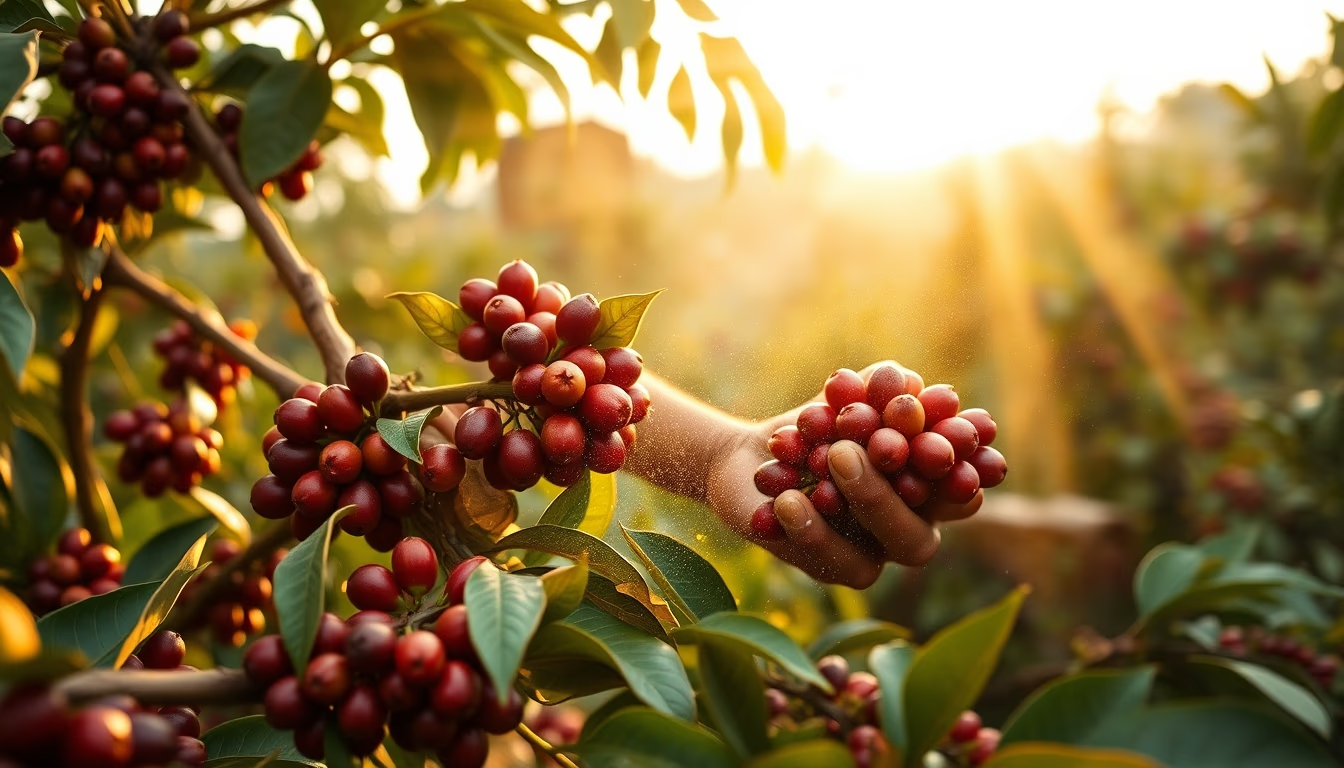
Rural worker manually harvests ripe coffee cherries on a commercial plantation, a practice that ensures selection of high-quality beans.
About this subject
Manual coffee harvesting is a traditional method still predominant in mountainous regions and on farms seeking quality certifications, such as specialty coffee. The worker, equipped with a basket or cloth tied around the waist, walks through the rows of coffee trees and picks only the ripe fruits, usually bright red or yellow depending on the variety. This process, called selective harvesting, contrasts with mechanized harvesting or stripping (when all fruits are removed at once), as it requires more labor but results in a beverage with better sensory profile. Brazil, the world's largest producer and exporter of coffee, employs about 200,000 temporary workers during the harvest, many of them on farms in southern Minas Gerais, the Cerrado Mineiro, and Mogiana Paulista. The workday starts early, often before sunrise, and ends in the early afternoon to avoid excessive heat. Manual picking also allows for quick identification of pests or diseases on the plants, contributing to integrated pest management. Despite the advance of mechanization, manual harvesting remains essential for specialty and organic coffees, which require traceability and individualized care for each fruit.
Frequently Asked Questions
Why is manual coffee harvesting important for coffee quality?
Manual harvesting allows selecting only ripe cherries, avoiding mixing with green or overripe ones. This results in a more homogeneous batch, essential for specialty coffees, which score above 80 on the SCA (Specialty Coffee Association) scale.
What is the productivity of a worker in manual coffee harvesting?
On average, an experienced worker harvests 60 to 100 liters of coffee per day, depending on plantation density and variety. In one season, this equates to about 20 to 30 bags of 60 kg of processed coffee per worker.
Is manual harvesting still common in Brazil?
Yes, especially in rugged terrain regions such as southern Minas Gerais and the Caparaó Mountains, where mechanization is unfeasible. About 30% of national production is still manually harvested, mainly for specialty and organic coffees.
Direct URL
https://pub-c7d6a6ea828543ac903a74a341ccb2e1.r2.dev/imagens/coffee-plantation-worker-picking-ripe-coffee-cherries-by-hand-editorial-overcast-daytime-5.avifHow to credit
Include a visible link back to UtilizAí. Copy one of the snippets below:
<a href="https://xn--utiliza-eza.com/en/midia/imagens/coffee-plantation-worker-picking-ripe-coffee-cherries-by-hand-editorial-overcast-daytime-5">Coffee plantation worker picking ripe coffee cherries by hand</a> by <a href="https://xn--utiliza-eza.com">UtilizAí</a>, licensed under <a href="https://creativecommons.org/licenses/by/4.0/">CC BY 4.0</a>.
[Coffee plantation worker picking ripe coffee cherries by hand](https://xn--utiliza-eza.com/en/midia/imagens/coffee-plantation-worker-picking-ripe-coffee-cherries-by-hand-editorial-overcast-daytime-5) by [UtilizAí](https://xn--utiliza-eza.com), CC BY 4.0
License: CC-BY-4.0