Coffee plantation worker picking ripe coffee cherries by hand
1344×768 · AVIF · CC BY 4.0
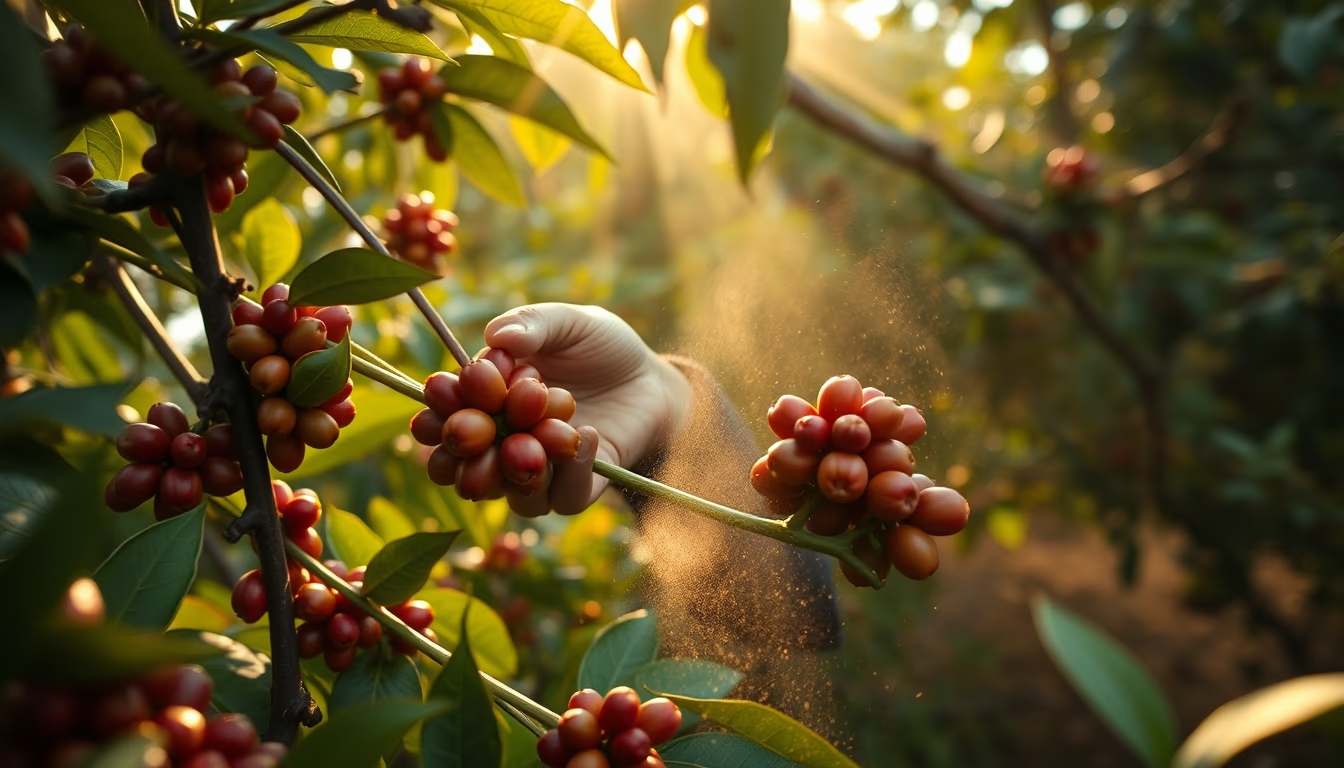
Rural worker hand-picks ripe coffee cherries on a Brazilian farm, a practice ensuring selective bean quality.
About this subject
Hand-picking coffee is a tradition dating back to the 18th century in Brazil, when cultivation became an economic driver. The rural worker, often from local communities, selects only fruits at peak ripeness, usually red or yellow, leaving green ones for later harvests. This method, predominant in specialty coffees, contrasts with mechanical harvesting used in large commercial plantations.
In Brazil, the world's largest coffee producer and exporter, manual harvesting occurs mainly in mountainous regions like southern Minas Gerais, Serra da Mantiqueira, and Espírito Santo. The rugged terrain hinders mechanization, and skilled labor is essential to preserve quality. Each worker harvests on average 60 to 100 liters of coffee per day, paid by production.
The coffee cherry is actually a fruit containing two seeds, the coffee beans. Selective manual picking allows separation of ripe fruits from green and overripe ones, avoiding unwanted fermentations. This care directly influences the beverage's sensory profile, with fruity notes and balanced acidity. Brazil produces about 50 million 60-kg bags annually, with approximately 30% being high-quality arabica coffee.
The practice also generates seasonal jobs for thousands of families, especially during the harvest from May to September. However, the sector faces challenges such as aging workforce and the need for modernization to ensure sustainability and social justice. Certification initiatives like Rainforest Alliance and Fair Trade aim to improve working conditions and pay for pickers.
Frequently Asked Questions
Why is manual coffee harvesting important for quality?
Manual harvesting allows selecting only ripe fruits, avoiding green or overripe beans that spoil the flavor. This results in a cleaner cup with superior sensory profile.
How much coffee does a rural worker pick per day?
On average, a manual picker harvests 60 to 100 liters of coffee per day, depending on field productivity and worker experience.
Which Brazilian regions stand out for manual coffee harvesting?
Mountainous regions such as southern Minas Gerais, Serra da Mantiqueira, and Espírito Santo are known for manual harvesting due to terrain that hinders mechanization.
Direct URL
https://pub-c7d6a6ea828543ac903a74a341ccb2e1.r2.dev/imagens/coffee-plantation-worker-picking-ripe-coffee-cherries-by-hand-editorial-overcast-daytime-4.avifHow to credit
Include a visible link back to UtilizAí. Copy one of the snippets below:
<a href="https://xn--utiliza-eza.com/en/midia/imagens/coffee-plantation-worker-picking-ripe-coffee-cherries-by-hand-editorial-overcast-daytime-4">Coffee plantation worker picking ripe coffee cherries by hand</a> by <a href="https://xn--utiliza-eza.com">UtilizAí</a>, licensed under <a href="https://creativecommons.org/licenses/by/4.0/">CC BY 4.0</a>.
[Coffee plantation worker picking ripe coffee cherries by hand](https://xn--utiliza-eza.com/en/midia/imagens/coffee-plantation-worker-picking-ripe-coffee-cherries-by-hand-editorial-overcast-daytime-4) by [UtilizAí](https://xn--utiliza-eza.com), CC BY 4.0
License: CC-BY-4.0