Coffee plantation worker picking ripe coffee cherries by hand
1344×768 · AVIF · CC BY 4.0
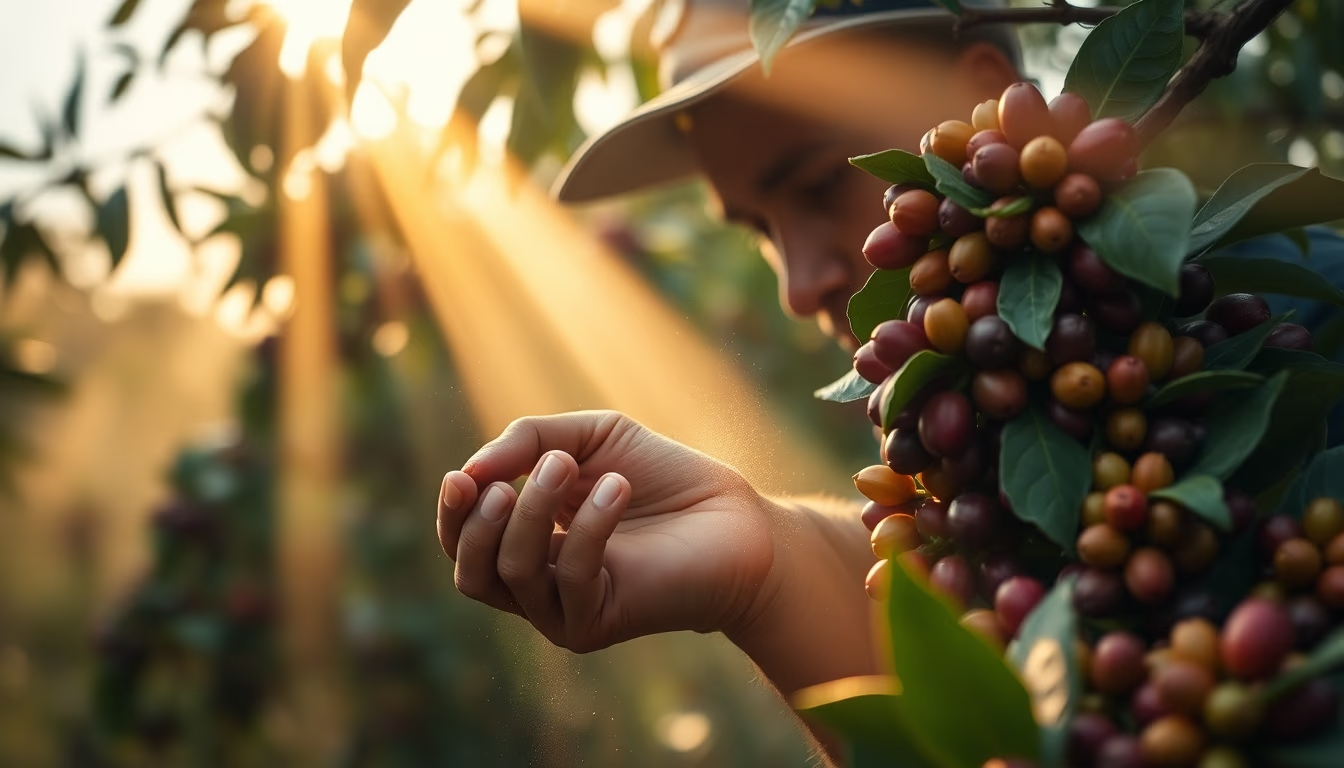
Rural worker hand-picks coffee on a Brazilian farm, selecting only ripe cherries to ensure superior quality.
About this subject
Manual coffee harvesting is a traditional practice that persists on many Brazilian farms, especially in the mountainous regions of Serra da Mantiqueira and southern Minas Gerais. Unlike mechanical harvesting, which knocks down all fruits at once, rural workers walk through coffee plants multiple times during the harvest season, picking only the ripe cherries, those with an intense red or golden-yellow color, depending on the variety. This method, called selective picking, is essential for producing specialty coffees, which can fetch prices up to 300% higher on the international market.
Brazil is the world's largest coffee producer and exporter, with an estimated 55 million bags harvested in 2023, according to the National Supply Company (Conab). About 80% of national production is Arabica coffee, a variety that requires greater care during harvesting. Manual labor still predominates in properties with steep terrain where machines cannot operate. Each worker harvests an average of 60 to 100 liters of coffee per day, equivalent to 4 to 6 bags of 60 kg after processing.
Brazilian coffee farming has deep historical roots, beginning in the 18th century in Pará and expanding to the Paraíba Valley in Rio de Janeiro, and later to São Paulo and Minas Gerais. Today, coffee is grown in over 1,800 municipalities, generating about 8 million direct and indirect jobs. Manual harvesting, though more expensive and labor-intensive, is valued by certification seals such as Fair Trade and Rainforest Alliance, which require sustainable and fair practices. Moreover, the manual selection of ripe cherries results in a sweeter beverage with balanced acidity, characteristics appreciated by baristas and discerning consumers.
Trivia: Brazil has over 300,000 coffee properties, most of which are small family farms. Manual harvesting also allows early identification of pests and diseases, as the worker examines each branch carefully. With the aging of rural labor, initiatives such as Sebrae's “Coffee with Quality” program aim to train young people and encourage selective mechanization, combining efficiency with the quality of manual harvesting.
Frequently Asked Questions
Why is manual coffee harvesting more valued than mechanical?
Manual harvesting allows selecting only ripe cherries, resulting in higher quality beans and a sweeter, more balanced beverage. It is essential for specialty coffees and sustainable certifications like Fair Trade and Rainforest Alliance.
What is the average productivity of a worker in manual coffee harvesting?
A worker harvests an average of 60 to 100 liters of coffee per day, equivalent to 4 to 6 bags of 60 kg after processing. Productivity varies according to topography and plant density.
Where is coffee production concentrated in Brazil?
Production is concentrated in Minas Gerais, São Paulo, Espírito Santo, and Bahia. Minas Gerais leads with about 50% of national production, especially in the regions of southern Minas Gerais, Cerrado, and Matas de Minas.
Direct URL
https://pub-c7d6a6ea828543ac903a74a341ccb2e1.r2.dev/imagens/coffee-plantation-worker-picking-ripe-coffee-cherries-by-hand-editorial-overcast-daytime-3.avifHow to credit
Include a visible link back to UtilizAí. Copy one of the snippets below:
<a href="https://xn--utiliza-eza.com/en/midia/imagens/coffee-plantation-worker-picking-ripe-coffee-cherries-by-hand-editorial-overcast-daytime-3">Coffee plantation worker picking ripe coffee cherries by hand</a> by <a href="https://xn--utiliza-eza.com">UtilizAí</a>, licensed under <a href="https://creativecommons.org/licenses/by/4.0/">CC BY 4.0</a>.
[Coffee plantation worker picking ripe coffee cherries by hand](https://xn--utiliza-eza.com/en/midia/imagens/coffee-plantation-worker-picking-ripe-coffee-cherries-by-hand-editorial-overcast-daytime-3) by [UtilizAí](https://xn--utiliza-eza.com), CC BY 4.0
License: CC-BY-4.0