Coffee plantation worker picking ripe coffee cherries by hand
1344×768 · AVIF · CC BY 4.0
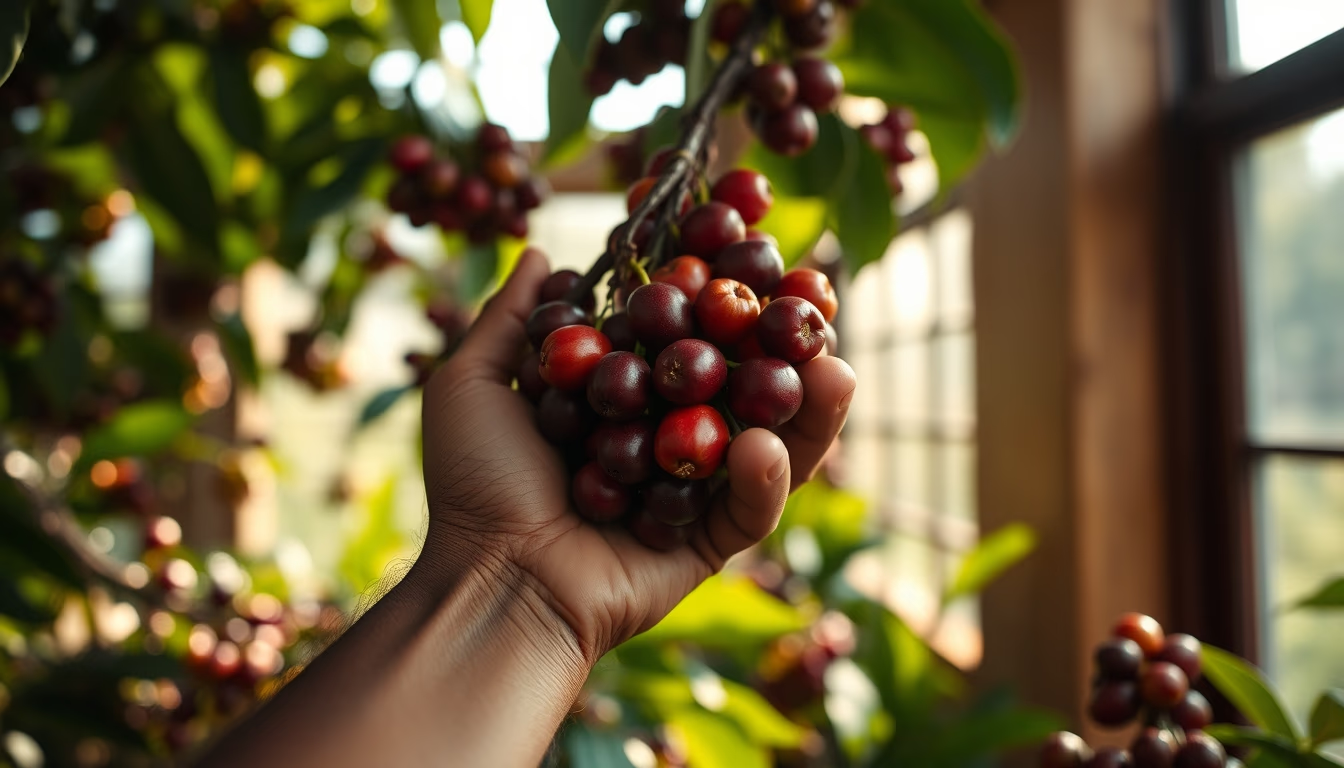
Rural worker hand-picks ripe coffee cherries on a Brazilian farm, an essential practice to ensure beverage quality.
About this subject
Manual coffee harvesting is a tradition dating back to the 18th century in Brazil, when the crop became an economic driver. Unlike mechanical harvesting, which knocks down both green and ripe fruits indiscriminately, hand selection allows only cherries at the ideal ripeness to be picked. This is crucial because coffee beans from unripe fruits impart astringency and grassy flavors to the beverage, while overripe ones can cause unwanted fermented notes. In Brazil, the world's largest coffee producer and exporter, manual harvesting still prevails in mountainous regions or on farms seeking quality certifications, such as those producing specialty coffees. The worker, usually equipped with a sieve or basket strapped to the waist, walks along the rows of coffee trees (Coffea arabica or Coffea canephora) and, with quick and precise movements, twists and pulls each ripe fruit. An experienced person can harvest 60 to 100 liters of cherries per day, depending on crop density. The activity is predominantly carried out in the early morning hours, when dew still moistens the leaves and fruits are more turgid, facilitating stem separation. Despite the advance of mechanization, selective hand harvesting remains valued for preserving bean integrity and enabling lot traceability, attributes increasingly demanded by the global consumer market.
Frequently Asked Questions
Why is manual coffee harvesting important for beverage quality?
Manual harvesting allows selecting only ripe cherries, avoiding green beans (which give grassy flavors) and overripe ones (which may ferment). This results in a more balanced, higher quality drink.
What is the average productivity of a worker in manual coffee harvesting?
An experienced worker harvests 60 to 100 liters of cherries per day, equivalent to about 12 to 20 kg of processed coffee, depending on the variety and field conditions.
At what time of day is manual coffee harvesting most common?
Usually in the early morning hours, when dew keeps fruits turgid and facilitates stem separation, while also avoiding the intense midday heat.
Direct URL
https://pub-c7d6a6ea828543ac903a74a341ccb2e1.r2.dev/imagens/coffee-plantation-worker-picking-ripe-coffee-cherries-by-hand-documentary-morning-4.avifHow to credit
Include a visible link back to UtilizAí. Copy one of the snippets below:
<a href="https://xn--utiliza-eza.com/en/midia/imagens/coffee-plantation-worker-picking-ripe-coffee-cherries-by-hand-documentary-morning-4">Coffee plantation worker picking ripe coffee cherries by hand</a> by <a href="https://xn--utiliza-eza.com">UtilizAí</a>, licensed under <a href="https://creativecommons.org/licenses/by/4.0/">CC BY 4.0</a>.
[Coffee plantation worker picking ripe coffee cherries by hand](https://xn--utiliza-eza.com/en/midia/imagens/coffee-plantation-worker-picking-ripe-coffee-cherries-by-hand-documentary-morning-4) by [UtilizAí](https://xn--utiliza-eza.com), CC BY 4.0
License: CC-BY-4.0