Coffee plantation worker picking ripe coffee cherries by hand
1344×768 · AVIF · CC BY 4.0
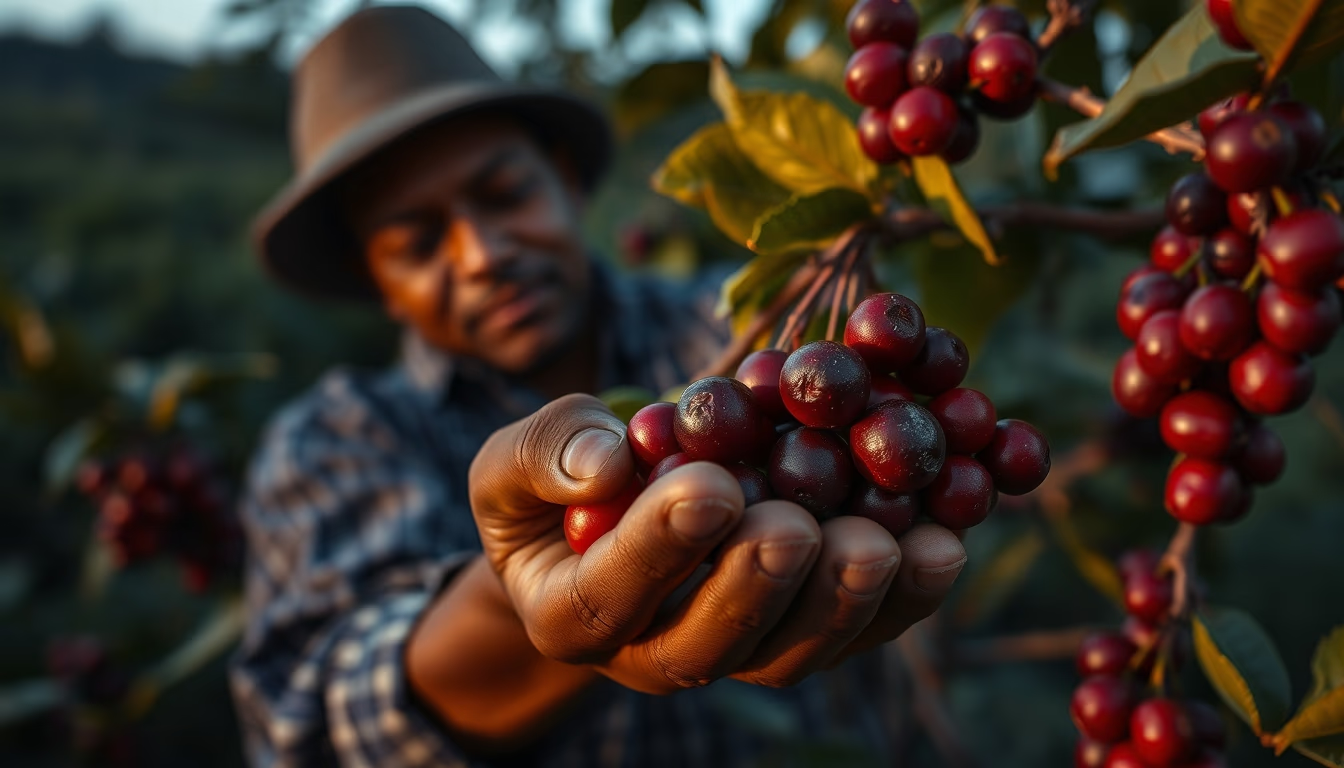
Manual coffee picker on a Brazilian farm harvesting ripe cherries at dusk, a common practice in the country's agribusiness.
About this subject
Manual coffee harvesting is a centuries-old tradition in Brazil, the world's largest producer and exporter of coffee. Despite increasing mechanization, crops in mountainous regions or family farms still rely on human labor to select only ripe fruits, ensuring superior quality. The worker, known as a 'picker' or 'harvester,' uses techniques such as 'derriçamento' (pulling branches) or selective picking, which requires skill to avoid damaging the branches. The choice of dusk is not random: cooler temperatures reduce thermal stress and dehydration, while providing better visibility of the red and yellow tones of ripe cherries. In Brazil, arabica coffee (Coffea arabica) predominates in regions such as Minas Gerais, São Paulo, and Espírito Santo, while robusta (Coffea canephora) is more common in Espírito Santo and Rondônia. Manual harvesting accounts for about 30% of national production, according to the National Supply Company (Conab), and is crucial for specialty coffees that require rigorous selection. The image captures a moment of direct connection between man and fruit, highlighting the importance of human labor in the Brazilian coffee supply chain.
Frequently Asked Questions
Why is manual harvesting still used in Brazil?
Manual harvesting is essential in mountainous areas where machines cannot operate, and for specialty coffees that require careful selection of ripe beans. About 30% of Brazilian production is still hand-picked.
What is the difference between arabica and robusta coffee?
Arabica (Coffea arabica) has a milder flavor and complex aroma, grown at high altitudes. Robusta (Coffea canephora) is more resistant, with higher caffeine content and a bitter taste, used in blends and instant coffee.
In which Brazilian regions is coffee most cultivated?
Minas Gerais leads production, followed by Espírito Santo, São Paulo, Bahia, and Rondônia. Arabica predominates in the Southeast and Midwest, while robusta is strong in Espírito Santo and the North.
Direct URL
https://pub-c7d6a6ea828543ac903a74a341ccb2e1.r2.dev/imagens/coffee-plantation-worker-picking-ripe-coffee-cherries-by-hand-closeup-twilight-2.avifHow to credit
Include a visible link back to UtilizAí. Copy one of the snippets below:
<a href="https://xn--utiliza-eza.com/en/midia/imagens/coffee-plantation-worker-picking-ripe-coffee-cherries-by-hand-closeup-twilight-2">Coffee plantation worker picking ripe coffee cherries by hand</a> by <a href="https://xn--utiliza-eza.com">UtilizAí</a>, licensed under <a href="https://creativecommons.org/licenses/by/4.0/">CC BY 4.0</a>.
[Coffee plantation worker picking ripe coffee cherries by hand](https://xn--utiliza-eza.com/en/midia/imagens/coffee-plantation-worker-picking-ripe-coffee-cherries-by-hand-closeup-twilight-2) by [UtilizAí](https://xn--utiliza-eza.com), CC BY 4.0
License: CC-BY-4.0