Coffee plantation worker picking ripe coffee cherries by hand
1344×768 · AVIF · CC BY 4.0
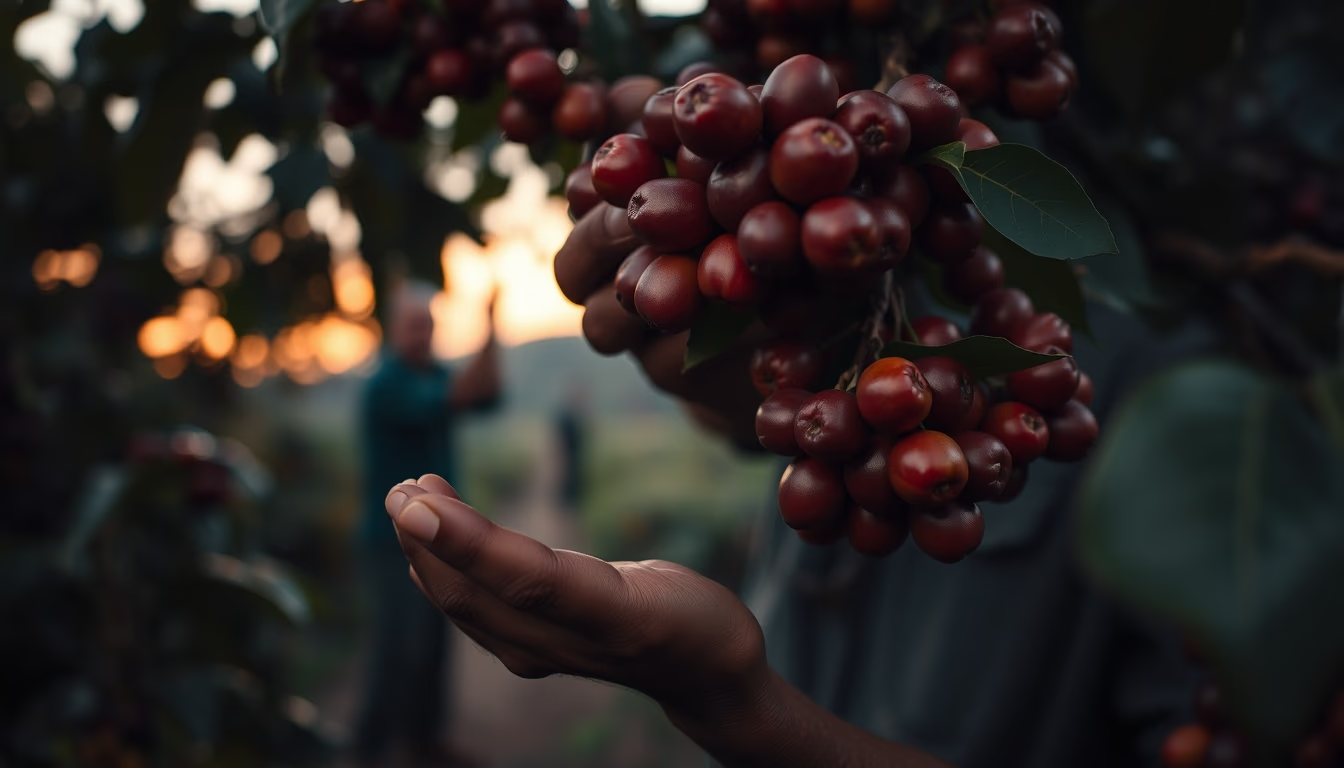
Rural worker handpicks ripe coffee cherries on a Brazilian farm, highlighting the tradition of selective harvesting.
About this subject
Manual coffee harvesting is a practice dating back to the early days of coffee farming in Brazil, still prevalent in mountainous regions and on farms that prioritize bean quality. Unlike mechanical harvesting, which strips all fruits at once, selective handpicking allows choosing only fruits at the ideal ripeness point, the so-called red or yellow cherries. This care is essential for producing specialty coffees, as green or overripe beans compromise the final beverage flavor.
The rural worker, often called a "picker" or "harvester," uses baskets or bags attached to the waist and walks through the coffee rows several times during the harvest season, which in Brazil occurs between May and September, depending on region and altitude. Each coffee tree can be visited three to five times throughout the season to ensure only ripe fruits are removed. This technique requires sharp visual and tactile knowledge, as the color and firmness of the skin indicate the exact harvesting moment.
Brazilian coffee farming is the largest in the world, accounting for about one-third of global production. The country grows both Coffea arabica, of higher value, and Coffea canephora (conilon/robusta). Manual harvesting, although more expensive and time-consuming, is valued by producers of gourmet and origin-controlled coffees, such as those from the Cerrado Mineiro, Alta Mogiana, and Serra da Mantiqueira regions. In these areas, specialized labor is a competitive advantage, and many workers are trained from a young age by their families.
Interestingly, manual harvesting also contributes to social sustainability by generating direct jobs in the countryside. In a country with great regional inequality, coffee farming temporarily employs thousands of people during the harvest, many coming from other regions. Despite technological advances, the figure of the manual picker remains a symbol of coffee tradition and the connection between people and the land.
Frequently Asked Questions
Why is manual coffee harvesting considered better for quality?
Manual harvesting allows selecting only ripe fruits (cherries), avoiding green or overripe beans that harm flavor. This is crucial for specialty coffees, which require uniform ripeness.
How many times is a coffee tree manually harvested during the season?
A single tree can be harvested three to five times throughout the season, as fruits do not ripen all at once. This selective harvesting ensures only fruits at the ideal point are picked.
What is the difference between arabica and conilon coffee in manual harvesting?
Arabica coffee, more prized, is usually handpicked in high-altitude regions. Conilon (robusta) is more resistant and often mechanically harvested, but can also be handpicked on small farms.
Direct URL
https://pub-c7d6a6ea828543ac903a74a341ccb2e1.r2.dev/imagens/coffee-plantation-worker-picking-ripe-coffee-cherries-by-hand-closeup-twilight.avifHow to credit
Include a visible link back to UtilizAí. Copy one of the snippets below:
<a href="https://xn--utiliza-eza.com/en/midia/imagens/coffee-plantation-worker-picking-ripe-coffee-cherries-by-hand-closeup-twilight">Coffee plantation worker picking ripe coffee cherries by hand</a> by <a href="https://xn--utiliza-eza.com">UtilizAí</a>, licensed under <a href="https://creativecommons.org/licenses/by/4.0/">CC BY 4.0</a>.
[Coffee plantation worker picking ripe coffee cherries by hand](https://xn--utiliza-eza.com/en/midia/imagens/coffee-plantation-worker-picking-ripe-coffee-cherries-by-hand-closeup-twilight) by [UtilizAí](https://xn--utiliza-eza.com), CC BY 4.0
License: CC-BY-4.0