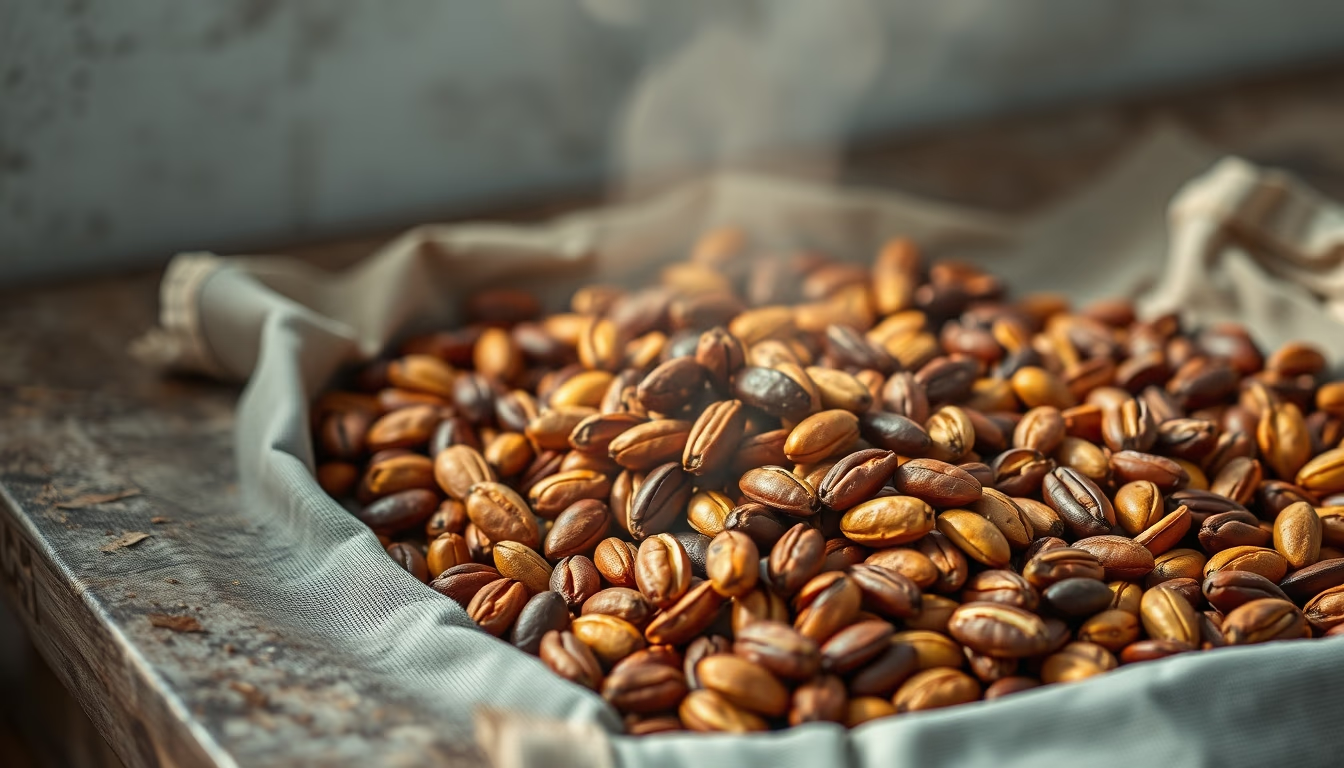
Cocoa beans drying
1344×768 · AVIF · CC BY 4.0
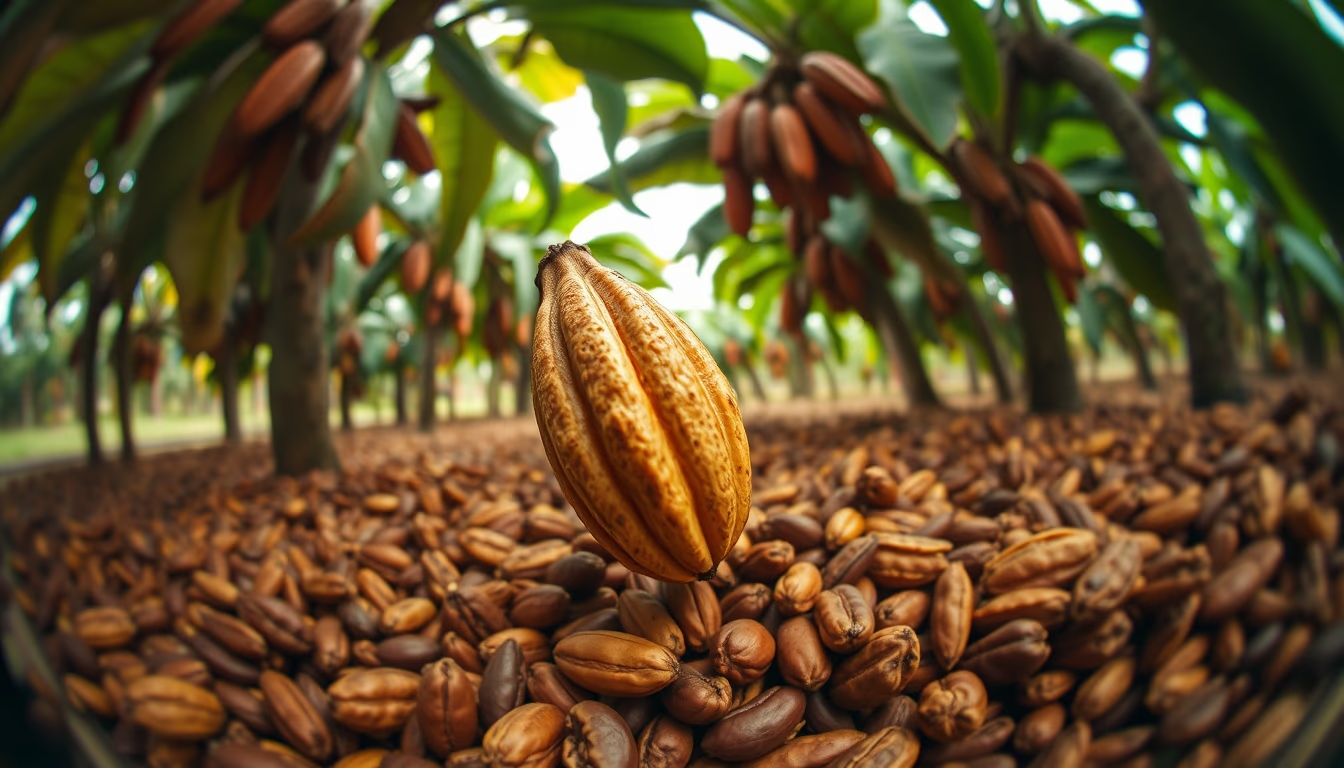
The drying process of cocoa beans is essential for developing chocolate flavor, reducing moisture and preparing beans for roasting.
About this subject
Cocoa bean drying occurs immediately after fermentation, a critical step for flavor precursor development. Traditionally done under the sun on large mats or wooden platforms, this practice is common in producing regions such as Bahia, Pará, and Ivory Coast. The process reduces moisture from 55-60% to 7-8%, taking 5 to 14 days depending on weather conditions. Farmers regularly turn the beans to ensure even drying and cover the rows with tarps in case of rain.
Technically, drying stops fermentation and fixes aromatic compounds. The speed and method directly influence acidity and sensory profile: overly fast drying can retain unwanted acidity, while too slow drying encourages fungal growth. Therefore, many artisanal producers prefer solar drying, which better preserves fruity and floral aromas, while mechanical dryers are used on a large scale for greater control and speed.
Interestingly, cocoa beans were once used as currency by the Aztecs, and drying quality was so valued that poorly dried batches lost trade value. Today, proper drying is a hallmark of fine cocoa, sold at premium prices. In Brazil, cocoa production holds strong cultural and economic significance, especially in southern Bahia, where the combination of sun and shade from cabruca systems creates ideal conditions.
Cocoa bean drying is thus a process blending tradition and science, directly impacting final chocolate quality. From small family farmers to large estates, care during drying defines the aromatic potential and purity of the product.
Frequently Asked Questions
Why do cocoa beans need to be dried?
To reduce moisture from about 55-60% to 7-8%, preventing mold and fungal growth, and stabilizing the flavor compounds developed during fermentation.
How long does cocoa bean drying take?
Under ideal sunny conditions, drying takes 5 to 14 days. The duration varies with temperature, humidity, and bean layer thickness.
Is there a difference between sun drying and mechanical drying?
Yes. Sun drying, more traditional, better preserves fruity and floral aromas but depends on weather. Mechanical drying is faster and more controlled, but may result in less complex sensory profiles.
Direct URL
https://pub-c7d6a6ea828543ac903a74a341ccb2e1.r2.dev/imagens/cocoa-beans-drying-fish-eye-wide-angle-fresh8.avifHow to credit
Include a visible link back to UtilizAí. Copy one of the snippets below:
<a href="https://xn--utiliza-eza.com/en/midia/imagens/cocoa-beans-drying-fish-eye-wide-angle-fresh8">Cocoa beans drying</a> by <a href="https://xn--utiliza-eza.com">UtilizAí</a>, licensed under <a href="https://creativecommons.org/licenses/by/4.0/">CC BY 4.0</a>.
[Cocoa beans drying](https://xn--utiliza-eza.com/en/midia/imagens/cocoa-beans-drying-fish-eye-wide-angle-fresh8) by [UtilizAí](https://xn--utiliza-eza.com), CC BY 4.0
License: CC-BY-4.0