Cobbler workbench
1344×768 · AVIF · CC BY 4.0

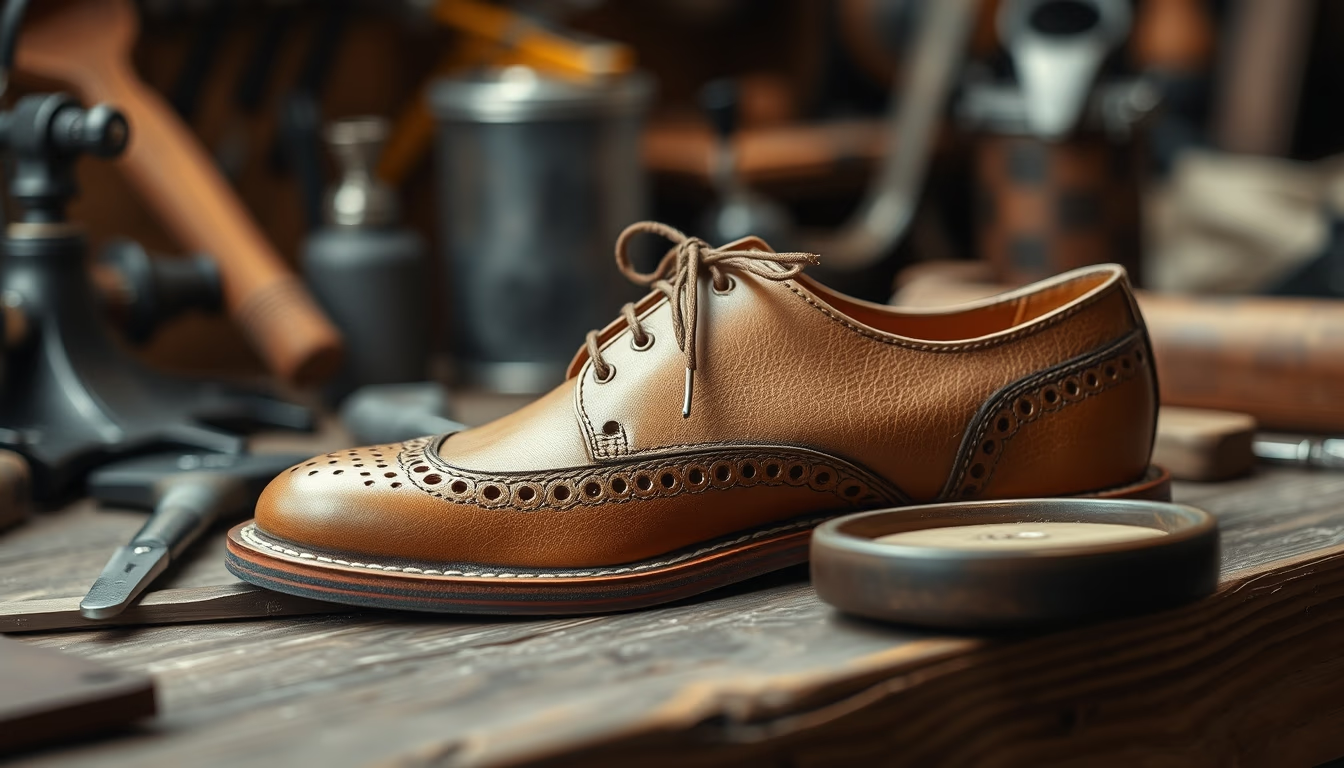
A cobbler's workbench with traditional tools unveils the secrets of the centuries-old craft of shoe repair and making.
About this subject
The craft of cobbling is one of the oldest in the world, with records dating back to Ancient Egypt, where leather sandals were already produced. In many cultures, the cobbler was a vital community member, maintaining footwear for all social classes. A typical cobbler's workbench contains hand tools that have changed little over centuries: hammers, wooden lasts, awls, waxed threads, nails, and specific adhesives.
Among the most iconic tools is the shoe last, a wooden form shaped like a foot that serves as a mold for shaping the shoe. The awl is used to pierce leather, allowing hand stitching with waxed thread. The cobbler's hammer has two faces: one for striking and one for smoothing. Modern contact glue is common, but many techniques still avoid adhesives, such as the Goodyear welt construction, which stitches the sole to the upper with threads.
The repair process begins with damage assessment. To replace a sole, the cobbler removes the worn sole with pliers, sands the surface, applies glue, and presses the new rubber or leather sole. For finer shoes, the sole is hand-stitched with a chain stitch. Heels can be reinforced with small metal or plastic tacks. Each step requires precision and knowledge of materials.
Culturally, cobblers represent the resilience of craftsmanship in an industrialized world. Despite factory advancements, many people prefer repairing quality footwear rather than discarding it, valuing manual labor. In some countries, cobbler appreciation days exist. Interestingly, the term "cobbler" also refers to a type of fruit dessert, but in footwear, it derives from the Old French "cobel" meaning a shoemaker.
Frequently Asked Questions
What are the main tools of a cobbler?
The main tools are: hammer, wooden shoe last, awl, waxed thread, pliers, leather scissors, nails, and contact glue.
How is a sole repair done?
First, the old sole is removed with pliers, then the surface is sanded, glue is applied, and the new sole is pressed on. In quality shoes, the sole is hand-stitched with waxed thread.
What is the difference between a cobbler and a shoemaker?
Shoemaker traditionally refers to someone who makes shoes from scratch, while a cobbler primarily repairs footwear. In modern usage, the terms often overlap.
Direct URL
https://pub-c7d6a6ea828543ac903a74a341ccb2e1.r2.dev/imagens/cobbler-workbench-isometric-flat-lay-fresh10.avifHow to credit
Include a visible link back to UtilizAí. Copy one of the snippets below:
<a href="https://xn--utiliza-eza.com/en/midia/imagens/cobbler-workbench-isometric-flat-lay-fresh10">Cobbler workbench</a> by <a href="https://xn--utiliza-eza.com">UtilizAí</a>, licensed under <a href="https://creativecommons.org/licenses/by/4.0/">CC BY 4.0</a>.
[Cobbler workbench](https://xn--utiliza-eza.com/en/midia/imagens/cobbler-workbench-isometric-flat-lay-fresh10) by [UtilizAí](https://xn--utiliza-eza.com), CC BY 4.0
License: CC-BY-4.0