Cinema theater empty seats
1344×768 · AVIF · CC BY 4.0
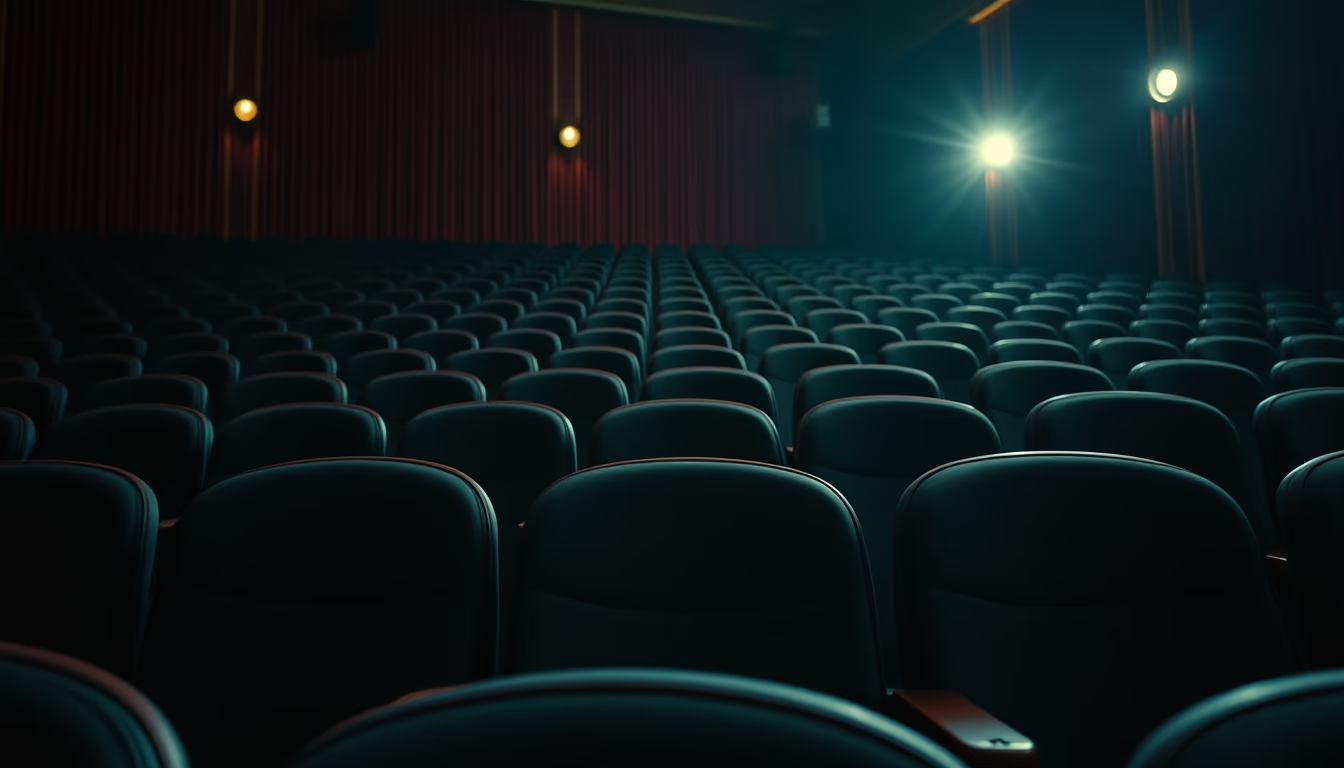
The image of an empty cinema theater evokes the quiet atmosphere before a screening, with rows of seats awaiting the audience.
About this subject
Movie theater auditoriums are designed for immersive experiences, and the seats play a crucial role. Traditionally, seats are arranged in curved rows to optimize viewing angles relative to the screen, a technique known as fan layout or stadium seating. This configuration, adopted since the 1920s, replaced older straight rows and ensures unobstructed views for every patron. Seats have evolved from simple wooden chairs to upholstered recliners with cup holders, reflecting the pursuit of comfort and competition with home entertainment.
The quiet of an empty auditorium contrasts with the bustle just before a film starts, when the audience fills the seats and chatter fills the air. This empty moment also allows appreciation of the space's architecture: sloping floors, acoustics designed to isolate external noise, and indirect lighting that guides eyes to the screen. Large chains like Cinemark and AMC standardize these elements, but independent and historic theaters, such as the Fox Theatre in Atlanta, retain unique features like vintage seats and art deco decor.
Cinema attendance in the U.S. peaked in the 1940s and has fluctuated since. In 2023, total box office revenue reached about $9 billion, still below pre-pandemic levels. The image of empty seats evokes both lockdown periods and the post-pandemic reality of sparser audiences. Matinee showings on weekdays often see low occupancy, a phenomenon cherished by movie buffs who enjoy a nearly private screening.
Technical curiosity: seat tilt angles (typically 5 to 10 degrees) and row spacing (minimum 40 inches) are calculated so that the screen occupies at least 30 degrees of the viewer's horizontal field of view, as recommended by the Society of Motion Picture and Television Engineers (SMPTE). These invisible details are essential for cinematic immersion.
Frequently Asked Questions
Why are movie theater seats tilted backward?
The slight recline (typically 5 to 10 degrees) helps maintain a comfortable head position and aligns the gaze with the screen center, reducing neck strain during the film.
What is the difference between 'stadium seating' and traditional layout?
Stadium seating features stepped rows, so each row is elevated above the one in front, preventing heads from blocking views. Traditional layout uses a continuous sloping floor but may still have sightline issues.
How do I choose the best seat in a movie theater?
The optimal spot is usually center row, at a distance of about 2 to 3 times the screen height. In stadium seating, middle to upper rows provide the best angle and comfort.
Direct URL
https://pub-c7d6a6ea828543ac903a74a341ccb2e1.r2.dev/imagens/cinema-theater-empty-seats-lo-fi-disposable-camera-p3.avifHow to credit
Include a visible link back to UtilizAí. Copy one of the snippets below:
<a href="https://xn--utiliza-eza.com/en/midia/imagens/cinema-theater-empty-seats-lo-fi-disposable-camera-p3">Cinema theater empty seats</a> by <a href="https://xn--utiliza-eza.com">UtilizAí</a>, licensed under <a href="https://creativecommons.org/licenses/by/4.0/">CC BY 4.0</a>.
[Cinema theater empty seats](https://xn--utiliza-eza.com/en/midia/imagens/cinema-theater-empty-seats-lo-fi-disposable-camera-p3) by [UtilizAí](https://xn--utiliza-eza.com), CC BY 4.0
License: CC-BY-4.0