Chocolate tempering marble
1344×768 · AVIF · CC BY 4.0
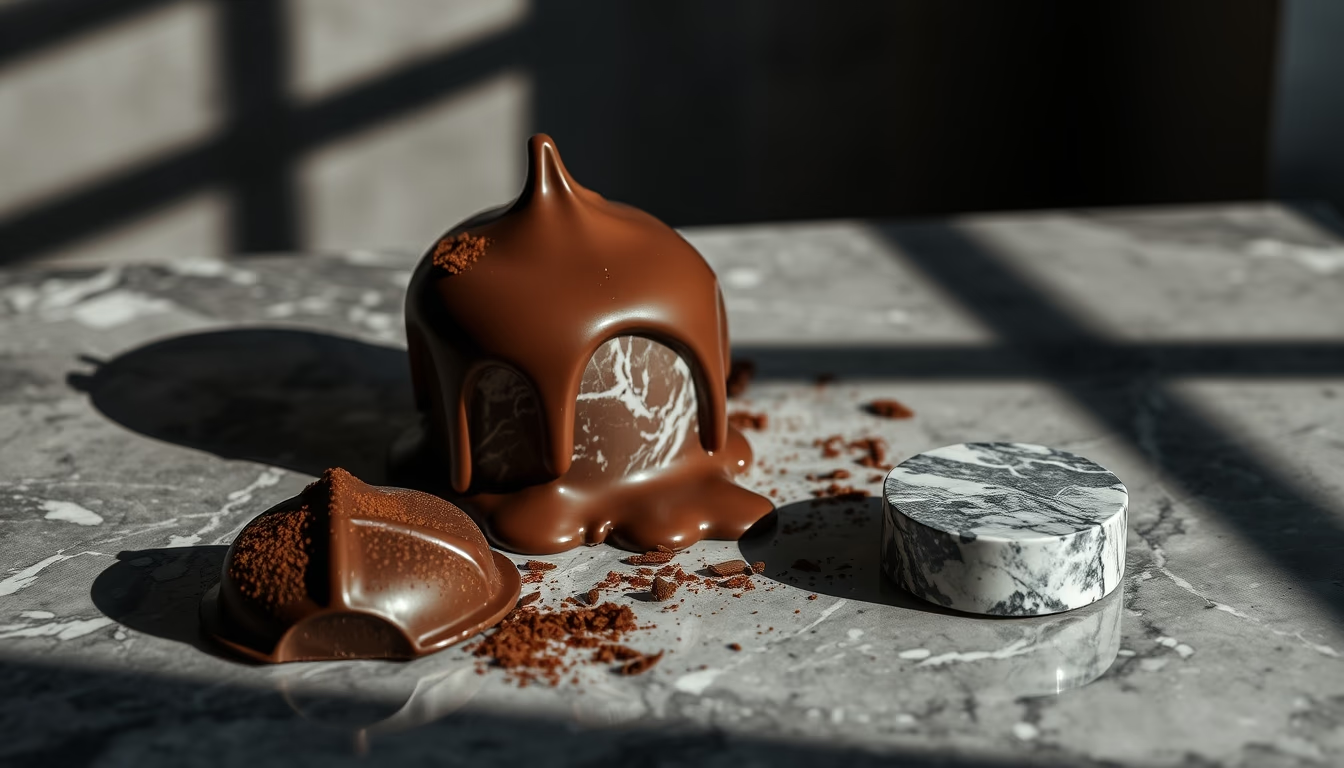
The chocolate tempering marble is an essential tool in professional confectionery, combining thermal conductivity and a smooth surface for ideal crystallization.
About this subject
Marble is the preferred material for chocolate tempering due to its ability to absorb and dissipate heat quickly and uniformly. During the process, melted chocolate is spread on the cold stone surface and worked with spatulas to reach the crystallization temperature, which varies between 31°C and 33°C for milk chocolate and 32°C to 34°C for dark chocolate. Marble's thermal inertia helps stabilize cocoa butter, ensuring shine, snap, and melt resistance.
In practice, the pastry chef pours about two-thirds of the chocolate onto the table and moves it with constant motions while monitoring temperature with an infrared thermometer. When the chocolate reaches the ideal range, it is collected and mixed with the remaining third still melted, avoiding supercooling. The smooth, non-porous surface prevents contamination and makes cleaning easy, while providing the necessary contrast to check the texture and gloss of tempered chocolate.
The choice of marble is not random: its density and mineral composition (calcium carbonate) offer a thermal conductivity of about 2.5 W/mK, higher than common granites and stainless steels. Marble tables for chocolate are usually 3 to 5 cm thick to maintain stable temperature. Traditional chocolatiers in Belgium and Switzerland have used these tables for centuries, and the manual method is still valued for allowing fine control over crystallization, resulting in professional-grade chocolate.
Although tempering machines exist, the marble technique is considered the most artisanal and effective for small-scale production. Dramatic lighting contrasts, such as Rembrandt chiaroscuro, enhance the glossy texture of chocolate against the cold stone background, highlighting temper quality. This method is also used in pastry classes to demonstrate the exact crystallization point.
Frequently Asked Questions
Why is marble ideal for tempering chocolate?
Marble has high thermal conductivity and thermal inertia, allowing rapid and even cooling of chocolate. Its smooth, non-porous surface facilitates handling and prevents contamination, being essential for stable crystallization of cocoa butter.
What is the ideal temperature for tempering milk chocolate?
Milk chocolate should be tempered between 31°C and 33°C. After melting at 45°C, it is cooled on the marble to this range, where cocoa butter crystals form correctly.
Can I use another material besides marble for tempering chocolate?
Granite and stainless steel can be used, but marble is superior due to its combination of thermal conductivity and ability to maintain stable temperature. Materials like plastic or glass do not work well because of low conductivity.
Direct URL
https://pub-c7d6a6ea828543ac903a74a341ccb2e1.r2.dev/imagens/chocolate-tempering-marble-rembrandt-lighting-dramatic-shadows-fresh14.avifHow to credit
Include a visible link back to UtilizAí. Copy one of the snippets below:
<a href="https://xn--utiliza-eza.com/en/midia/imagens/chocolate-tempering-marble-rembrandt-lighting-dramatic-shadows-fresh14">Chocolate tempering marble</a> by <a href="https://xn--utiliza-eza.com">UtilizAí</a>, licensed under <a href="https://creativecommons.org/licenses/by/4.0/">CC BY 4.0</a>.
[Chocolate tempering marble](https://xn--utiliza-eza.com/en/midia/imagens/chocolate-tempering-marble-rembrandt-lighting-dramatic-shadows-fresh14) by [UtilizAí](https://xn--utiliza-eza.com), CC BY 4.0
License: CC-BY-4.0