Chocolate tempering marble
1344×768 · AVIF · CC BY 4.0
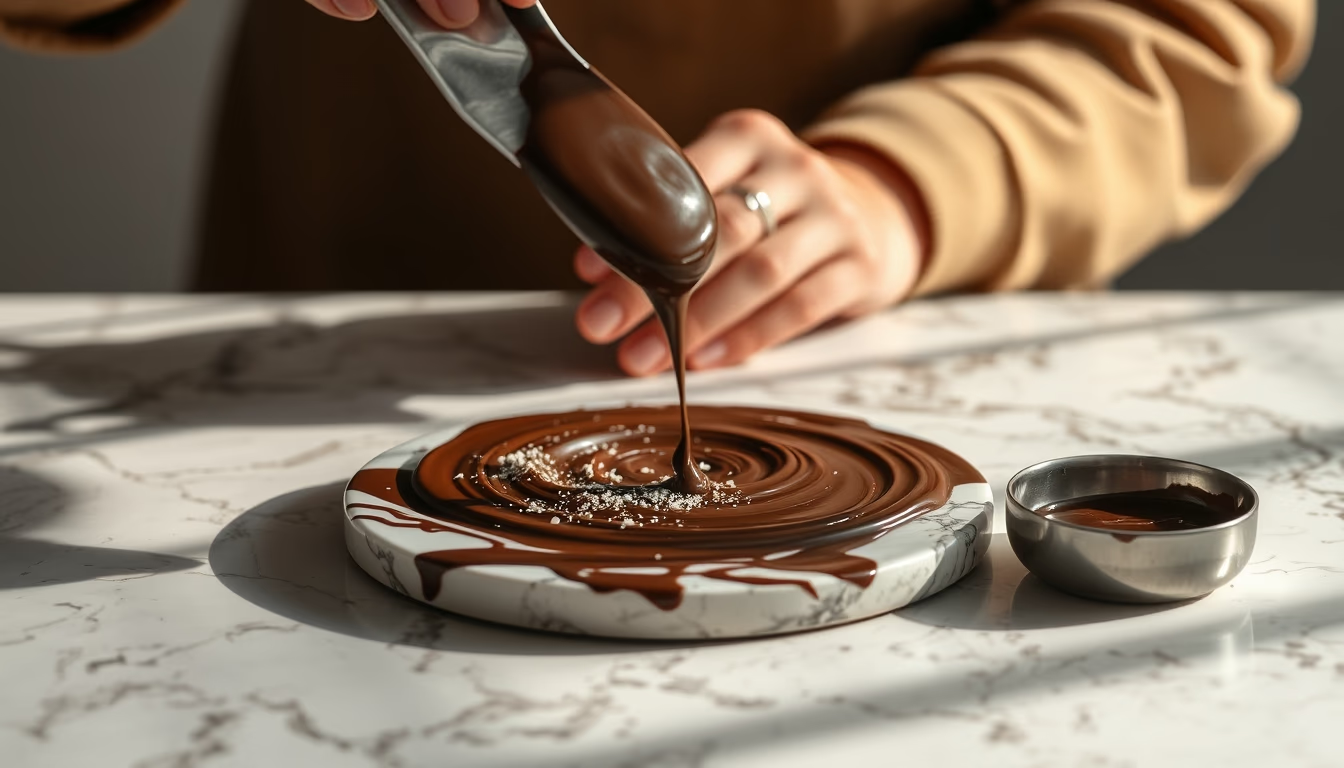
A marble tempering slab is an essential tool in artisanal chocolate making, ensuring perfect texture and shine.
About this subject
A marble tempering slab is a natural stone plate widely used by chocolatiers to stabilize melted chocolate. Tempering is the controlled cooling process that aligns cocoa butter crystals, resulting in a shiny, snappy, and melt-in-the-mouth final product. Marble is chosen for its high thermal mass and conductivity: the stone absorbs and dissipates heat evenly, accelerating cooling without thermal shock.
In the classic method, chocolate is melted to about 45°C, then poured onto the marble and spread with spatulas. Contact with the cold surface rapidly lowers the temperature, while continuous movement prevents unwanted crystal formation. When it reaches working temperature (32°C for milk chocolate, 31°C for dark, 30°C for white), it is scraped up and used.
The marble slab is preferred over other surfaces because it doesn't react chemically with chocolate, is easy to clean, and maintains a stable temperature longer. Its smooth, non-porous surface avoids contamination. Many chocolatiers consider this artisanal technique superior to automated methods, as it allows greater visual and tactile control during the process.
Interestingly, tempering marble often comes from regions like Carrara, Italy, known for stone purity. In Brazil, quarries such as those in Cachoeiro do Itapemirim (ES) also produce high-quality marble. Ideal thickness is between 2 and 3 centimeters to balance weight and thermal conduction.
Frequently Asked Questions
Why is marble used for tempering chocolate?
Marble has high thermal mass and conductivity, allowing rapid and even cooling of chocolate. Its non-porous surface also prevents contamination and is easy to clean.
What is the ideal marble temperature for tempering?
The marble should be at room temperature, typically between 20°C and 22°C. If too cold, chocolate may crystallize quickly; if too warm, it won't cool properly.
Can I use another surface instead of marble?
Granite or stainless steel can be used, but marble is preferred for its ideal balance of thermal conductivity, chemical inertness, and ease of handling. Surfaces like plastic or glass do not work well.
Direct URL
https://pub-c7d6a6ea828543ac903a74a341ccb2e1.r2.dev/imagens/chocolate-tempering-marble-magazine-editorial-fresh2.avifHow to credit
Include a visible link back to UtilizAí. Copy one of the snippets below:
<a href="https://xn--utiliza-eza.com/en/midia/imagens/chocolate-tempering-marble-magazine-editorial-fresh2">Chocolate tempering marble</a> by <a href="https://xn--utiliza-eza.com">UtilizAí</a>, licensed under <a href="https://creativecommons.org/licenses/by/4.0/">CC BY 4.0</a>.
[Chocolate tempering marble](https://xn--utiliza-eza.com/en/midia/imagens/chocolate-tempering-marble-magazine-editorial-fresh2) by [UtilizAí](https://xn--utiliza-eza.com), CC BY 4.0
License: CC-BY-4.0