Chocolate tempering marble
1344×768 · AVIF · CC BY 4.0
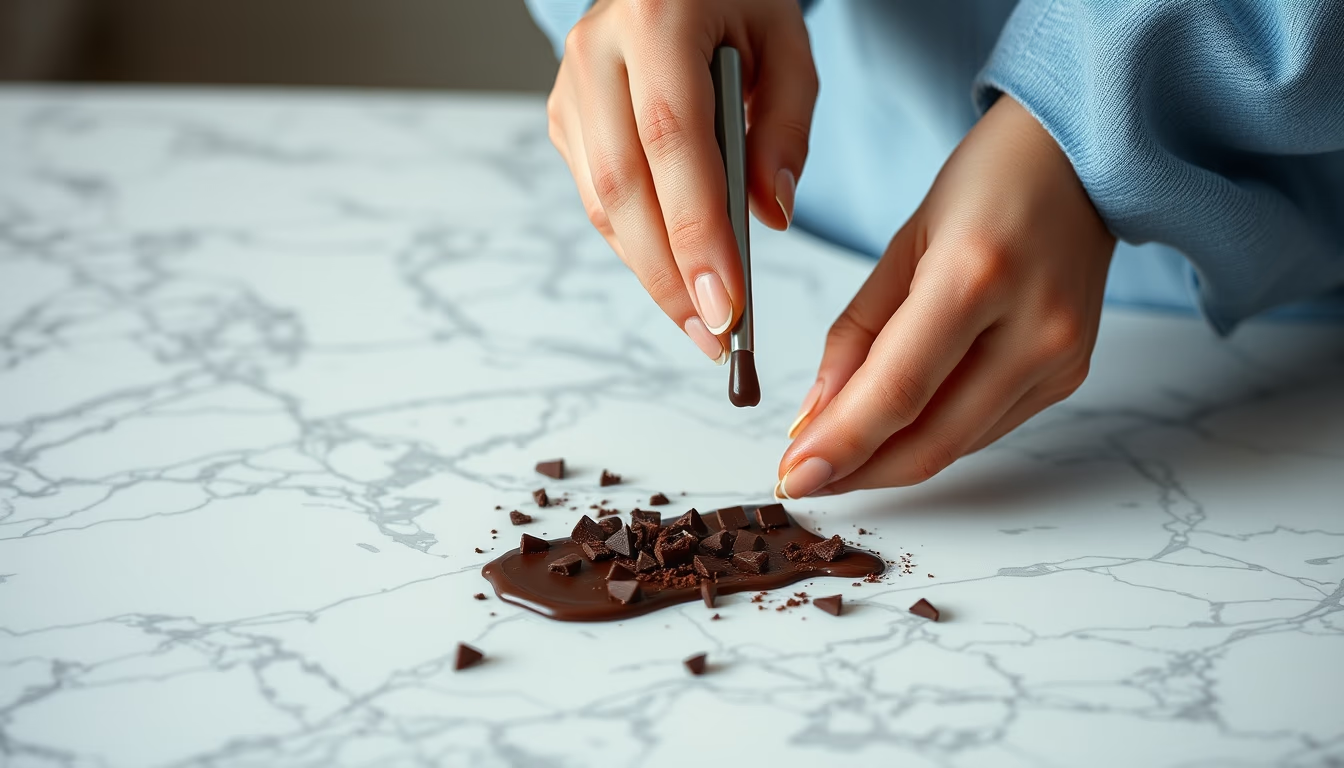
Chocolate tempering marble: essential surface for crystallizing cocoa butter, giving shine and snap.
About this subject
Chocolate tempering is a thermal process that stabilizes cocoa butter, ensuring the final chocolate has shine, a clean snap, and resistance to fat bloom. The marble slab is traditionally used for this process due to its high heat absorption capacity: marble quickly conducts heat away from melted chocolate, allowing it to cool evenly. The chocolatier pours the chocolate onto the marble surface and, using spatulas, spreads and scrapes it repeatedly, controlling the temperature until it reaches the ideal crystallization range, typically between 31°C and 32°C for milk chocolate and 32°C to 33°C for dark chocolate.
The technique, known as tablierage, requires practice and precision. As the chocolate cools on marble, the cocoa butter molecules form stable crystals (beta V forms), responsible for the smooth texture and characteristic snap when broken. Without this step, the chocolate may become dull, grainy, or melt easily. Marble is preferred over other materials like granite or stainless steel because of its combination of hardness, low porosity, and moderate thermal conductivity, not too fast, not too slow.
Historically, the use of marble in confectionery dates back to 19th century Europe, especially France and Switzerland, where chocolatiers developed manual tempering methods. Today, although automatic tempering machines exist, many chefs and artisans still prefer marble for the visual and tactile control it provides over the process. In Brazil, marble slabs are found in artisanal chocolate workshops and pastry courses, symbolizing tradition and quality. The surface must be clean and dry, and the environment should be climate-controlled to avoid sudden temperature fluctuations.
Interestingly, not all marble stones are suitable for tempering: those with fine grain and no deep veins are best, as they prevent contamination and facilitate cleaning. The ideal room temperature for working with chocolate on marble is around 20°C to 22°C, with low humidity. The tempering marble has become a visual icon of artisanal chocolate, as important as the chocolate itself.
Frequently Asked Questions
Why is marble used for tempering chocolate?
Marble has high thermal conductivity, quickly absorbing heat from melted chocolate, allowing uniform and controlled cooling that is essential for stable crystallization of cocoa butter.
What is the ideal temperature for tempering chocolate on marble?
For dark chocolate, between 32°C and 33°C; for milk chocolate, between 31°C and 32°C; and for white chocolate, between 29°C and 30°C. The marble helps maintain the temperature during the process.
What is the tablierage method?
Tablierage is a manual tempering technique where chocolate is spread on a marble slab with spatulas and scraped repeatedly until it reaches the crystallization temperature, forming stable crystals.
Direct URL
https://pub-c7d6a6ea828543ac903a74a341ccb2e1.r2.dev/imagens/chocolate-tempering-marble-film-grain-authentic-fresh7.avifHow to credit
Include a visible link back to UtilizAí. Copy one of the snippets below:
<a href="https://xn--utiliza-eza.com/en/midia/imagens/chocolate-tempering-marble-film-grain-authentic-fresh7">Chocolate tempering marble</a> by <a href="https://xn--utiliza-eza.com">UtilizAí</a>, licensed under <a href="https://creativecommons.org/licenses/by/4.0/">CC BY 4.0</a>.
[Chocolate tempering marble](https://xn--utiliza-eza.com/en/midia/imagens/chocolate-tempering-marble-film-grain-authentic-fresh7) by [UtilizAí](https://xn--utiliza-eza.com), CC BY 4.0
License: CC-BY-4.0