Centenary olive tree spain
1344×768 · AVIF · CC BY 4.0
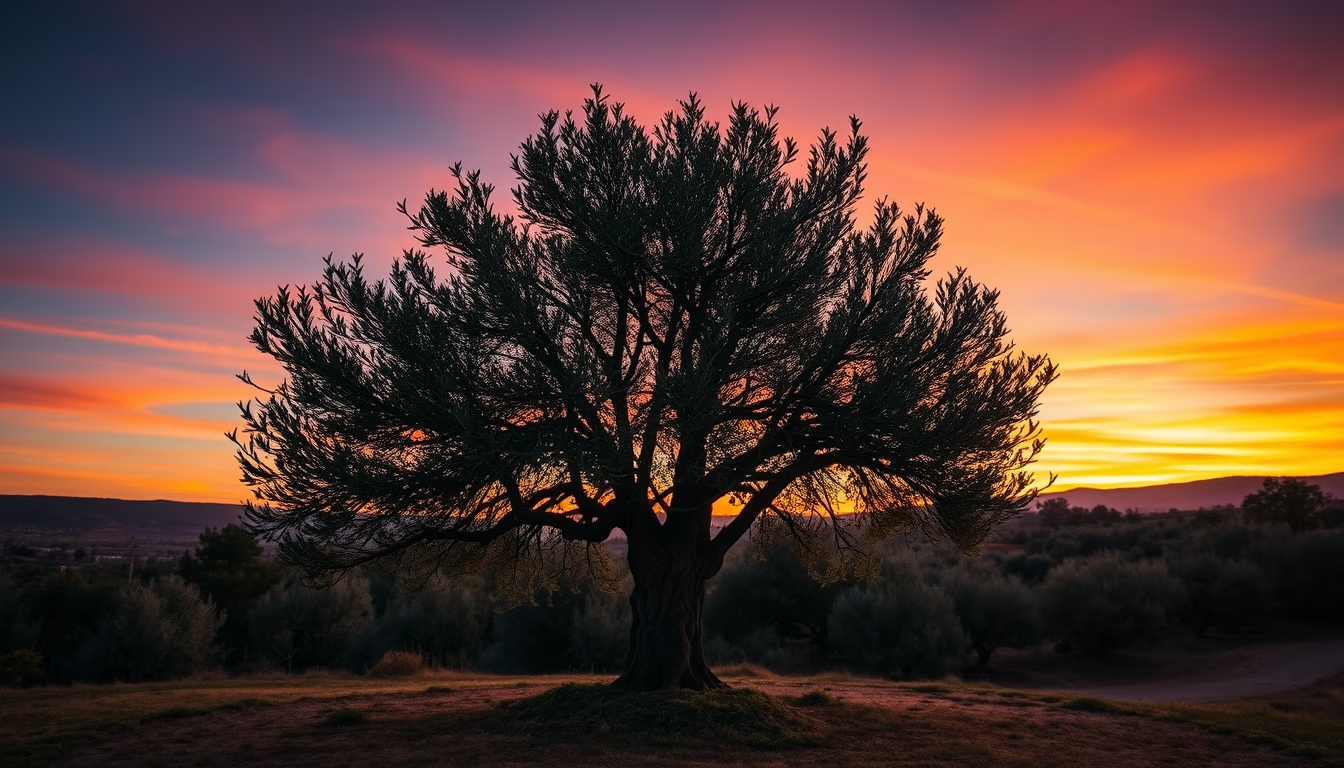
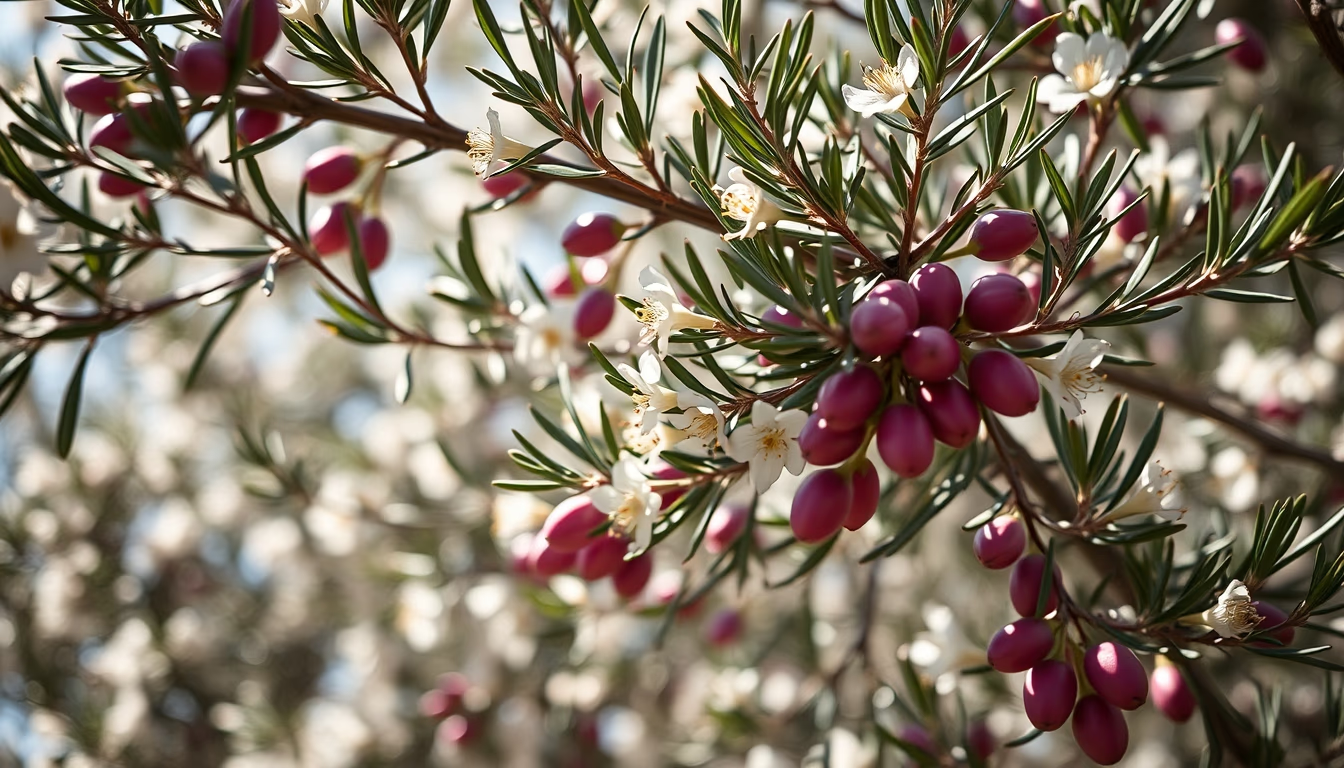
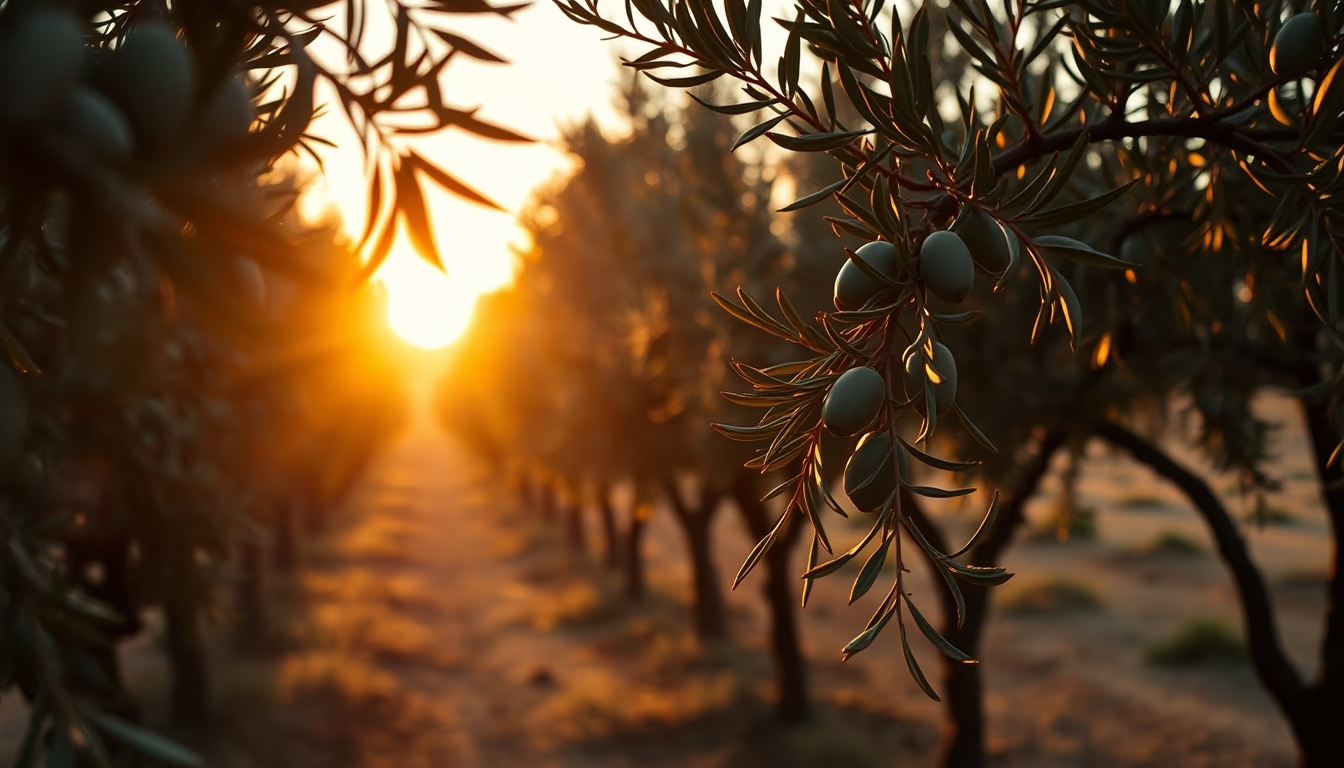
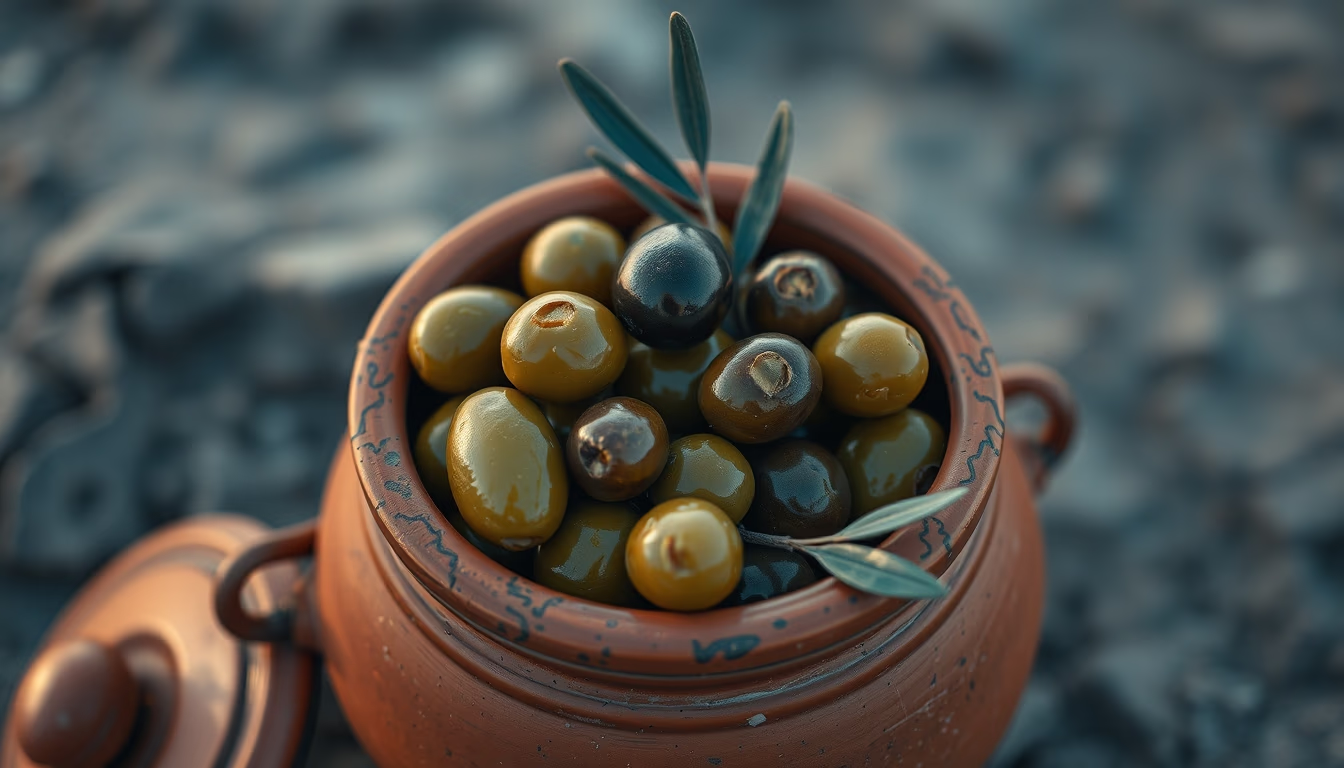
Centenary olive trees in Spain, symbols of resilience and high-quality olive oil production, with roots in Mediterranean history.
About this subject
Centenary olive trees are living witnesses to Spain's agricultural history. Trees over 100 years old are mainly found in Andalusia, especially in the provinces of Jaén, Córdoba, and Seville, but also in the Valencian Community and Catalonia. The Picual variety is the most common among these ancient specimens, responsible for the majority of Spanish olive oil production.
The olive-growing heritage dates back to the Phoenicians and Romans, who introduced and expanded cultivation on the Iberian Peninsula. Some olive trees reach estimated ages of thousands of years, such as the 'Olive Tree of Fuentebuena' in Córdoba, around 1,200 years old. These trees not only produce olives with intense flavor but also represent an invaluable cultural and landscape heritage.
Economically, Spain is the world leader in olive oil production, accounting for about 40% of global output. Centenary olive trees, though less productive than younger ones, yield extremely high-quality oil with unique sensory characteristics prized by chefs and demanding consumers. Many of these trees are protected by regional laws that prohibit removal and encourage preservation.
Culturally, the olive tree is a symbol of peace, longevity, and connection to the land. In Spain, festivals and tourist routes, such as the 'Oil Route' in Jaén, celebrate this heritage. The long-exposure technique used to photograph these trees highlights their textures and twisted shapes, poetically capturing the passage of time.
Frequently Asked Questions
What is the minimum age for an olive tree to be considered centenary?
An olive tree is considered centenary when it surpasses 100 years of age. Many Spanish olive trees are between 100 and 300 years old, but some exceed a thousand years.
Where are the oldest olive trees in Spain located?
The oldest olive trees are in Andalusia, especially in Jaén and Córdoba. The Olive Tree of Fuentebuena in Córdoba, around 1,200 years old, is a notable example.
Why are centenary olive trees protected by law?
They are protected due to their historical, cultural, and environmental value. Additionally, they produce high-quality olive oil, and their preservation ensures the continuity of a unique heritage.
Direct URL
https://pub-c7d6a6ea828543ac903a74a341ccb2e1.r2.dev/imagens/centenary-olive-tree-spain-long-exposure-p8.avifHow to credit
Include a visible link back to UtilizAí. Copy one of the snippets below:
<a href="https://xn--utiliza-eza.com/en/midia/imagens/centenary-olive-tree-spain-long-exposure-p8">Centenary olive tree spain</a> by <a href="https://xn--utiliza-eza.com">UtilizAí</a>, licensed under <a href="https://creativecommons.org/licenses/by/4.0/">CC BY 4.0</a>.
[Centenary olive tree spain](https://xn--utiliza-eza.com/en/midia/imagens/centenary-olive-tree-spain-long-exposure-p8) by [UtilizAí](https://xn--utiliza-eza.com), CC BY 4.0
License: CC-BY-4.0