Cell animation paper
1344×768 · AVIF · CC BY 4.0

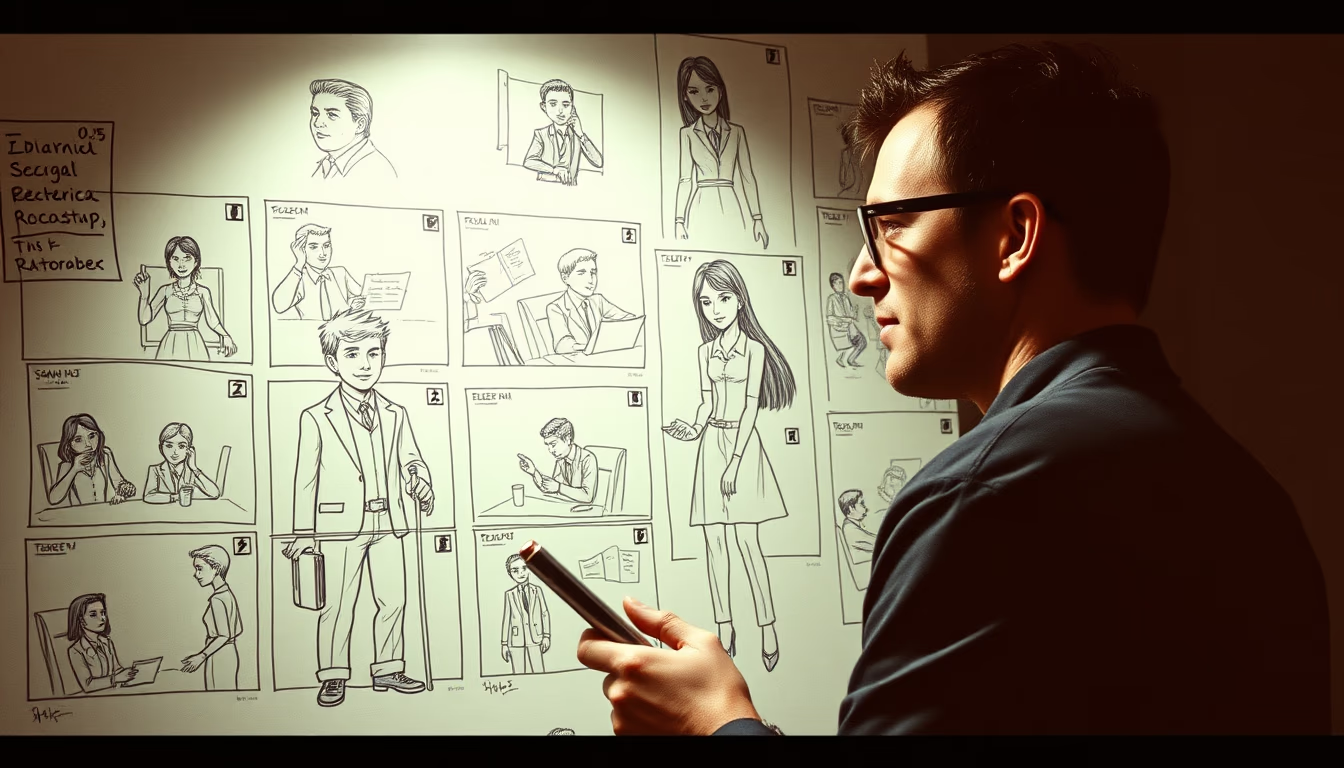
Cell animation paper is a special type of perforated sheet used by animators to draw sequential frames with precise registration.
About this subject
Cell animation paper, also known as punched animation paper, is an essential material in traditional hand-drawn animation. Unlike ordinary paper, it has standard pre-punched holes that fit onto registration pegs on a light table, ensuring every drawing in a sequence is perfectly aligned. This alignment is crucial for creating smooth motion without jitter or drift.
The use of this paper dates back to the early 20th century, coinciding with the industrialization of cartoon production. Studios like Walt Disney Productions and Fleischer Studios standardized perforated paper to streamline the workflow. The paper was typically white and slightly translucent, allowing animators to trace previous frames via backlighting. Its weight usually ranged from 60 to 90 gsm, suitable for pencil tests and final linework.
Historically, animation paper worked hand-in-hand with acetate cels. The paper held the pencil drawings, roughs, clean-ups, and in-betweens, while the cels were painted and layered for the final scene. Iconic films such as "Snow White and the Seven Dwarfs" (1937) and "The Lion King" (1994) were created using thousands of these sheets. At 24 frames per second, a minute of animation could require over 1,440 individual drawings.
In the digital age, most mainstream animation has shifted to paperless workflows, but many independent animators and niche studios still prefer paper for its tactile feedback and traditional aesthetic. Original animation paper from famous productions has become a collector's item, often authenticated and sold at auctions. Furthermore, paper is recyclable and biodegradable, offering an environmental advantage over the plastic cels used in earlier decades.
Frequently Asked Questions
What is the difference between animation paper and regular paper?
Animation paper has standard pre-punched holes that fit onto registration pegs, ensuring all drawings in a scene are aligned. It is also slightly translucent to facilitate tracing previous frames.
How do animators use animation paper?
Animators place the perforated paper on a light table and draw frame by frame, using the holes to maintain position. They first create keyframes, then in-betweens, checking motion by overlaying sheets.
Is animation paper still used in the modern industry?
Yes, although digital animation dominates, many independent artists and studios continue to use traditional paper for its tactile quality. It is also common in animation schools for teaching fundamentals.
Direct URL
https://pub-c7d6a6ea828543ac903a74a341ccb2e1.r2.dev/imagens/cell-animation-paper-long-exposure-fresh18.avifHow to credit
Include a visible link back to UtilizAí. Copy one of the snippets below:
<a href="https://xn--utiliza-eza.com/en/midia/imagens/cell-animation-paper-long-exposure-fresh18">Cell animation paper</a> by <a href="https://xn--utiliza-eza.com">UtilizAí</a>, licensed under <a href="https://creativecommons.org/licenses/by/4.0/">CC BY 4.0</a>.
[Cell animation paper](https://xn--utiliza-eza.com/en/midia/imagens/cell-animation-paper-long-exposure-fresh18) by [UtilizAí](https://xn--utiliza-eza.com), CC BY 4.0
License: CC-BY-4.0