Cave painting lascaux
1344×768 · AVIF · CC BY 4.0
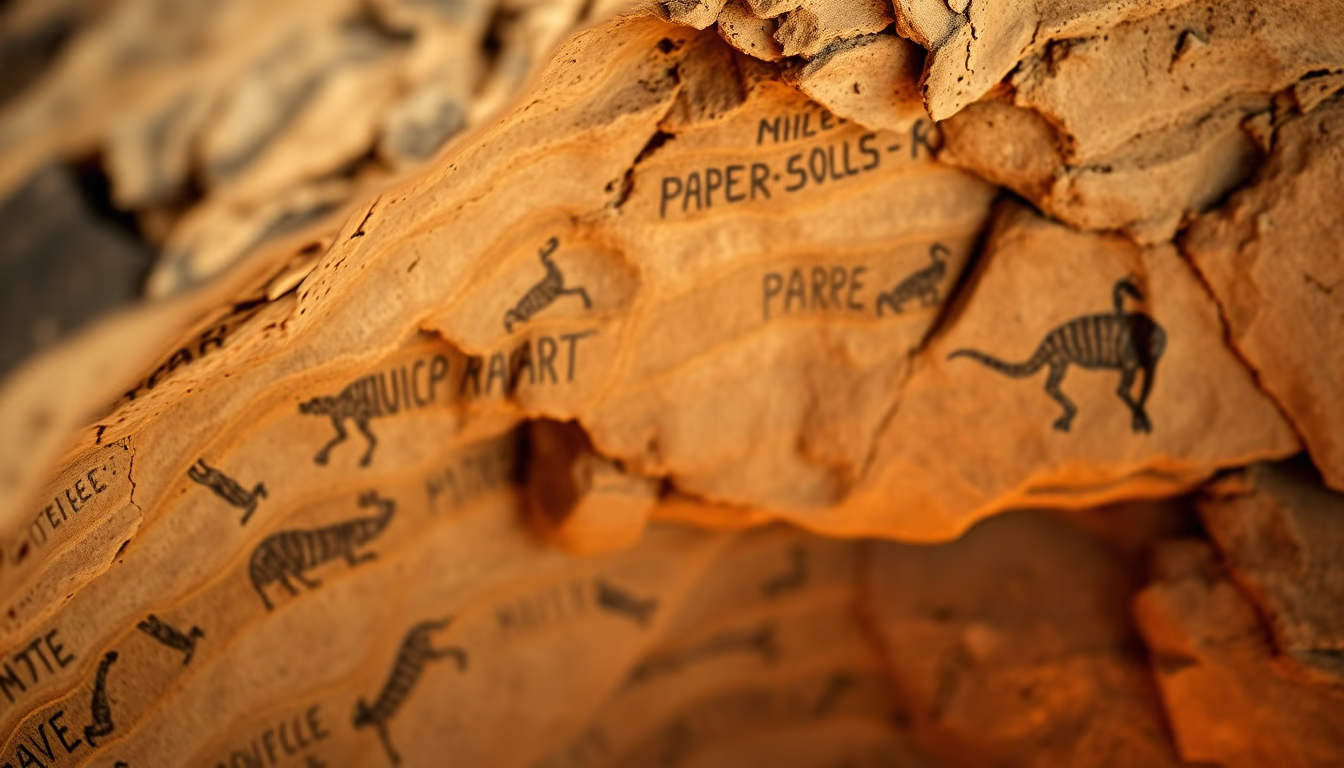
The Lascaux cave paintings in France are one of the most important records of prehistoric art, dating back to approximately 17,000 to 15,000 BCE.
About this subject
Discovered in 1940 by four teenagers in the Dordogne region of southwestern France, the Lascaux caves house an extensive collection of Upper Paleolithic rock paintings. The images primarily depict large animals such as horses, deer, bison, and aurochs, along with abstract figures and geometric symbols. These paintings are estimated to have been created between 17,000 and 15,000 years ago, during the Magdalenian culture.
The exact meaning of the paintings remains debated among archaeologists. The most accepted hypothesis is that they served ritualistic or shamanic purposes, possibly related to hunting ceremonies or spiritual practices. The techniques used are impressive: prehistoric artists employed natural pigments like ochre, charcoal, and hematite, applied with fingers, brushes made of hair or twigs, and even airbrushing through bone tubes. Some figures take advantage of the wall's contours and crevices to create volume and movement.
Lascaux was closed to the public in 1963 due to deterioration caused by carbon dioxide from visitors' breath. Today, a replica called Lascaux II, open since 1983, allows tourists to appreciate the art without damaging the original. The real cave is constantly monitored and preserved under controlled conditions. In 1979, the site was declared a UNESCO World Heritage Site, along with other prehistoric sites in the Vézère Valley.
A fascinating curiosity is the panel known as the "Shaft of the Dead Man," which depicts a fallen human between a wounded bison and a rhinoceros. This narrative scene is rare in Paleolithic art and suggests a greater symbolic complexity than previously thought. Recent studies apply radiocarbon dating and chemical analysis to better understand pigments and paint layers, revealing that some areas were retouched over millennia.
Frequently Asked Questions
Where are the Lascaux caves located?
The Lascaux caves are located in the Dordogne region of southwestern France, near the village of Montignac.
Why were the Lascaux caves closed to the public?
They were closed in 1963 because the humidity and carbon dioxide from visitors' breath caused mold and deterioration of the paintings.
How old are the Lascaux paintings?
The paintings date from the Upper Paleolithic, between 17,000 and 15,000 years ago, during the Magdalenian period.
Direct URL
https://pub-c7d6a6ea828543ac903a74a341ccb2e1.r2.dev/imagens/cave-painting-lascaux-studio-editorial-portrait-p5.avifHow to credit
Include a visible link back to UtilizAí. Copy one of the snippets below:
<a href="https://xn--utiliza-eza.com/en/midia/imagens/cave-painting-lascaux-studio-editorial-portrait-p5">Cave painting lascaux</a> by <a href="https://xn--utiliza-eza.com">UtilizAí</a>, licensed under <a href="https://creativecommons.org/licenses/by/4.0/">CC BY 4.0</a>.
[Cave painting lascaux](https://xn--utiliza-eza.com/en/midia/imagens/cave-painting-lascaux-studio-editorial-portrait-p5) by [UtilizAí](https://xn--utiliza-eza.com), CC BY 4.0
License: CC-BY-4.0