Cave painting lascaux
1344×768 · AVIF · CC BY 4.0
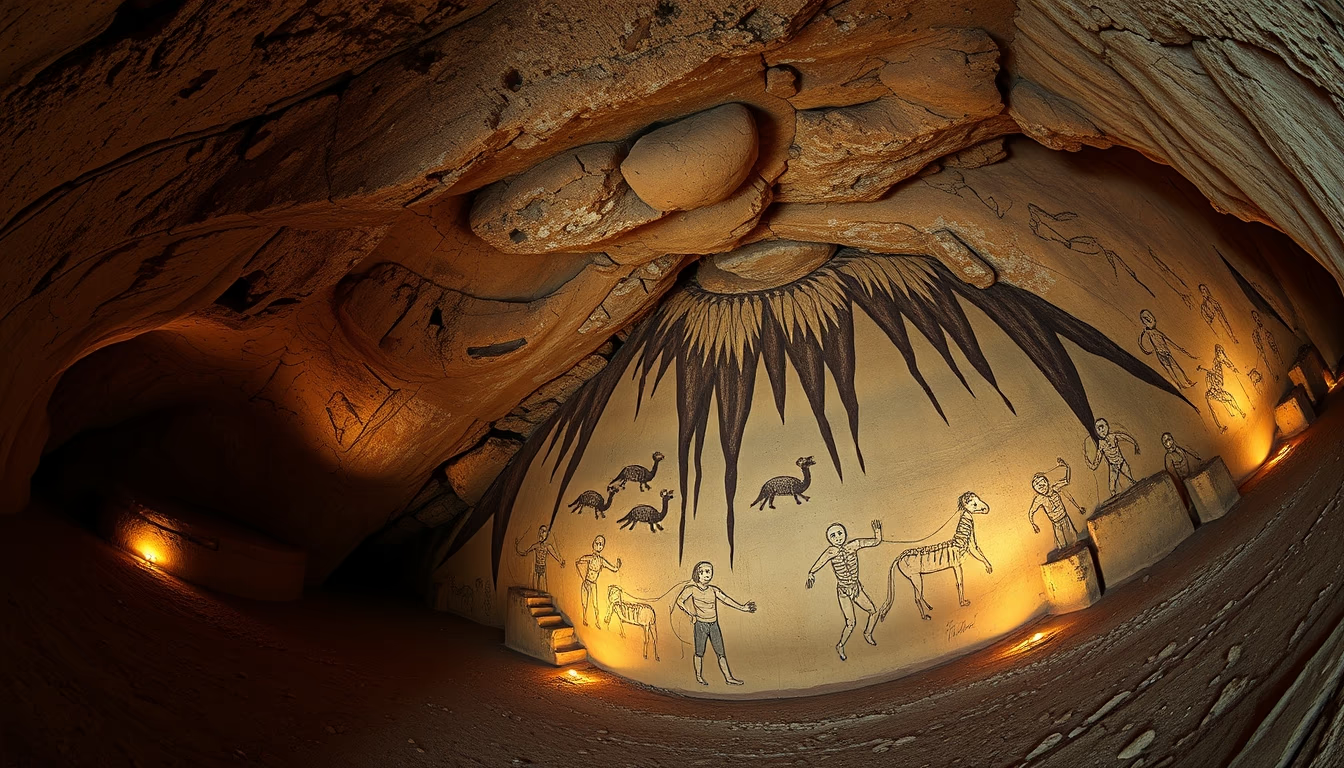
The Lascaux cave paintings in France are among the most important prehistoric art sites in the world, dating back approximately 17,000 years.
About this subject
Discovered on September 12, 1940, by four teenagers in the Dordogne region of southwestern France, the Lascaux cave paintings mark a milestone in understanding human artistic expression during the Upper Paleolithic period. The complex houses approximately 600 parietal figures and 1,500 engravings, primarily depicting animals such as horses, deer, bison, and aurochs, along with abstract symbols and a rare human figure. The images were created using mineral pigments like iron oxide and manganese, applied with rudimentary brushes or blown through hollow bones, a technique that allowed shading and perspective effects.
The main chamber, known as the Hall of the Bulls, features one of the most impressive compositions, with figures up to five meters in length. Studies suggest that the paintings were not merely decorative but likely had ritualistic or magical significance related to hunting or shamanic beliefs. Radiocarbon dating of charcoal found at the site confirmed the age of the works, placing them between 15,000 and 17,000 years ago, during the Magdalenian period.
Due to deterioration caused by public visits starting in 1948, the original cave was closed in 1963 and is now preserved under controlled conditions. An exact replica, Lascaux II, opened in 1983 just 200 meters away, allowing the public to appreciate the images without damaging the original environment. In 1979, Lascaux was inscribed as a UNESCO World Heritage Site, solidifying its global importance as a testament to early human creativity.
Frequently Asked Questions
Why are the Lascaux paintings so important?
They represent one of the best-preserved and artistically sophisticated examples of prehistoric art, providing insights into the beliefs, techniques, and social life of Upper Paleolithic humans.
How were the paintings preserved for so long?
The cave remained sealed for millennia, maintaining stable temperature and humidity. After discovery, conservation measures were implemented, including closing to the public and creating a replica.
Can I visit the original Lascaux cave?
No, the original cave has been closed to the public since 1963 to prevent damage. Visitors can tour the replica Lascaux II and, more recently, the International Centre for Parietal Art (Lascaux IV), which offers an immersive experience.
Direct URL
https://pub-c7d6a6ea828543ac903a74a341ccb2e1.r2.dev/imagens/cave-painting-lascaux-fish-eye-wide-angle-p1.avifHow to credit
Include a visible link back to UtilizAí. Copy one of the snippets below:
<a href="https://xn--utiliza-eza.com/en/midia/imagens/cave-painting-lascaux-fish-eye-wide-angle-p1">Cave painting lascaux</a> by <a href="https://xn--utiliza-eza.com">UtilizAí</a>, licensed under <a href="https://creativecommons.org/licenses/by/4.0/">CC BY 4.0</a>.
[Cave painting lascaux](https://xn--utiliza-eza.com/en/midia/imagens/cave-painting-lascaux-fish-eye-wide-angle-p1) by [UtilizAí](https://xn--utiliza-eza.com), CC BY 4.0
License: CC-BY-4.0