Cave painting lascaux
1344×768 · AVIF · CC BY 4.0
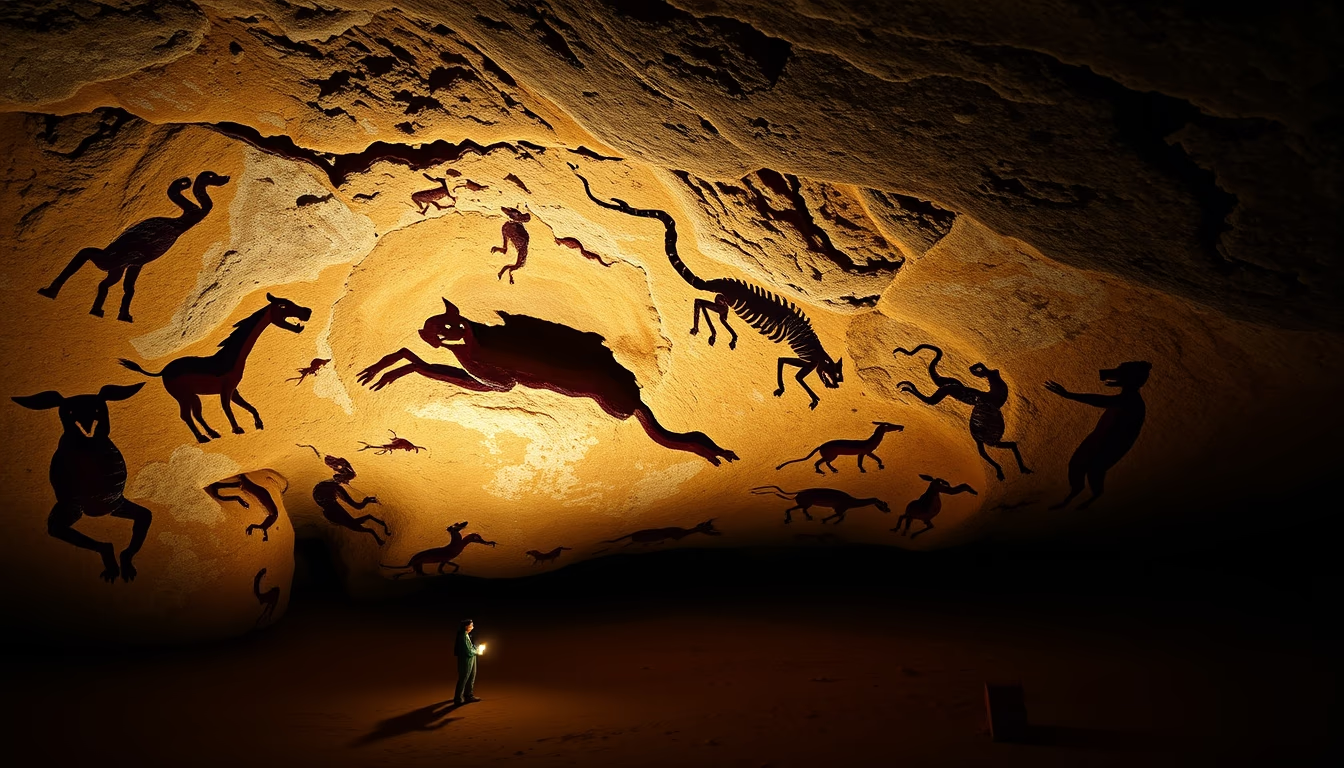
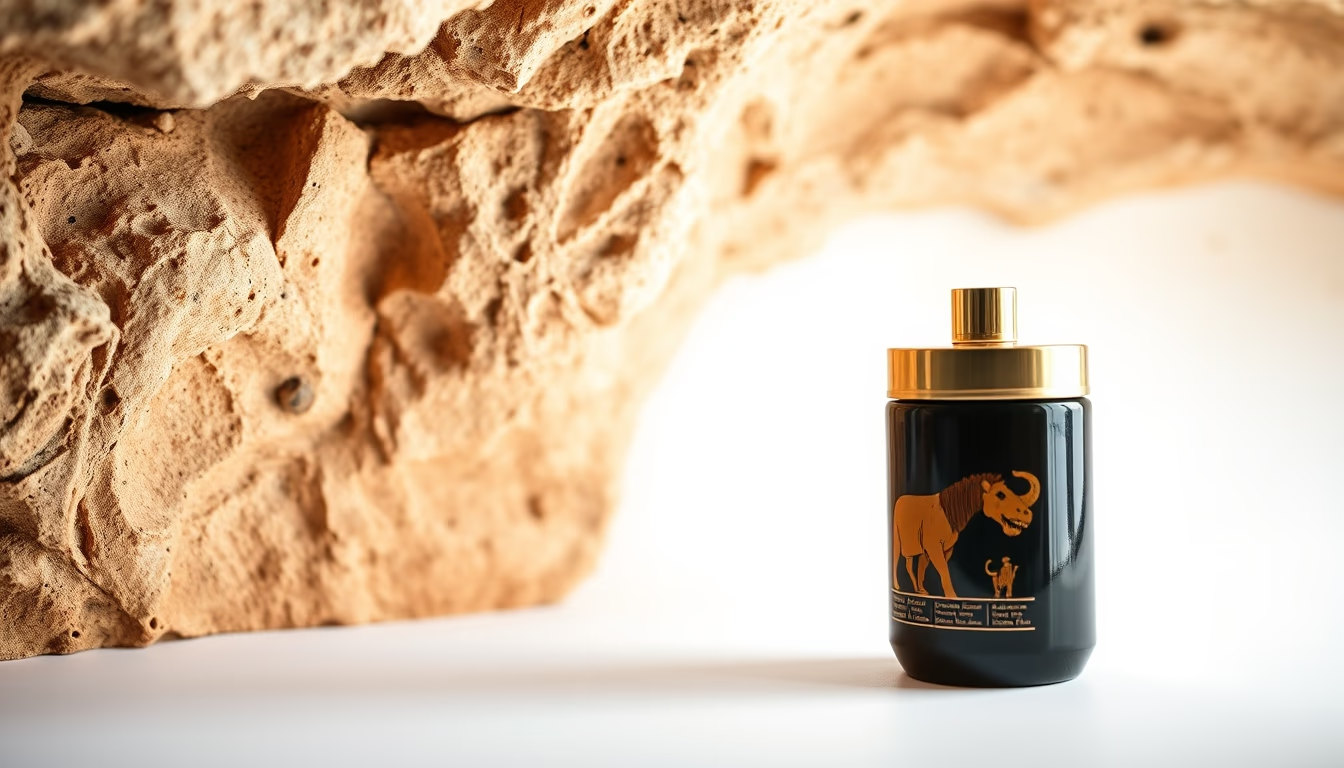
The Lascaux cave paintings, discovered in 1940, are one of the most significant examples of Upper Paleolithic prehistoric art.
About this subject
Located in southwestern France near the town of Montignac, the Lascaux cave was discovered by four teenagers on September 12, 1940. The archaeological site dates back approximately 17,000 years, to the Magdalenian period. The cave walls display over 600 figures, including horses, deer, bison, aurochs, and felines, as well as abstract symbols. The paintings were created with mineral pigments such as ochre and charcoal, applied with fingers, bristle brushes, or blown through tubes. The anatomical precision and use of perspective demonstrate advanced techniques for the time.
The discovery of Lascaux had a major impact on the worlds of archaeology and art, attracting thousands of visitors in the following decades. However, the excessive carbon dioxide exhaled by tourists, combined with artificial lighting, began to deteriorate the paintings. In 1963, the French government closed the cave to the public. Since then, strict conservation measures have been implemented, including temperature and humidity control. To allow public appreciation, replicas were created: Lascaux II (opened in 1983) and Lascaux IV (2016), which faithfully reproduce the original galleries.
The Lascaux paintings are not merely decorative; they are believed to have a ritualistic or shamanic function, related to hunting or spiritual beliefs. The presence of stylized human figures and wounded animals suggests hunting narratives. Moreover, the deep location within the cave indicates that the production of images was part of ceremonies. Today, Lascaux is a UNESCO World Heritage site (inscribed in 1979) and continues to be the subject of multidisciplinary studies, combining archaeology, anthropology, and digital imaging techniques.
Frequently Asked Questions
Why are the Lascaux paintings so important?
They represent one of the best preserved and most complex examples of Upper Paleolithic rock art, offering insights into the life, beliefs, and artistic skills of prehistoric humans.
How were the paintings made?
Pigments were obtained from minerals such as ochre (yellow, red) and charcoal. They were applied with fingers, brushes made of animal hair, or blown through bone tubes. Artists used the irregularities of the rock to create volume and perspective.
Is the original cave open to the public?
No. Since 1963, the cave has been closed for preservation. Replicas such as Lascaux II and Lascaux IV have been built for visitation, accurately recreating the paintings and the environment.
Direct URL
https://pub-c7d6a6ea828543ac903a74a341ccb2e1.r2.dev/imagens/cave-painting-lascaux-fine-art-photography-p9.avifHow to credit
Include a visible link back to UtilizAí. Copy one of the snippets below:
<a href="https://xn--utiliza-eza.com/en/midia/imagens/cave-painting-lascaux-fine-art-photography-p9">Cave painting lascaux</a> by <a href="https://xn--utiliza-eza.com">UtilizAí</a>, licensed under <a href="https://creativecommons.org/licenses/by/4.0/">CC BY 4.0</a>.
[Cave painting lascaux](https://xn--utiliza-eza.com/en/midia/imagens/cave-painting-lascaux-fine-art-photography-p9) by [UtilizAí](https://xn--utiliza-eza.com), CC BY 4.0
License: CC-BY-4.0