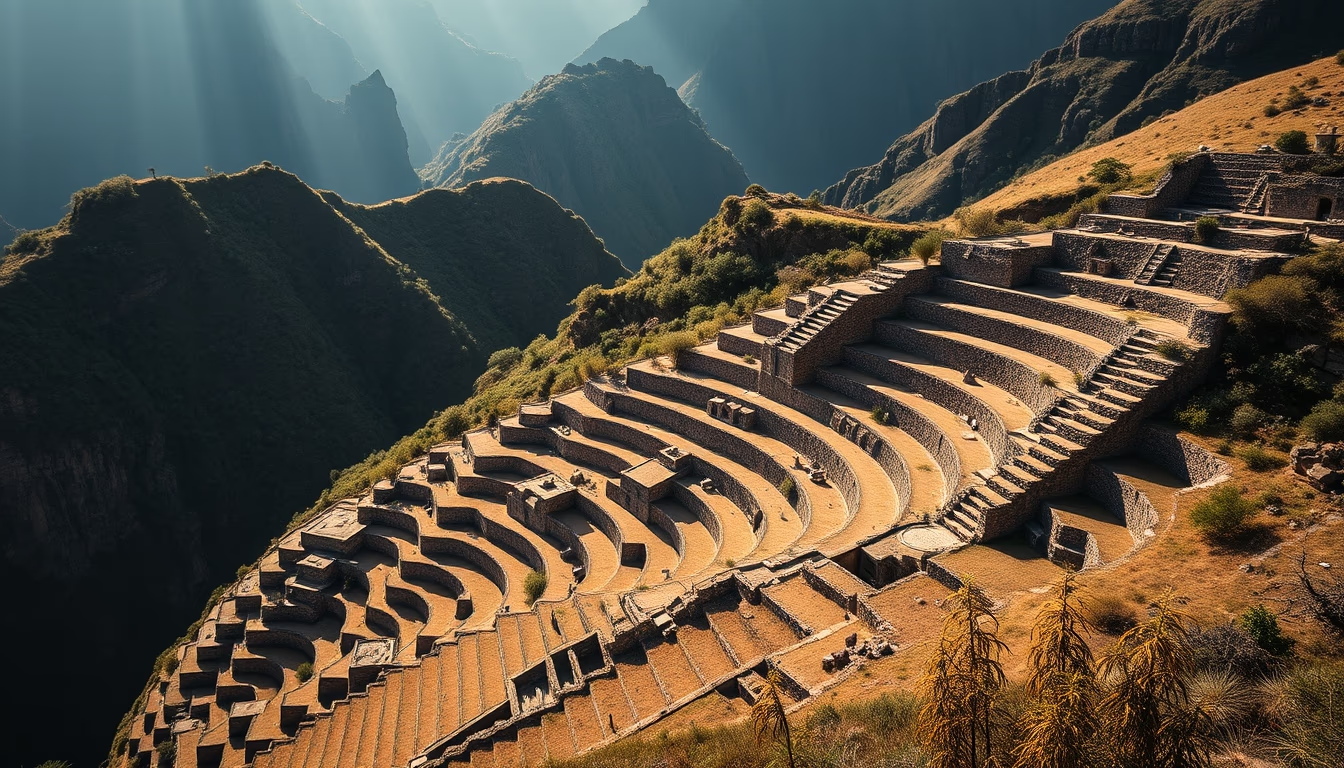
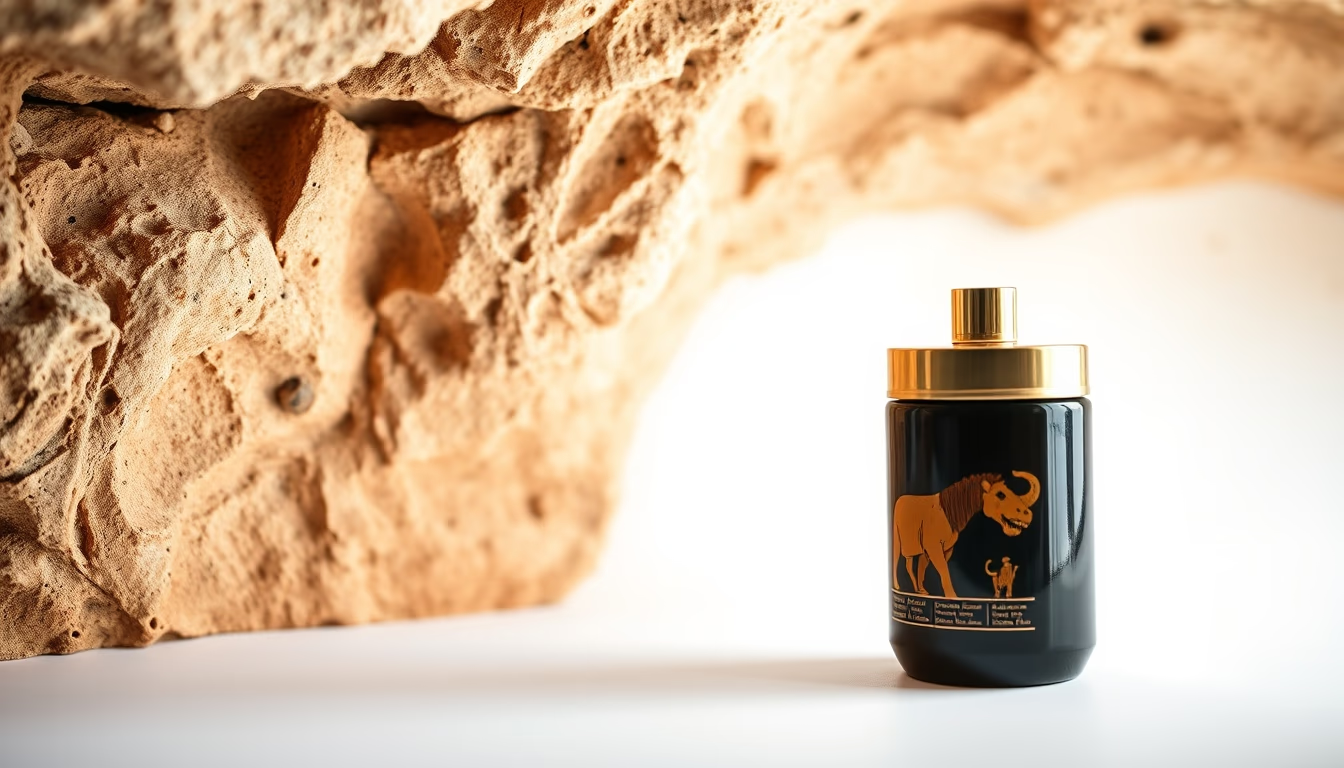
Cave painting lascaux
1344×768 · AVIF · CC BY 4.0

The Lascaux cave paintings in France are among the most important prehistoric art sites in the world, dating back approximately 17,000 years.
About this subject
Located in the Vézère Valley in the Dordogne region of southwestern France, the Lascaux cave complex was discovered on September 12, 1940, by four teenagers. The walls and ceilings contain about 600 paintings and 1,500 engravings, predominantly depicting animals such as horses, deer, bison, aurochs, ibex, and even a rare feline. Upper Paleolithic artists used mineral pigments like ochre and charcoal, applied with fingers, brushes made of hair, or blown through tubes. The anatomical precision and rudimentary perspective techniques impress archaeologists and art historians.
The paintings are not merely decorative; theories suggest they served hunting rituals or shamanic purposes, as many animals appear wounded or in motion. The main chamber, the Hall of the Bulls, features enormous aurochs up to 5 meters long. Exceptional preservation is due to the cave's stable microclimate. However, after opening to the public in 1948, massive visitation caused fungal growth, algae, and calcite crystals due to exhaled carbon dioxide. In 1963, the French government closed the original site.
To allow public appreciation, replicas were created: Lascaux II (1983), a copy of two main halls, and Lascaux IV (2016), the International Center for Cave Art, which reproduces the entire cave using 3D technology. The original remains sealed and constantly monitored for conservation. In 1979, Lascaux was declared a UNESCO World Heritage site, along with other prehistoric sites in the Vézère Valley. Lascaux's art revolutionized understanding of the symbolic and aesthetic capacity of prehistoric humans.
Frequently Asked Questions
Why were the Lascaux caves closed to the public?
The caves were closed in 1963 due to damage from the high number of visitors, which altered the internal microclimate and caused the growth of fungi, algae, and calcite crystals, threatening the paintings.
How many animals are depicted in the Lascaux paintings?
There are an estimated 600 painted animal figures, with emphasis on horses, deer, bison, and aurochs. Many are superimposed or arranged in complex compositions.
How old are the Lascaux cave paintings?
The paintings date to the Upper Paleolithic period, approximately 17,000 to 15,000 years ago, during the Magdalenian era. Dating was done through radiocarbon analysis of charcoal and bone fragments found at the site.
Direct URL
https://pub-c7d6a6ea828543ac903a74a341ccb2e1.r2.dev/imagens/cave-painting-lascaux-cinematic-wide-shot-p4.avifHow to credit
Include a visible link back to UtilizAí. Copy one of the snippets below:
<a href="https://xn--utiliza-eza.com/en/midia/imagens/cave-painting-lascaux-cinematic-wide-shot-p4">Cave painting lascaux</a> by <a href="https://xn--utiliza-eza.com">UtilizAí</a>, licensed under <a href="https://creativecommons.org/licenses/by/4.0/">CC BY 4.0</a>.
[Cave painting lascaux](https://xn--utiliza-eza.com/en/midia/imagens/cave-painting-lascaux-cinematic-wide-shot-p4) by [UtilizAí](https://xn--utiliza-eza.com), CC BY 4.0
License: CC-BY-4.0