Cave house cappadocia
1344×768 · AVIF · CC BY 4.0
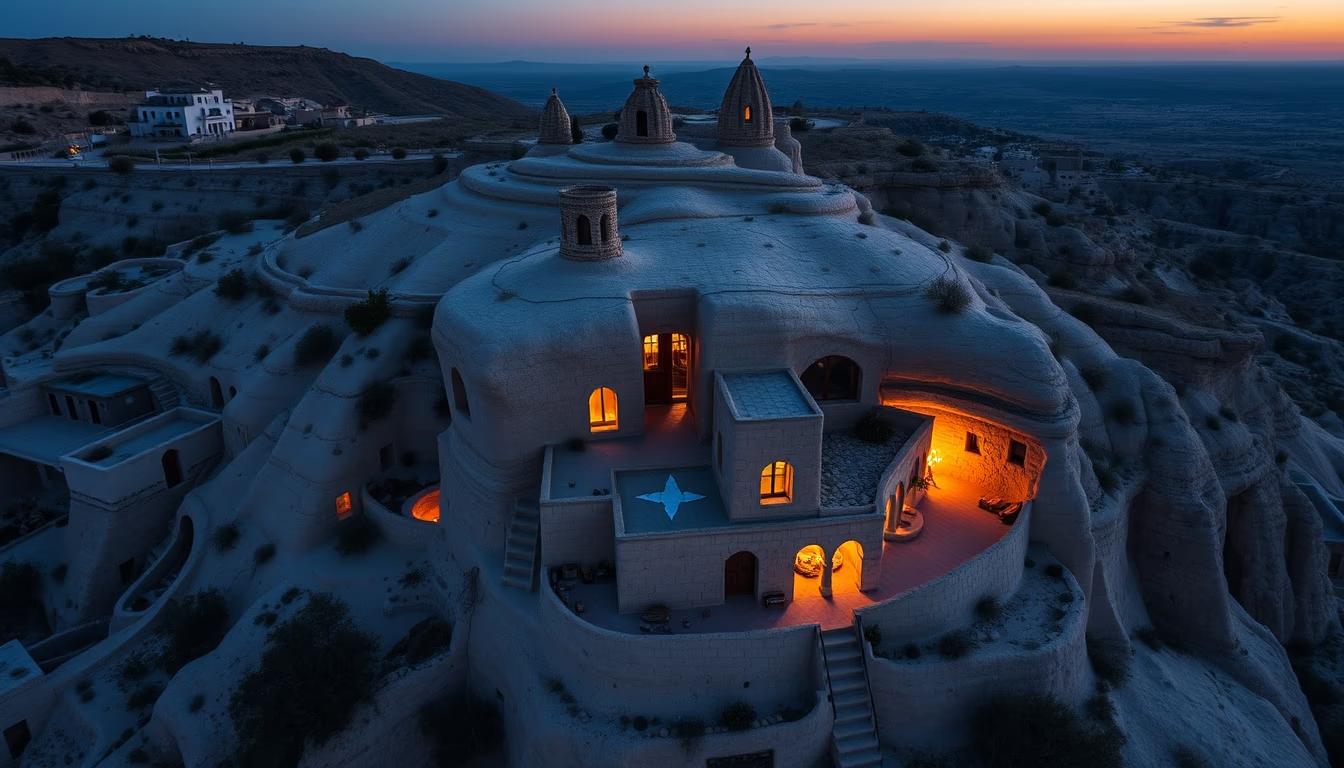
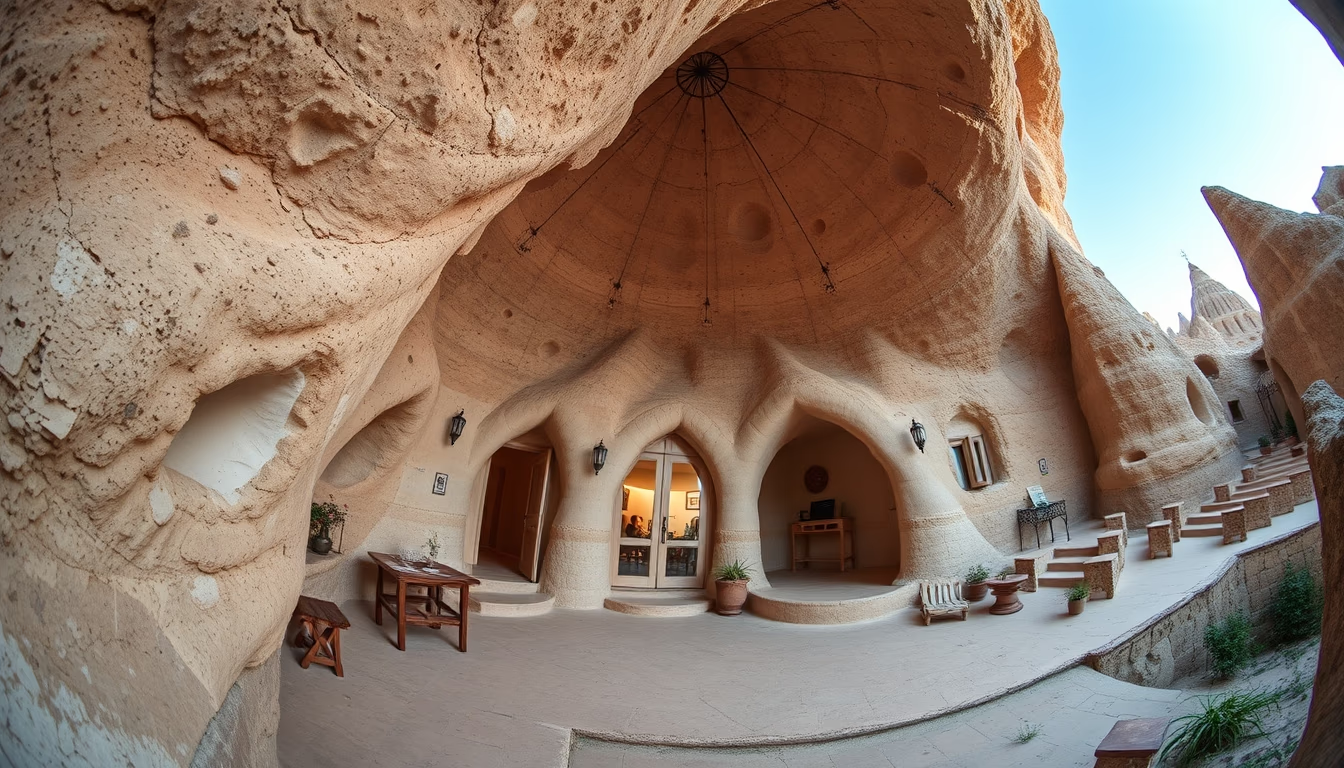
Cappadocia's cave houses, carved from volcanic rock, are millennia-old dwellings blending history, geology, and unique architecture in Turkey.
About this subject
Cappadocia, located in Central Anatolia (Turkey), is globally famous for its surreal fairy chimney rock formations and dwellings carved directly into soft volcanic tuff. The cave houses have been inhabited since at least the 4th century BCE, initially by the Hittites and later by early Christians escaping persecution, who expanded them into extensive underground cities like Derinkuyu and Kaymaklı, capable of sheltering thousands. Over centuries, residents carved not only homes but also churches, monasteries, and entire subterranean complexes, creating a unique architectural landscape.
The region's geology is key to this construction style. Volcanic tuff from eruptions of Mount Erciyes, Hasan, and Göllü Dağ is soft enough to carve when moist yet hardens upon exposure to air, providing durable structures with natural insulation. Cave houses maintain a steady temperature around 15°C (59°F), cool in summer and warm in winter. Many have been restored into boutique hotels, restaurants, and museums, attracting millions of tourists each year. The area was declared a UNESCO World Heritage Site in 1985, and visitors explore valleys like Göreme, Ihlara, and Pasabag where dwellings blend seamlessly with the landscape.
Culturally, cave houses exemplify vernacular architecture adapted to environment and history. Around 10% of Cappadocia's population still lives in cave dwellings, preserving this millennia-old heritage. The volcanic soil also supports agriculture: fertile vineyards and orchards produce local wines and dried fruits. Photography enthusiasts and history buffs flock to capture the interplay of light and rock, while hot air balloon rides offer a bird's-eye view of the surreal topography. The enduring appeal lies in how human habitation harmoniously integrates with nature's sculptural wonders.
Frequently Asked Questions
Are the cave houses of Cappadocia still inhabited today?
Yes, an estimated 10% of the local population still lives in cave houses, especially in rural areas. Many have been modernized with electricity and plumbing, keeping the tradition alive.
What is the difference between a cave house and an underground city in Cappadocia?
Cave houses are individual or group dwellings carved into cliffs or rock formations. Underground cities (like Derinkuyu) are multi-level complexes with rooms, tunnels, churches, and ventilation systems, designed to shelter entire communities during times of war.
Is the volcanic tuff material durable? Do these houses collapse often?
Volcanic tuff is lightweight, porous, and becomes hard when exposed to air. Natural collapses are rare, but erosion and moisture can cause damage over time. Many houses undergo periodic restoration for preservation.
Direct URL
https://pub-c7d6a6ea828543ac903a74a341ccb2e1.r2.dev/imagens/cave-house-cappadocia-aerial-drone-shot-fresh3.avifHow to credit
Include a visible link back to UtilizAí. Copy one of the snippets below:
<a href="https://xn--utiliza-eza.com/en/midia/imagens/cave-house-cappadocia-aerial-drone-shot-fresh3">Cave house cappadocia</a> by <a href="https://xn--utiliza-eza.com">UtilizAí</a>, licensed under <a href="https://creativecommons.org/licenses/by/4.0/">CC BY 4.0</a>.
[Cave house cappadocia](https://xn--utiliza-eza.com/en/midia/imagens/cave-house-cappadocia-aerial-drone-shot-fresh3) by [UtilizAí](https://xn--utiliza-eza.com), CC BY 4.0
License: CC-BY-4.0