Cassini saturn rings
1344×768 · AVIF · CC BY 4.0
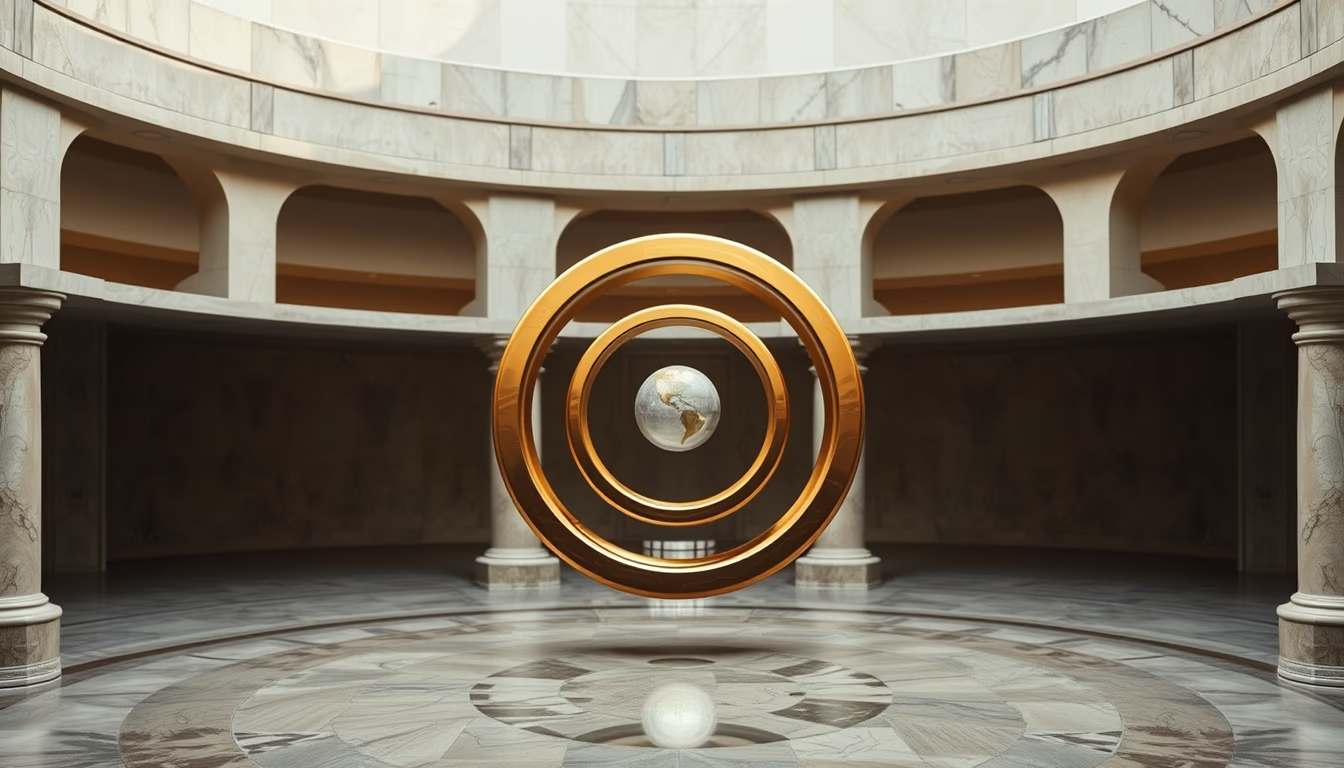
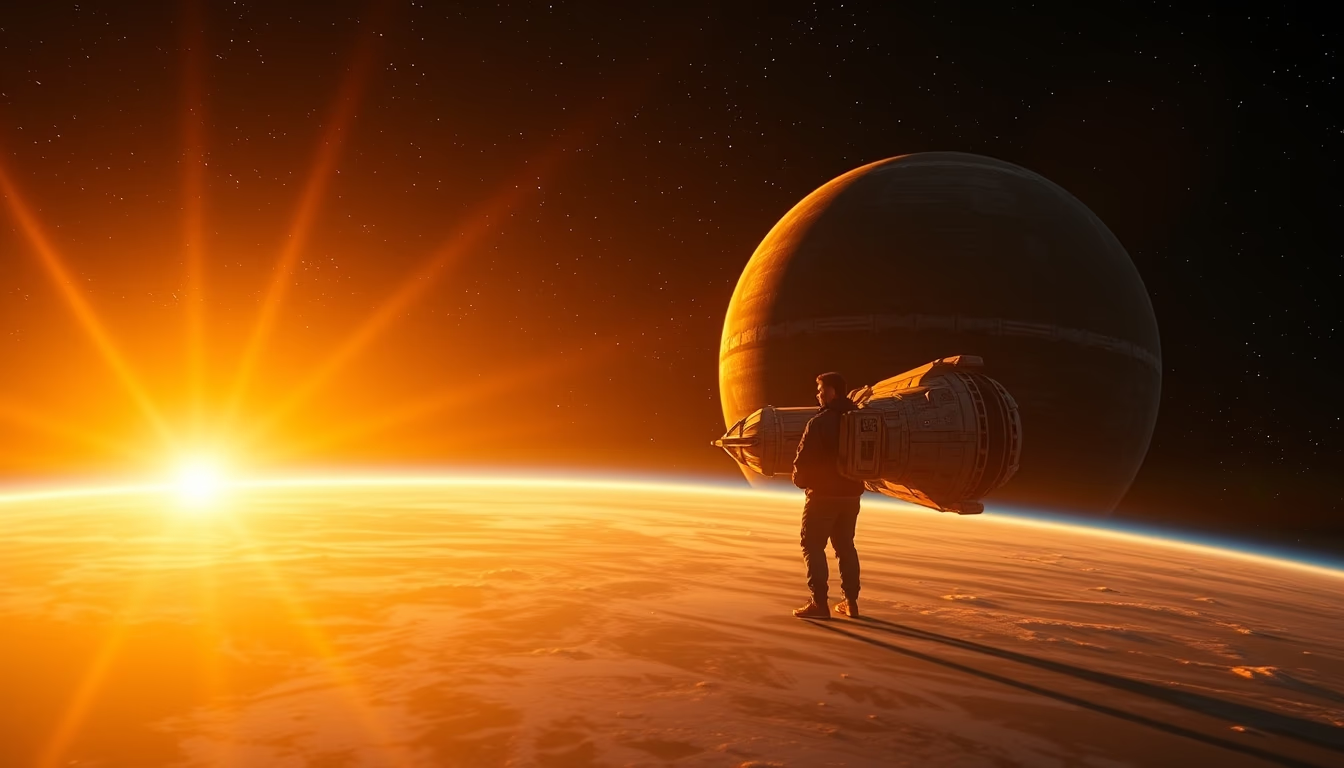
The Cassini spacecraft revolutionized our understanding of Saturn and its rings, revealing unprecedented details.
About this subject
The Cassini-Huygens mission, a collaboration between NASA, ESA, and ASI, launched on October 15, 1997, and arrived at Saturn on July 1, 2004. For 13 years, the spacecraft orbited the gas giant, sending invaluable data about its atmosphere, moons, and the intricate ring system. Cassini ended its mission on September 15, 2017, by plunging into Saturn's atmosphere to avoid contaminating its moons.
Saturn's rings are composed mainly of water ice and rocky particles, ranging from micrometers to meters in size. Cassini discovered that the rings are much younger than previously thought, with an estimated age between 10 and 100 million years. The probe also revealed structures such as density waves, small shepherd moons that shape the rings (like Prometheus and Pandora), and a thin molecular oxygen atmosphere around the rings.
One of the most impactful discoveries was the detection of methane and propane emissions in Saturn's atmosphere, as well as giant storms like the Great White Spot. Cassini also explored moons such as Enceladus, with water geysers at its south pole, and Titan, with liquid methane lakes. The data transformed our understanding of giant planet dynamics and the potential for life on icy moons.
Interestingly, Saturn's rings may disappear in a few hundred million years, as they are constantly being pulled by the planet's gravity and micrometeoroids. Cassini allowed scientists to calculate the mass loss rate of the rings, estimated at 10,000 kg per second. This process causes the rings to become increasingly faint, a phenomenon only understood thanks to the spacecraft's data.
Frequently Asked Questions
What did the Cassini spacecraft discover about Saturn's rings?
Cassini revealed that the rings are young (10, 100 million years old), composed of ice and rock, and are rapidly losing mass. It also identified structures like density waves and shepherd moons.
When did the Cassini mission begin and end?
Cassini launched in 1997, arrived at Saturn in 2004, and ended in 2017 when it was deliberately destroyed in Saturn's atmosphere.
Will Saturn's rings disappear?
Yes, the rings are estimated to disappear in about 100 million years due to particles falling into the planet and micrometeoroid bombardment.
Direct URL
https://pub-c7d6a6ea828543ac903a74a341ccb2e1.r2.dev/imagens/cassini-saturn-rings-architectural-photography-fresh6.avifHow to credit
Include a visible link back to UtilizAí. Copy one of the snippets below:
<a href="https://xn--utiliza-eza.com/en/midia/imagens/cassini-saturn-rings-architectural-photography-fresh6">Cassini saturn rings</a> by <a href="https://xn--utiliza-eza.com">UtilizAí</a>, licensed under <a href="https://creativecommons.org/licenses/by/4.0/">CC BY 4.0</a>.
[Cassini saturn rings](https://xn--utiliza-eza.com/en/midia/imagens/cassini-saturn-rings-architectural-photography-fresh6) by [UtilizAí](https://xn--utiliza-eza.com), CC BY 4.0
License: CC-BY-4.0