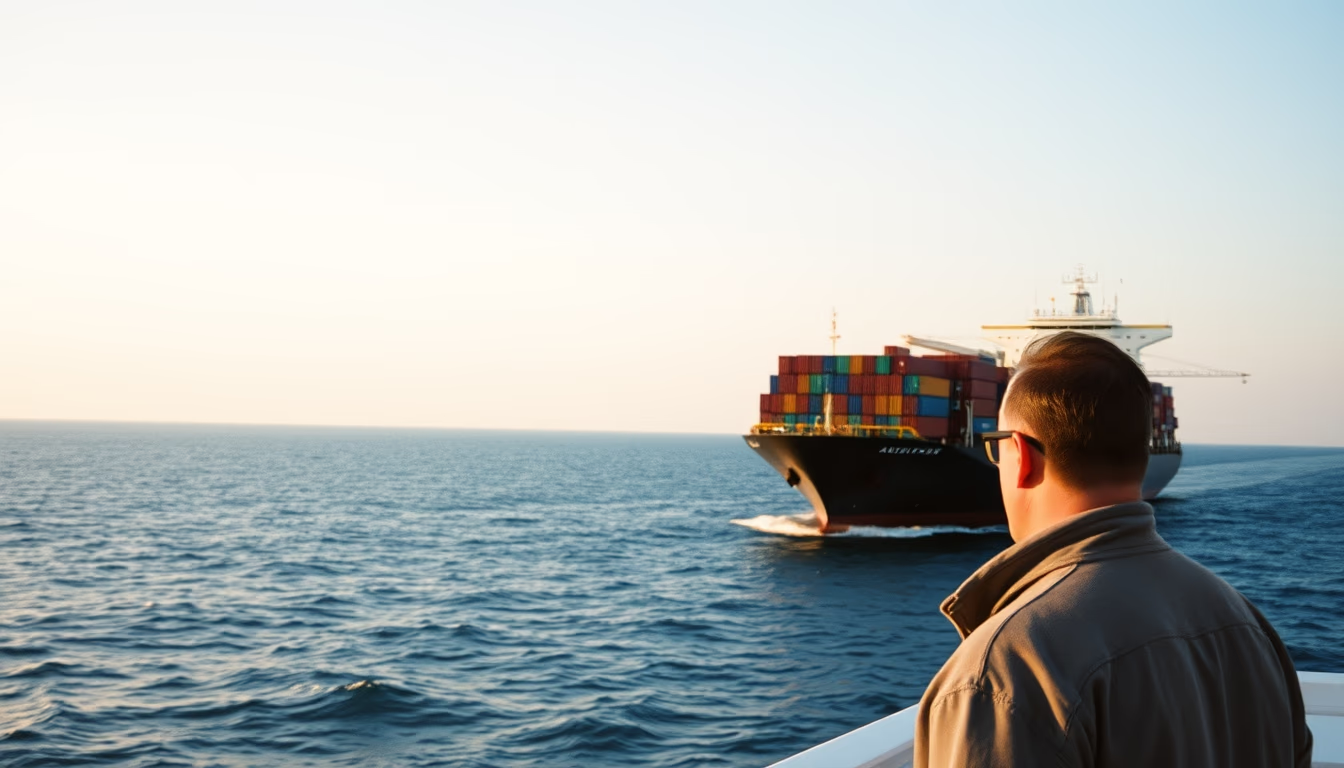
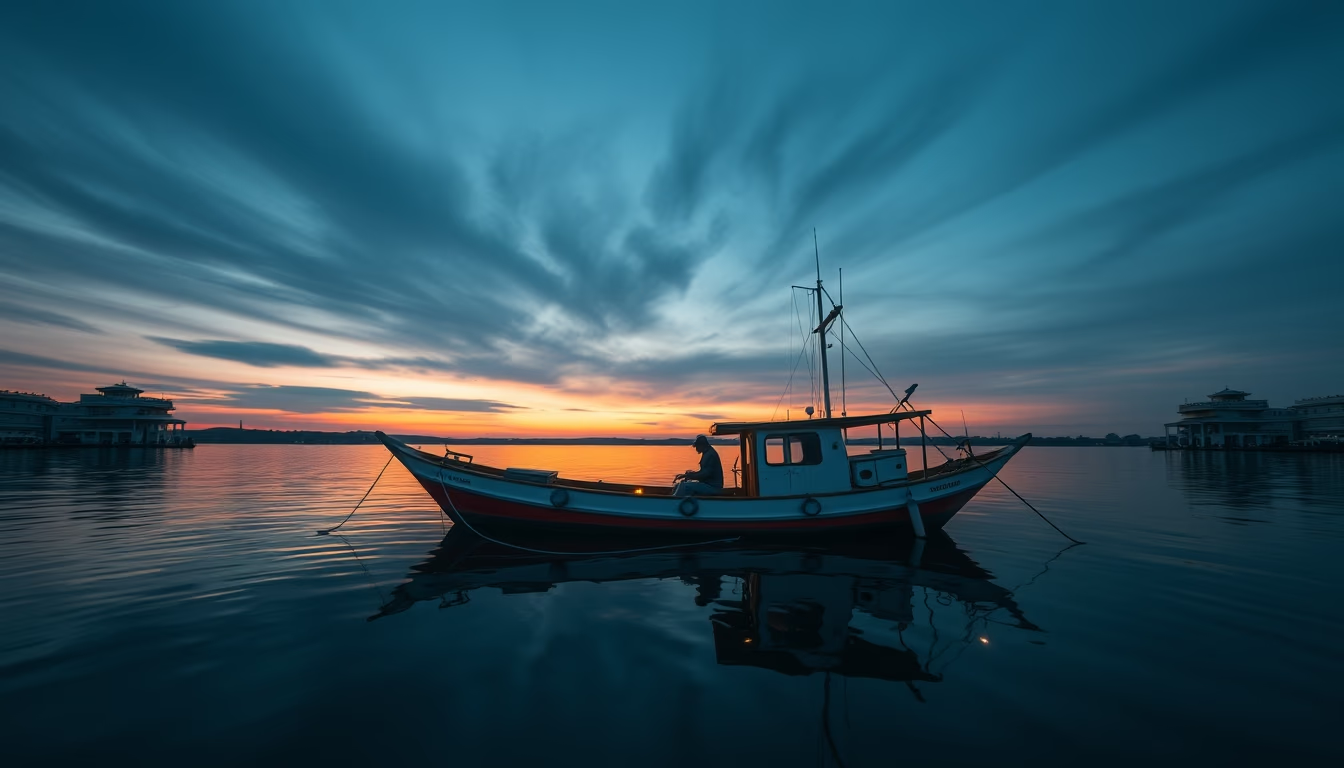
Cargo ship horizon
1344×768 · AVIF · CC BY 4.0

Cargo ships are the backbone of global trade, carrying about 90% of the world's goods across oceans.
About this subject
The cargo ship, also known as a freighter, is one of the pillars of the world economy. An estimated 50,000 merchant ships are in operation, moving impressive volumes of containers, dry and liquid bulk, and general cargo. The largest type, the container ship, can carry over 24,000 twenty-foot equivalent units (TEU), such as the MSC Gülsün class. These vessels follow strategic routes, including the Panama Canal or the Strait of Malacca, connecting production centers in Asia to consumer markets in Europe and the Americas.
The history of cargo ships dates back to 19th-century sailing vessels, but the revolution came with containerization in the 1950s, pioneered by American Malcolm McLean. Before that, loading was slow and prone to theft. Today, a container ship can be loaded or unloaded in under 24 hours thanks to specialized cranes and terminals. This system drastically reduced shipping costs and made globalization as we know it possible.
However, the shipping industry faces environmental challenges. Cargo ships burn heavy fuel oil, emitting large amounts of CO2, sulfur oxides, and particulate matter. The International Maritime Organization (IMO) has set emission reduction targets, encouraging alternative fuels like LNG, ammonia, and hydrogen. Some ships already use auxiliary wind power, such as the Flettner rotor, and there are electric propulsion projects for short-sea shipping.
The horizon of maritime trade also reflects geopolitical trends. China's Maritime Silk Road, the Panama Canal expansion, and Arctic ice melt are opening new passages. For the future, autonomous ships like the Yara Birkeland, an electric, unmanned container vessel set to operate in Norway, are on the horizon. This technological evolution promises to transform the sector again, balancing efficiency and sustainability.
Frequently Asked Questions
How many cargo ships are there in the world?
There are an estimated 50,000 merchant ships in operation, including container ships, bulk carriers, tankers, and general cargo vessels.
What is the largest cargo ship in the world?
The largest container ships in terms of capacity are the MSC Gülsün class, with a capacity of over 24,000 TEU (twenty-foot equivalent units).
Are cargo ships polluting?
Yes, they burn heavy fuel oil, emitting CO2 and local pollutants. The IMO has set targets to reduce emissions, promoting cleaner fuels and green technologies.
Direct URL
https://pub-c7d6a6ea828543ac903a74a341ccb2e1.r2.dev/imagens/cargo-ship-horizon-high-fashion-editorial-p4.avifHow to credit
Include a visible link back to UtilizAí. Copy one of the snippets below:
<a href="https://xn--utiliza-eza.com/en/midia/imagens/cargo-ship-horizon-high-fashion-editorial-p4">Cargo ship horizon</a> by <a href="https://xn--utiliza-eza.com">UtilizAí</a>, licensed under <a href="https://creativecommons.org/licenses/by/4.0/">CC BY 4.0</a>.
[Cargo ship horizon](https://xn--utiliza-eza.com/en/midia/imagens/cargo-ship-horizon-high-fashion-editorial-p4) by [UtilizAí](https://xn--utiliza-eza.com), CC BY 4.0
License: CC-BY-4.0