Cardiology heart monitor
1344×768 · AVIF · CC BY 4.0
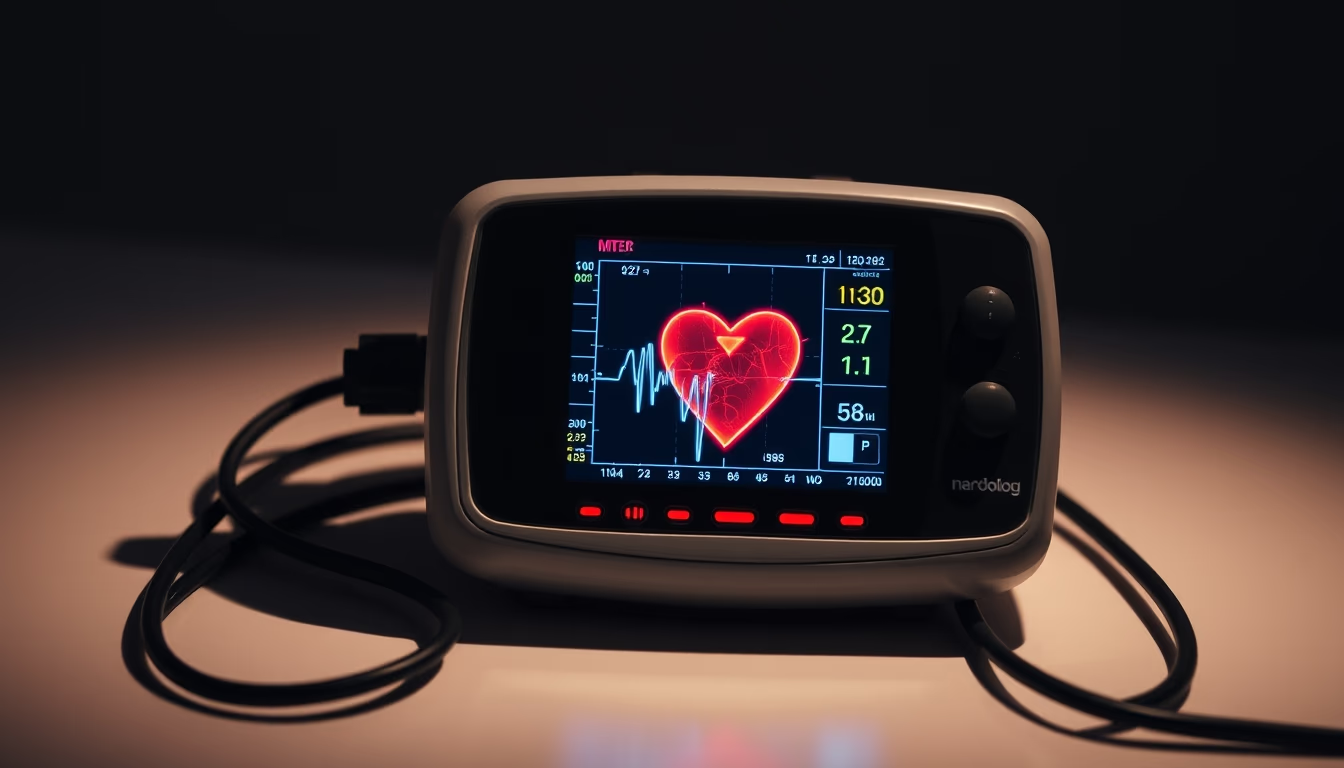
Cardiac monitors are essential devices in cardiology for recording the heart's electrical activity over time, aiding in the diagnosis of arrhythmias and other conditions.
About this subject
Cardiac monitors, also known as ambulatory electrocardiographs, are medical instruments that continuously record a patient's heart rhythm. Unlike a standard ECG, which captures only a few seconds of activity, these devices allow prolonged monitoring, from 24 hours to several days. The most common example is the Holter monitor, developed by biophysicist Norman Holter in the 1960s. It consists of small electrodes attached to the chest, connected to a portable recorder that stores electrical data. This data is later analyzed by a cardiologist to detect irregularities that may not appear in rapid examinations.
Technology has evolved significantly with the introduction of cardiac telemetry and implantable monitors. In telemetry, devices transmit signals in real time to a monitoring center, common in coronary care units. Implantable monitors, such as loop recorders, are placed under the skin and record cardiac episodes for up to three years. They are indicated for patients with syncope of unknown cause or suspected intermittent arrhythmias. Additionally, wearable devices such as smartwatches with ECG sensors have made monitoring accessible to the lay public, although with diagnostic limitations.
In Brazil, the use of cardiac monitors is regulated by the National Health Surveillance Agency (ANVISA) and integrates public health protocols for cardiovascular diseases, which are the leading cause of death in the country. It is estimated that more than 1 million outpatient monitoring procedures are performed annually through the Unified Health System (SUS). The accuracy of the collected data depends on both the quality of the equipment and the correct placement of electrodes, which requires technical training. With increasing digitalization, remote analysis by specialist physicians has become common practice, especially in regions with a shortage of cardiologists.
Frequently Asked Questions
What is a Holter cardiac monitor?
A Holter monitor is a portable device that records the heart's electrical activity for typically 24 to 48 hours. It is used to diagnose arrhythmias that do not appear on a resting electrocardiogram.
How does cardiac telemetry work?
Cardiac telemetry uses sensors that transmit the patient's heartbeat in real time to a monitoring center. It is common in hospitals to monitor patients at risk of cardiac complications.
What is the difference between a cardiac monitor and an electrocardiogram?
An electrocardiogram (ECG) is a quick test showing only a few seconds of heart rhythm. A cardiac monitor records continuously for hours or days, allowing it to capture sporadic events.
Direct URL
https://pub-c7d6a6ea828543ac903a74a341ccb2e1.r2.dev/imagens/cardiology-heart-monitor-magazine-editorial-p4.avifHow to credit
Include a visible link back to UtilizAí. Copy one of the snippets below:
<a href="https://xn--utiliza-eza.com/en/midia/imagens/cardiology-heart-monitor-magazine-editorial-p4">Cardiology heart monitor</a> by <a href="https://xn--utiliza-eza.com">UtilizAí</a>, licensed under <a href="https://creativecommons.org/licenses/by/4.0/">CC BY 4.0</a>.
[Cardiology heart monitor](https://xn--utiliza-eza.com/en/midia/imagens/cardiology-heart-monitor-magazine-editorial-p4) by [UtilizAí](https://xn--utiliza-eza.com), CC BY 4.0
License: CC-BY-4.0