Cardiology heart monitor
1344×768 · AVIF · CC BY 4.0
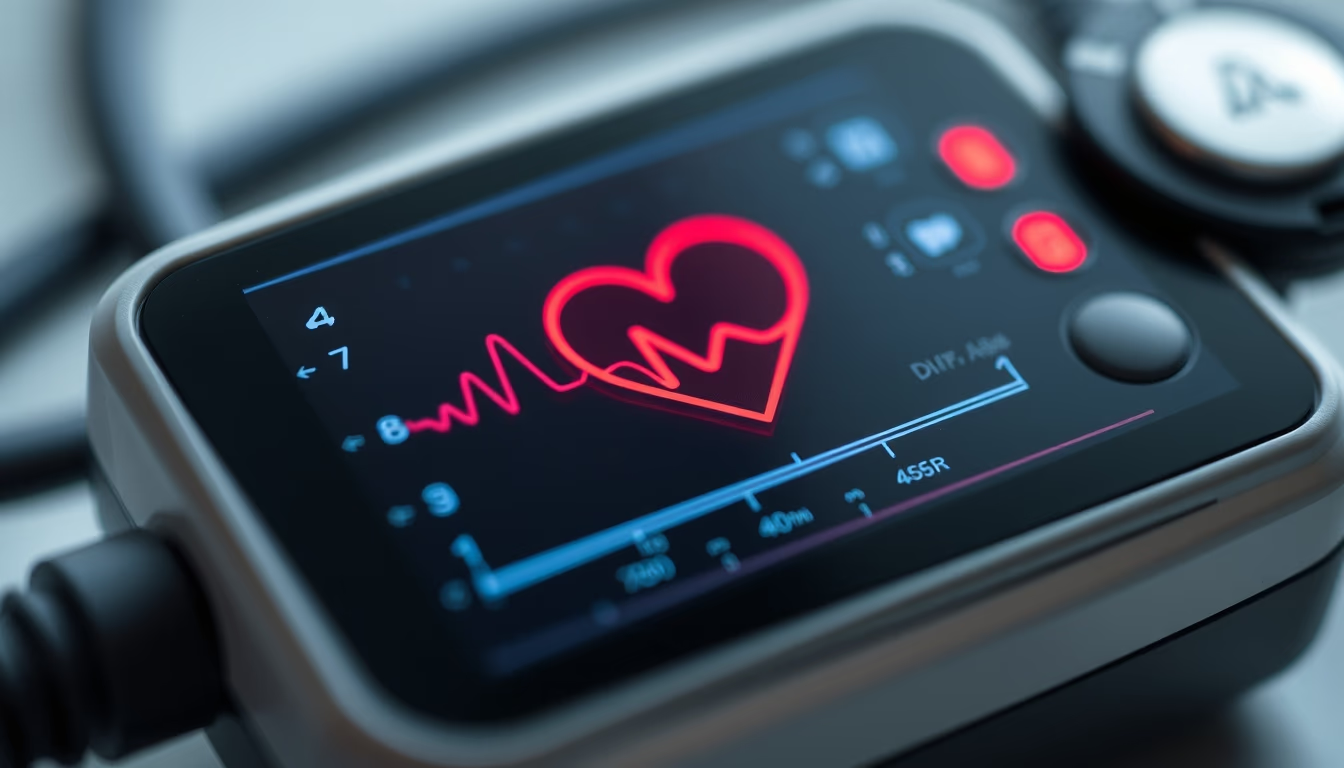
Macro closeup of a cardiology heart monitor used for continuous monitoring of the heart's electrical activity.
About this subject
A heart monitor, also known as a continuous electrocardiograph (ECG), is an essential medical device for assessing the electrical activity of the heart. It captures electrical signals through electrodes placed on the skin, generating a tracing called an electrocardiogram. This test is crucial for diagnosing arrhythmias, myocardial ischemia, conduction disorders, and other cardiac conditions. Heart monitors are routinely used in hospitals, especially in intensive care units (ICUs) and operating rooms, where continuous observation can save lives.
There are different types of heart monitors, from fixed devices in hospital beds to portable ones like the Holter monitor, which records cardiac activity over 24 hours or more. This variety allows doctors to capture cardiac events that occur sporadically, outside the clinical setting. With technological advances, many monitors now incorporate artificial intelligence algorithms to detect early changes in heart rhythm, such as atrial fibrillation, reducing the risk of stroke.
In global clinical practice, the American Heart Association and the European Society of Cardiology recommend cardiac monitoring in various scenarios, including preoperative evaluation and follow-up of patients with heart failure. Correct interpretation of the tracings requires specialized training, as subtle variations may indicate serious problems. Furthermore, device miniaturization has enabled the development of wearables, such as smartwatches with ECG, which allow remote monitoring and telemedicine, expanding access to cardiac diagnosis.
Frequently Asked Questions
What is a heart monitor and what is it used for?
A heart monitor is a device that continuously records the electrical activity of the heart, helping to diagnose arrhythmias, ischemia, and other cardiac disorders. It is used in hospitals and also in portable versions like the Holter.
What types of heart monitors exist?
The main types are fixed bedside monitors in hospitals, Holter monitors (portable long-duration recorders), and wearable devices such as smartwatches with ECG functionality.
How does cardiac monitoring technology work?
Electrodes capture the electrical impulses from the heart and transmit them to software that generates a graphical tracing (electrocardiogram). Algorithms can analyze the rhythm and detect abnormalities automatically.
Direct URL
https://pub-c7d6a6ea828543ac903a74a341ccb2e1.r2.dev/imagens/cardiology-heart-monitor-macro-closeup-p1.avifHow to credit
Include a visible link back to UtilizAí. Copy one of the snippets below:
<a href="https://xn--utiliza-eza.com/en/midia/imagens/cardiology-heart-monitor-macro-closeup-p1">Cardiology heart monitor</a> by <a href="https://xn--utiliza-eza.com">UtilizAí</a>, licensed under <a href="https://creativecommons.org/licenses/by/4.0/">CC BY 4.0</a>.
[Cardiology heart monitor](https://xn--utiliza-eza.com/en/midia/imagens/cardiology-heart-monitor-macro-closeup-p1) by [UtilizAí](https://xn--utiliza-eza.com), CC BY 4.0
License: CC-BY-4.0