Capacitor electrolytic blown
1344×768 · AVIF · CC BY 4.0
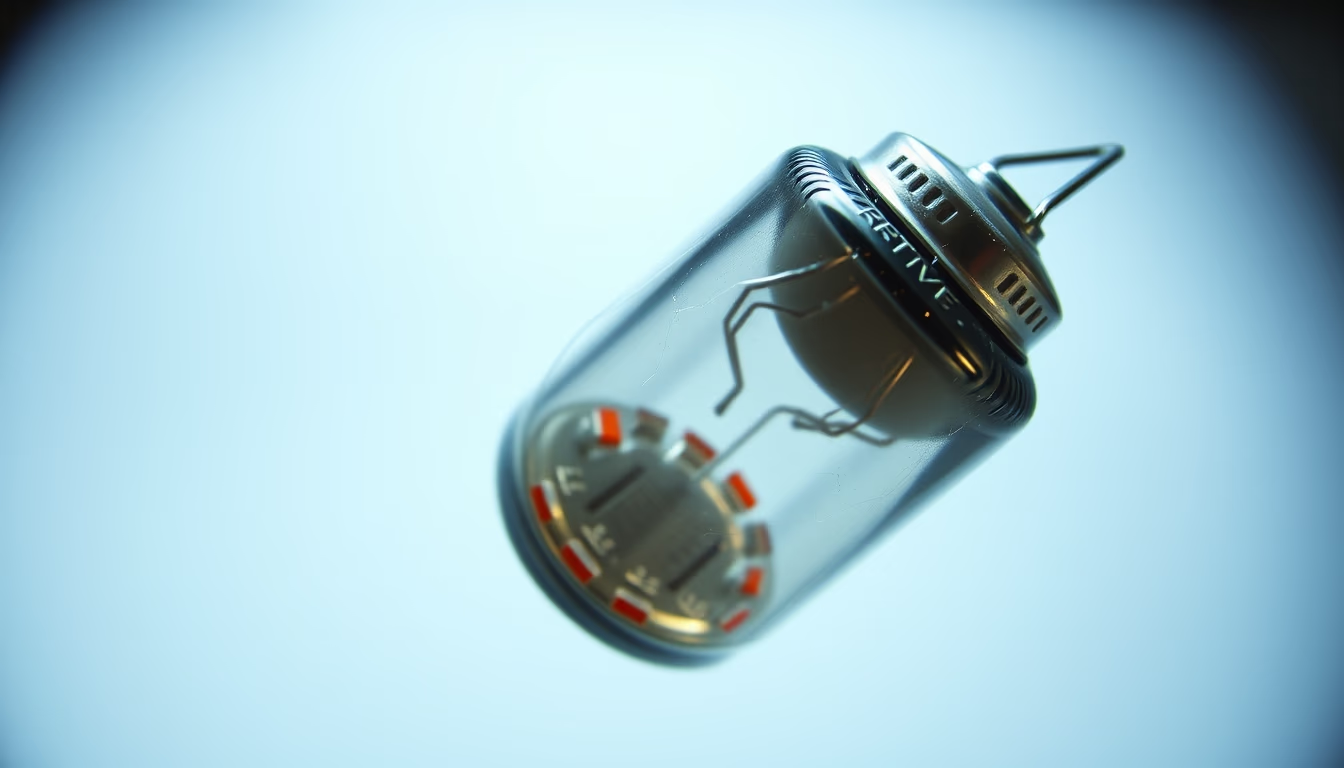
Blown electrolytic capacitor: common causes, how to identify, and why it's critical in electronic circuits.
About this subject
Electrolytic capacitors are passive components that store electrical energy in an electrostatic field, using an oxide dielectric on aluminum foil. They are widely used in power supplies, motherboards, and audio circuits due to their high capacitance per volume. However, they are prone to catastrophic failure, commonly called "blown" capacitor.
Common causes include overvoltage, reverse polarity, natural aging, and overheating. Overvoltage can rupture the dielectric, causing a short circuit and generating flammable gas inside the can. Aging manifests as the electrolyte dries out, increasing equivalent series resistance (ESR) and leading to thermal runaway. In switched-mode power supplies, low-quality capacitors often fail prematurely due to thermal cycling and ripple current.
Physical signs of a blown capacitor include a bulged or burst top, brown or yellowish electrolyte leakage, a rotten fish smell (from the electrolyte), and in extreme cases, explosion with debris. Functionally, they cause excessive ripple on DC voltage, device crashes, random reboots, or complete circuit failure. Replacement is necessary, matching capacitance, voltage rating, and temperature, preferably with low-ESR parts for reliability.
Frequently Asked Questions
What causes an electrolytic capacitor to blow?
Common causes include overvoltage, reverse polarity, aging (electrolyte drying out), and overheating. Excessive ripple current and poor-quality components also contribute to premature failure.
How can I identify a blown electrolytic capacitor?
Look for a bulged or burst top, brownish electrolyte leakage, and a rotten fish smell. Functionally, the device may show instability, random reboots, or failure to power on.
Can I replace a blown capacitor with a different value?
No. Use a capacitor with the same capacitance (μF) and a voltage rating equal to or higher than the original. Temperature rating and ESR must match the application, especially in switching power supplies.
Direct URL
https://pub-c7d6a6ea828543ac903a74a341ccb2e1.r2.dev/imagens/capacitor-electrolytic-blown-fish-eye-wide-angle-p12.avifHow to credit
Include a visible link back to UtilizAí. Copy one of the snippets below:
<a href="https://xn--utiliza-eza.com/en/midia/imagens/capacitor-electrolytic-blown-fish-eye-wide-angle-p12">Capacitor electrolytic blown</a> by <a href="https://xn--utiliza-eza.com">UtilizAí</a>, licensed under <a href="https://creativecommons.org/licenses/by/4.0/">CC BY 4.0</a>.
[Capacitor electrolytic blown](https://xn--utiliza-eza.com/en/midia/imagens/capacitor-electrolytic-blown-fish-eye-wide-angle-p12) by [UtilizAí](https://xn--utiliza-eza.com), CC BY 4.0
License: CC-BY-4.0