Capacitor electrolytic blown
1344×768 · AVIF · CC BY 4.0
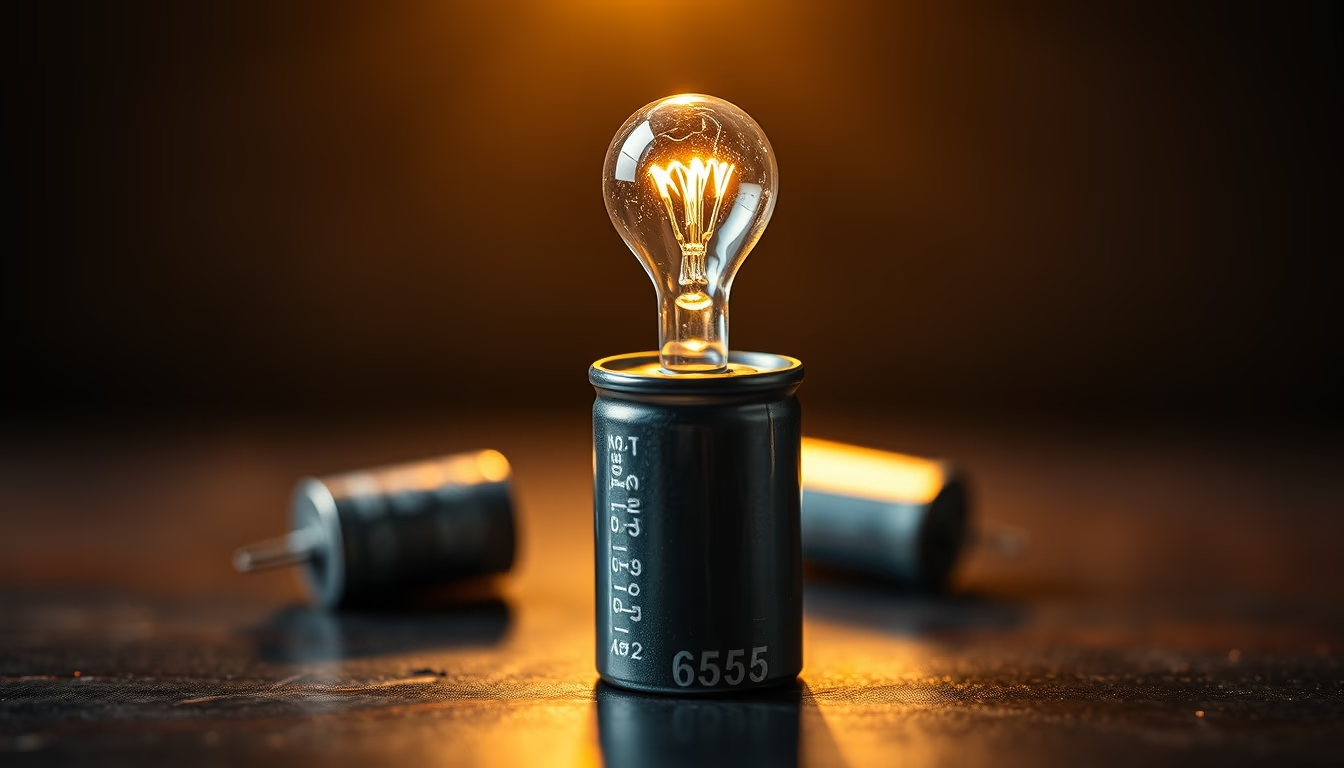
A blown electrolytic capacitor on a circuit board, a common symptom of failure in power supplies and electronic equipment.
About this subject
Electrolytic capacitors are passive components used to store electrical energy in the form of an electrostatic field. They consist of two conductive plates separated by a dielectric, which in electrolytic capacitors is an oxide layer formed electrochemically. These components are widely used in power supplies, voltage filters, and coupling circuits due to their high capacitance relative to physical size.
Failure of an electrolytic capacitor, such as a bulging or burst casing, typically occurs due to overvoltage, reverse polarity, dielectric aging, or high temperatures. Vapor generated by the internal electrolyte increases pressure, leading to rupture of the safety vent or the casing itself. This phenomenon is known as capacitor "venting" or "explosion" and can release a distinctive-smelling gas, as well as damage surrounding components.
In electronic equipment, electrolytic capacitors have a limited lifespan, typically 1,000 to 10,000 hours at 105°C. Factors like excessive heat, high ripple current, and low component quality accelerate degradation. The repair of power supplies and motherboards often involves the preventive replacement of these capacitors, a common practice in fixing computers, TVs, and amplifiers.
Notably, the infamous "capacitor plague" in the early 2000s, which affected many motherboards, was caused by improper electrolyte formulations, leading to premature failures. This episode spurred the development of solid-state and polymer capacitors, which are more reliable and have longer lifespans.
Frequently Asked Questions
Why does an electrolytic capacitor blow?
Main causes include overvoltage, reverse polarity, natural dielectric aging, or high temperatures that generate unbearable internal pressure.
How to identify a blown capacitor?
Visually, the casing may be bulging or torn, with electrolyte leakage. During operation, the equipment may show failures, noises, or a burning smell.
Can blown capacitors be replaced?
Yes, as long as the rest of the circuit is undamaged. Replacement must be done with a capacitor of the same capacitance, voltage rating, and type.
Direct URL
https://pub-c7d6a6ea828543ac903a74a341ccb2e1.r2.dev/imagens/capacitor-electrolytic-blown-fine-art-photography-p0.avifHow to credit
Include a visible link back to UtilizAí. Copy one of the snippets below:
<a href="https://xn--utiliza-eza.com/en/midia/imagens/capacitor-electrolytic-blown-fine-art-photography-p0">Capacitor electrolytic blown</a> by <a href="https://xn--utiliza-eza.com">UtilizAí</a>, licensed under <a href="https://creativecommons.org/licenses/by/4.0/">CC BY 4.0</a>.
[Capacitor electrolytic blown](https://xn--utiliza-eza.com/en/midia/imagens/capacitor-electrolytic-blown-fine-art-photography-p0) by [UtilizAí](https://xn--utiliza-eza.com), CC BY 4.0
License: CC-BY-4.0