Capacitor electrolytic blown
1344×768 · AVIF · CC BY 4.0
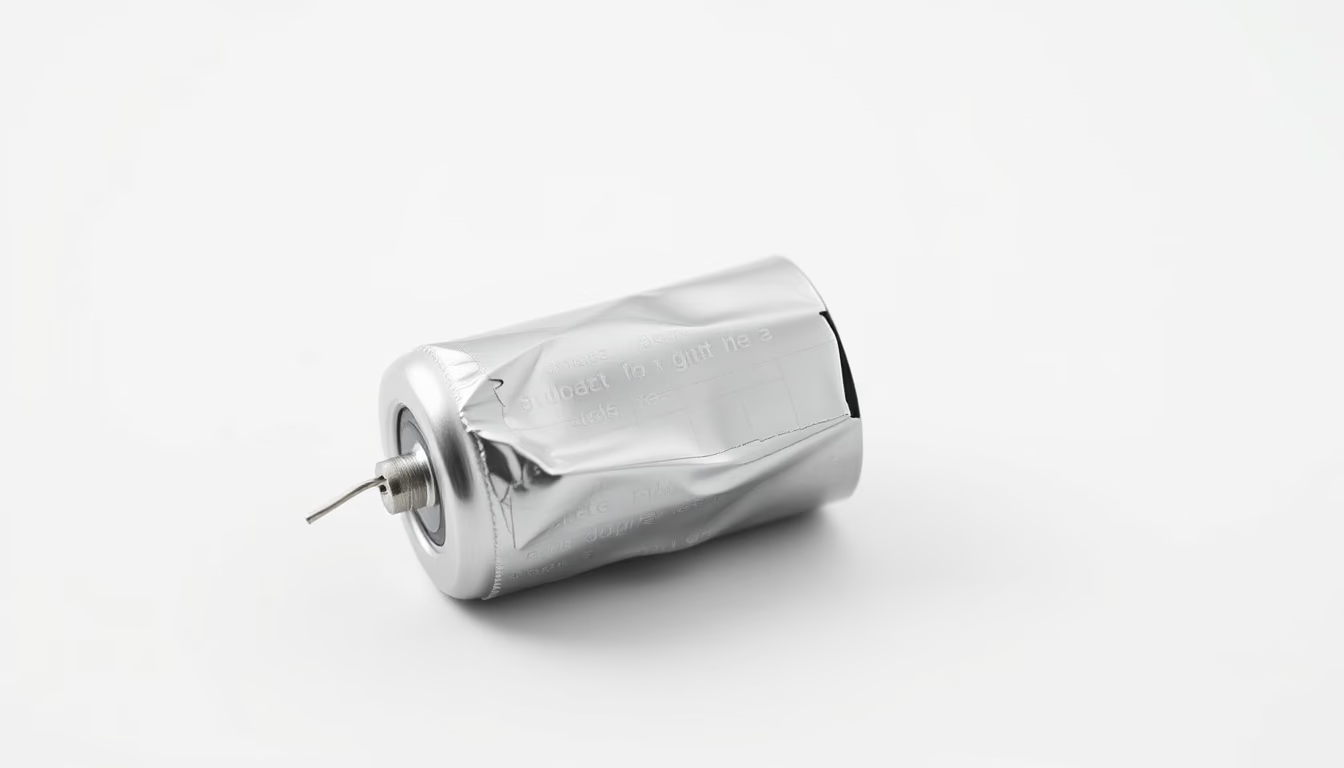
Blown electrolytic capacitors are a common hardware failure caused by overheating, voltage spikes, or aging. Understand the causes and consequences.
About this subject
Electrolytic capacitors are essential components in power supplies, motherboards, and electronic equipment, storing energy temporarily to smooth voltage fluctuations. They consist of two electrodes separated by a liquid or semi-liquid electrolyte, which gives them high capacitance relative to physical size. However, this construction makes them susceptible to failure under adverse conditions.
Typical failure manifests as a blown or leaking capacitor, often preceded by visible bulging on the top (if the casing has scored lines, they open to relieve pressure). Common causes include overheating due to poor airflow or high ambient temperatures, voltage spikes above rated value (common in poorly designed switched-mode power supplies), natural aging with electrolyte loss, and use of low-quality components, especially in cheap Chinese power supplies.
The consequence of a blown capacitor in electronic equipment can range from minor malfunction, such as random resets or instability, to complete destruction of other components if the conductive electrolyte comes into contact with the printed circuit board. In power supplies, a blown filter capacitor can cause excessive ripple voltage, damaging downstream components.
To prevent this failure, ensure adequate ventilation inside the case, use reputable power supply brands, and periodically replace capacitors in critical equipment. Typical electrolytic capacitor life is 1000 to 10000 hours at 105°C, but at lower temperatures it can be longer following the decade rule: every 10°C reduction doubles lifespan.
Frequently Asked Questions
What does it mean when an electrolytic capacitor is blown?
It means the capacitor has undergone a catastrophic failure, usually due to excessive internal pressure from gas generation, electrolyte leakage, or a short circuit. The component may show deformation, liquid leakage, or even explosion.
What are the signs that an electrolytic capacitor is going to fail?
Bulging on the top (vent), electrolyte leakage (corrosive substance), terminal corrosion, burnt smell, or if the equipment exhibits oscillations, random shutdowns, or failure to power on.
Is it safe to replace a blown electrolytic capacitor?
Yes, provided the equipment is unpowered and discharged, respecting polarity (electrolytic capacitors are polarized), and using a component with the same or higher specifications (voltage, capacitance, temperature).
Direct URL
https://pub-c7d6a6ea828543ac903a74a341ccb2e1.r2.dev/imagens/capacitor-electrolytic-blown-commercial-product-photography-p2.avifHow to credit
Include a visible link back to UtilizAí. Copy one of the snippets below:
<a href="https://xn--utiliza-eza.com/en/midia/imagens/capacitor-electrolytic-blown-commercial-product-photography-p2">Capacitor electrolytic blown</a> by <a href="https://xn--utiliza-eza.com">UtilizAí</a>, licensed under <a href="https://creativecommons.org/licenses/by/4.0/">CC BY 4.0</a>.
[Capacitor electrolytic blown](https://xn--utiliza-eza.com/en/midia/imagens/capacitor-electrolytic-blown-commercial-product-photography-p2) by [UtilizAí](https://xn--utiliza-eza.com), CC BY 4.0
License: CC-BY-4.0