Candle pouring hot wax
1344×768 · AVIF · CC BY 4.0
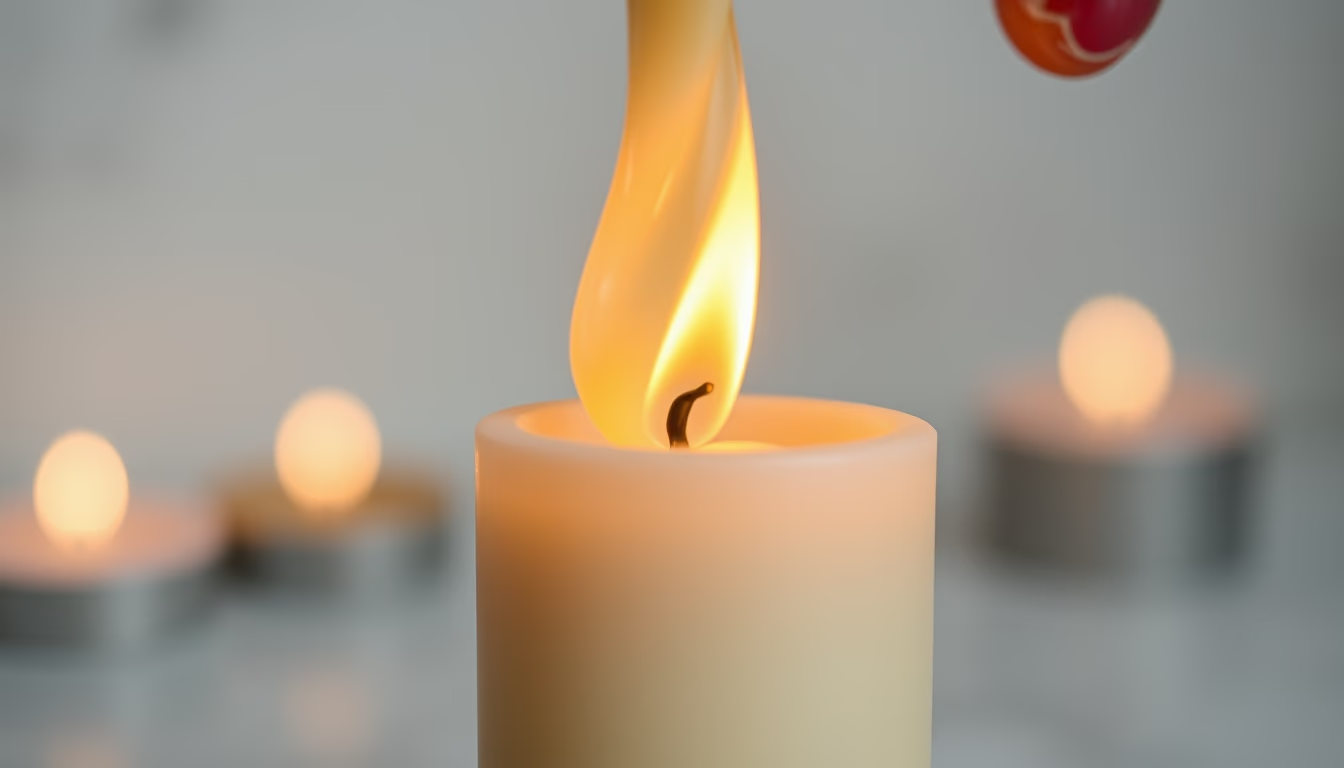
Pouring hot wax is a critical step in candle making, requiring precision and temperature control to ensure a uniform result.
About this subject
Pouring hot wax into molds or containers is one of the most delicate stages in handmade candle production. The wax, typically paraffin, beeswax, soy, or palm, must be heated to a specific temperature, between 158°F and 185°F (70°C, 85°C), depending on the type, to fully melt without burning or releasing harmful fumes. The artisan uses a pouring vessel with a spout, such as a metal pitcher or saucepan, to slowly drizzle the wax, avoiding air bubbles that could cause uneven burning.
Room temperature and pouring speed directly affect the final texture. Wax poured too hot may cause mold deformation or cracking; too cold, it creates surface roughness. Techniques like layering or using kitchen thermometers are common among experienced makers. Safety is paramount, as hot wax can cause severe burns and is flammable if exposed to open flames.
Historically, candle making dates back to ancient civilizations like Egypt and Rome, which used tallow or beeswax. Manual pouring was the standard until the Industrial Revolution introduced automated machines. Today, candle crafting is experiencing a revival, with hobbyists embracing traditional methods and natural ingredients like soy wax, which burns longer and produces less soot.
Fun fact: melted beeswax emits a subtle, natural honey scent, while paraffin, a petroleum byproduct, can release volatile organic compounds when burned. This drives many artisans to use blends or plant-based waxes for more eco-friendly candles.
Frequently Asked Questions
What is the ideal temperature for pouring soy wax?
Soy wax is typically heated to between 158°F and 176°F (70°C, 80°C). Pouring within this range prevents cracking and ensures good wick adhesion.
Why do bubbles appear on the candle surface after pouring?
Air bubbles form when wax is poured too quickly or the mold is jostled. To avoid them, pour slowly and tilt the mold slightly.
Is it safe to pour hot wax at home?
Yes, with precautions: use heat-resistant gloves, work on a protected surface, and keep children and pets away. Never heat wax in a microwave unsupervised.
Direct URL
https://pub-c7d6a6ea828543ac903a74a341ccb2e1.r2.dev/imagens/candle-pouring-hot-wax-macro-closeup-p0.avifHow to credit
Include a visible link back to UtilizAí. Copy one of the snippets below:
<a href="https://xn--utiliza-eza.com/en/midia/imagens/candle-pouring-hot-wax-macro-closeup-p0">Candle pouring hot wax</a> by <a href="https://xn--utiliza-eza.com">UtilizAí</a>, licensed under <a href="https://creativecommons.org/licenses/by/4.0/">CC BY 4.0</a>.
[Candle pouring hot wax](https://xn--utiliza-eza.com/en/midia/imagens/candle-pouring-hot-wax-macro-closeup-p0) by [UtilizAí](https://xn--utiliza-eza.com), CC BY 4.0
License: CC-BY-4.0