Calligraphy ink brush
1344×768 · AVIF · CC BY 4.0
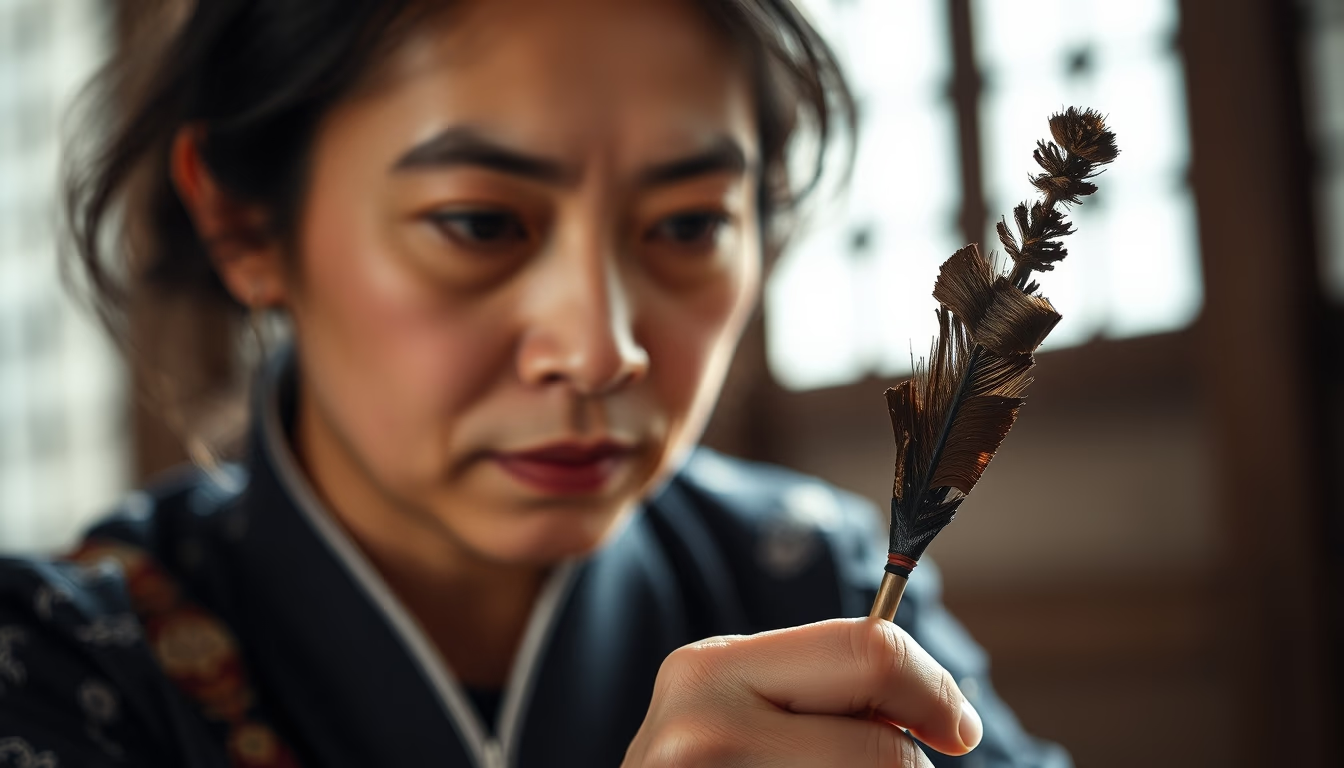
The calligraphy ink brush is a millennia-old tool essential to Chinese and Japanese writing arts, crafted from bamboo and natural hairs.
About this subject
The calligraphy brush, known as shūfǎ bǐ in Chinese and fude in Japanese, is an instrument that has accompanied the development of writing for over two thousand years. Traditionally, the handle is made from bamboo or light wood, while the tip is crafted from animal hairs such as goat, wolf, rabbit, or badger. Each hair type offers distinct properties: goat hair is soft and holds much ink, ideal for smooth, full strokes; wolf hair is firmer, providing greater control and precise lines. The combination of different hairs allows calligraphers to create a vast range of thicknesses and textures in characters.
Artisanal brush making is a tradition that requires great skill. Craftsmen select and align the hairs by hand, ensuring the tip forms a perfect cone when wet. The best producing regions include Huzhou and Xuanzhou in China, and the city of Kumano in Japan. Choosing the right brush is the first step for any practitioner: size and hair type directly influence stroke execution and calligraphic style.
Historically, the brush was one of the four treasures of study in classical China, alongside paper, ink, and inkstone. Its invention is attributed to General Meng Tian of the Qin dynasty, although archaeological evidence shows rudimentary brushes already in the Warring States period. In Japan, the brush was introduced along with the Chinese writing system and became fundamental in the practice of shodō (the way of writing). To this day, calligraphers dedicate years to mastering the brush, as the slightest variation in pressure or angle dramatically alters the character's form.
In contemporary art, the calligraphy brush is also used in painting and abstract expression, transcending its original function. Western artists like Mark Rothko and John C. Brown explored its effects. UNESCO recognized Chinese calligraphy as an Intangible Cultural Heritage of Humanity in 2009, consolidating the importance of this centuries-old instrument.
Frequently Asked Questions
What is the difference between Chinese and Japanese calligraphy brushes?
Chinese brushes typically have longer handles and more conical tips, while Japanese brushes often have shorter handles and more rounded tips. The manufacturing technique and hair types also vary according to local tradition.
How to choose a calligraphy brush for beginners?
For beginners, a medium-sized brush (tip about 3-5 cm) made of goat hair is recommended, as it is softer and more forgiving. Traditional Chinese brands like Huzhou or Japanese brands like Kuretake are good options.
How to care for a calligraphy brush to extend its lifespan?
Rinse it immediately after use with room-temperature water, removing all ink. Reshape the tip with your fingers and let it dry horizontally or hanging tip-down. Never store the brush wet or with ink residue.
Direct URL
https://pub-c7d6a6ea828543ac903a74a341ccb2e1.r2.dev/imagens/calligraphy-ink-brush-documentary-photography-p3.avifHow to credit
Include a visible link back to UtilizAí. Copy one of the snippets below:
<a href="https://xn--utiliza-eza.com/en/midia/imagens/calligraphy-ink-brush-documentary-photography-p3">Calligraphy ink brush</a> by <a href="https://xn--utiliza-eza.com">UtilizAí</a>, licensed under <a href="https://creativecommons.org/licenses/by/4.0/">CC BY 4.0</a>.
[Calligraphy ink brush](https://xn--utiliza-eza.com/en/midia/imagens/calligraphy-ink-brush-documentary-photography-p3) by [UtilizAí](https://xn--utiliza-eza.com), CC BY 4.0
License: CC-BY-4.0