Caliper vernier brass
1344×768 · AVIF · CC BY 4.0
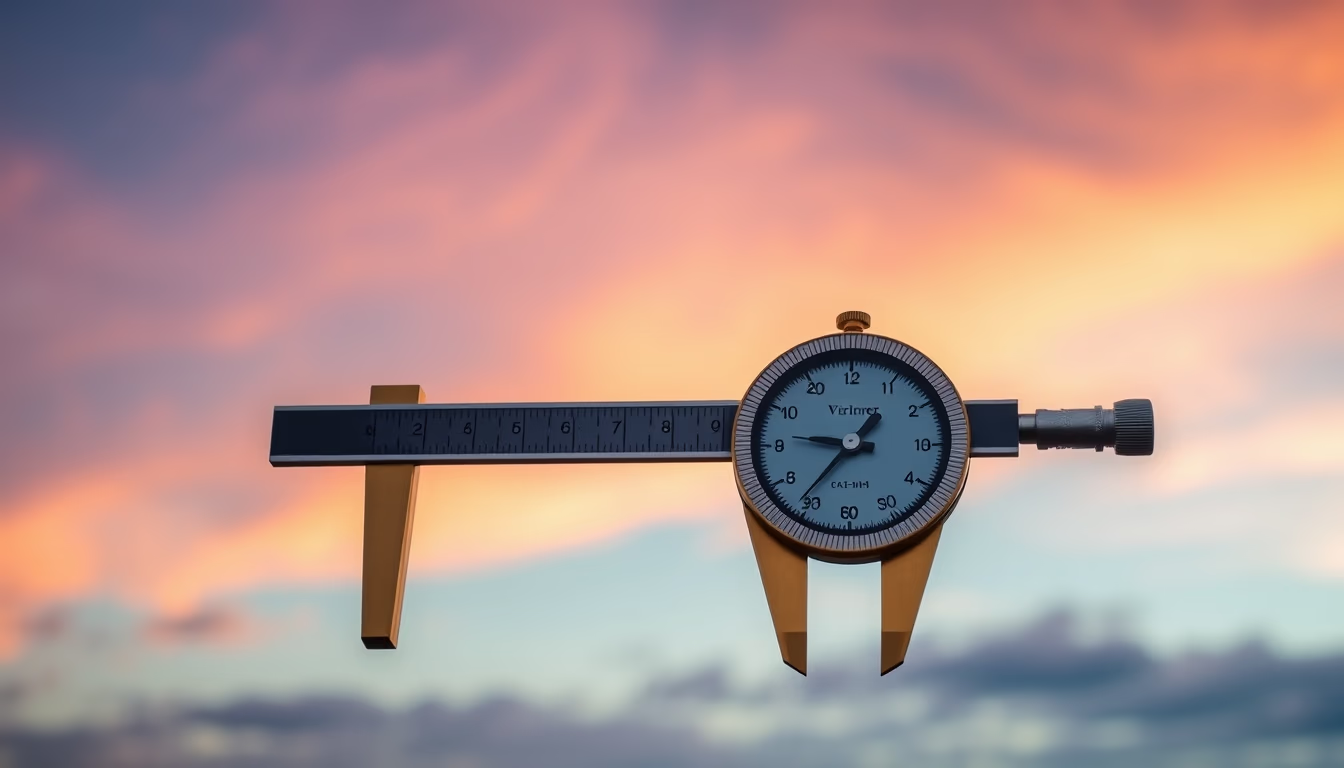
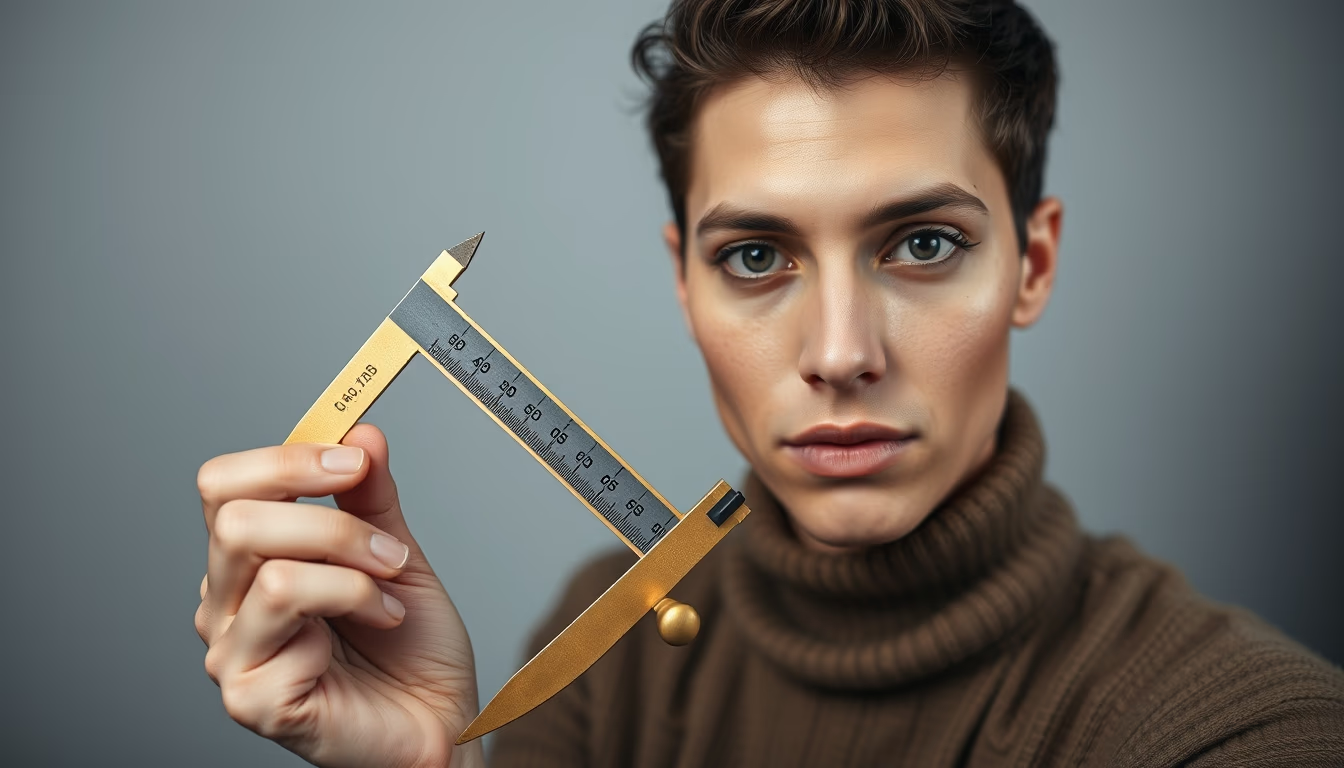
Brass vernier caliper, a precision measuring instrument from the 19th century, icon of industrial metrology.
About this subject
The vernier caliper is a linear measuring instrument that allows readings with high precision, typically on the order of 0.02 mm or 1/128 inch. Its invention is attributed to the French mathematician Pierre Vernier, who in 1631 described the principle of the sliding auxiliary scale. However, practical versions of the instrument only became popular in the 19th century with the advent of the Industrial Revolution and the need for interchangeable parts. Brass models, like the one depicted, were common in machine shops and physics laboratories until the mid-20th century.
Brass, an alloy of copper and zinc, was widely used in the manufacture of precision instruments due to its corrosion resistance, malleability, and dimensional stability. Antique brass calipers often feature hand-engraved scales, spring-loaded cursors, and tips for internal and external measurements. The piece shown has an aged finish and details that reveal prolonged use, such as wear marks on the measuring faces.
The precision of a vernier caliper depends on the quality of the scale engraving and the cursor adjustment. Old brass instruments are valued by collectors and restorers as they represent the transition between craftsmanship and mass production. Although they have been replaced by digital and laser calipers, they continue to be studied in metrology courses as a classic example of vernier reading.
Curiosity: the term "nonius" comes from the Portuguese mathematician Pedro Nunes, who proposed a similar system in the 16th century. The vernier scale was later improved by Pierre Vernier, who published his method in 1631 in the work "La Construction, l'usage et les propriétés du quadrant nouveau de mathématiques".
Frequently Asked Questions
How does the vernier scale work on a brass caliper?
The vernier scale consists of a sliding auxiliary ruler with divisions slightly smaller than those on the main scale. By aligning the marks, fractions of the smallest main scale division can be read, allowing measurements with precision up to 0.02 mm.
Why was brass the preferred material for antique calipers?
Brass offers corrosion resistance, ease of machining, and thermal stability, essential characteristics for precision measuring instruments in 19th and early 20th century industrial environments.
What is the difference between a vernier caliper and a modern digital caliper?
The vernier caliper requires manual reading of the scale, while the digital caliper provides instant reading on an electronic display. The digital is faster and easier to use, but the vernier does not need batteries and is more robust in harsh conditions.
Direct URL
https://pub-c7d6a6ea828543ac903a74a341ccb2e1.r2.dev/imagens/caliper-vernier-brass-long-exposure-fresh10.avifHow to credit
Include a visible link back to UtilizAí. Copy one of the snippets below:
<a href="https://xn--utiliza-eza.com/en/midia/imagens/caliper-vernier-brass-long-exposure-fresh10">Caliper vernier brass</a> by <a href="https://xn--utiliza-eza.com">UtilizAí</a>, licensed under <a href="https://creativecommons.org/licenses/by/4.0/">CC BY 4.0</a>.
[Caliper vernier brass](https://xn--utiliza-eza.com/en/midia/imagens/caliper-vernier-brass-long-exposure-fresh10) by [UtilizAí](https://xn--utiliza-eza.com), CC BY 4.0
License: CC-BY-4.0