Caliper vernier brass
1344×768 · AVIF · CC BY 4.0
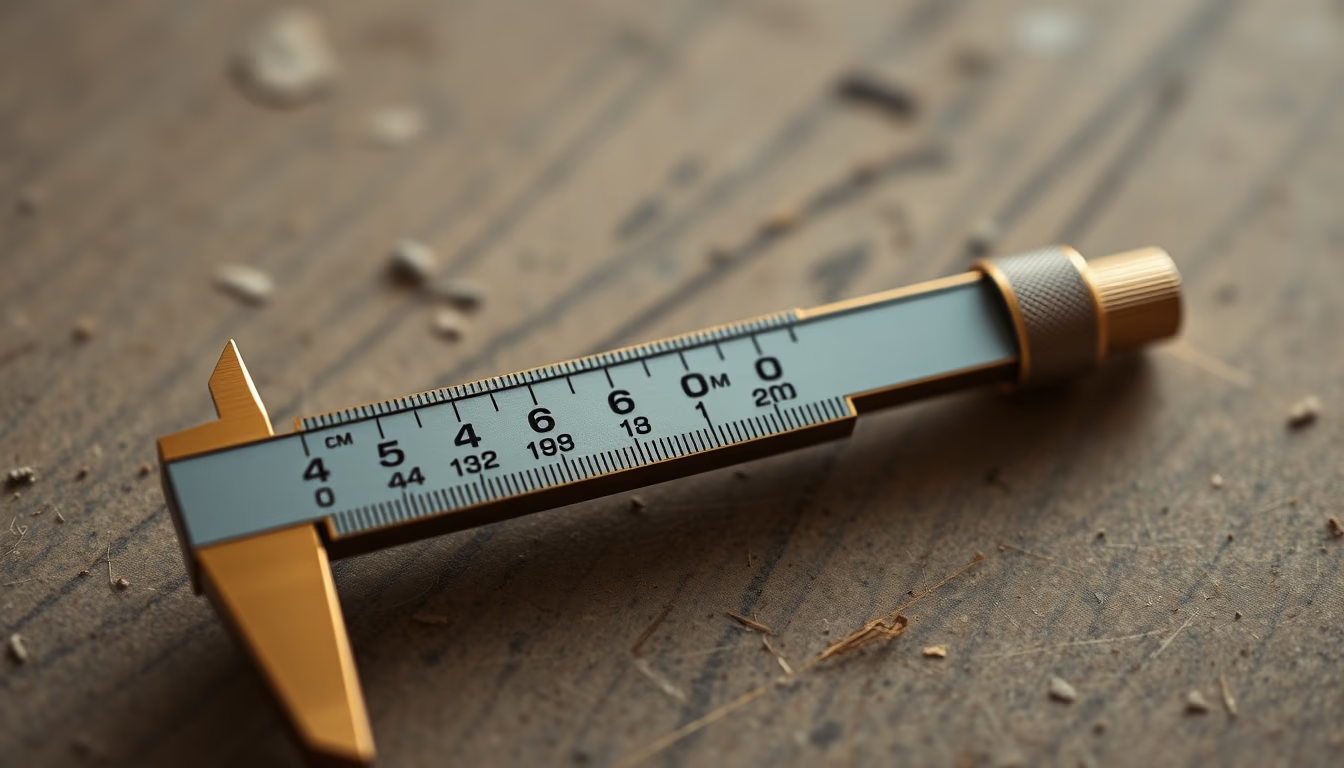
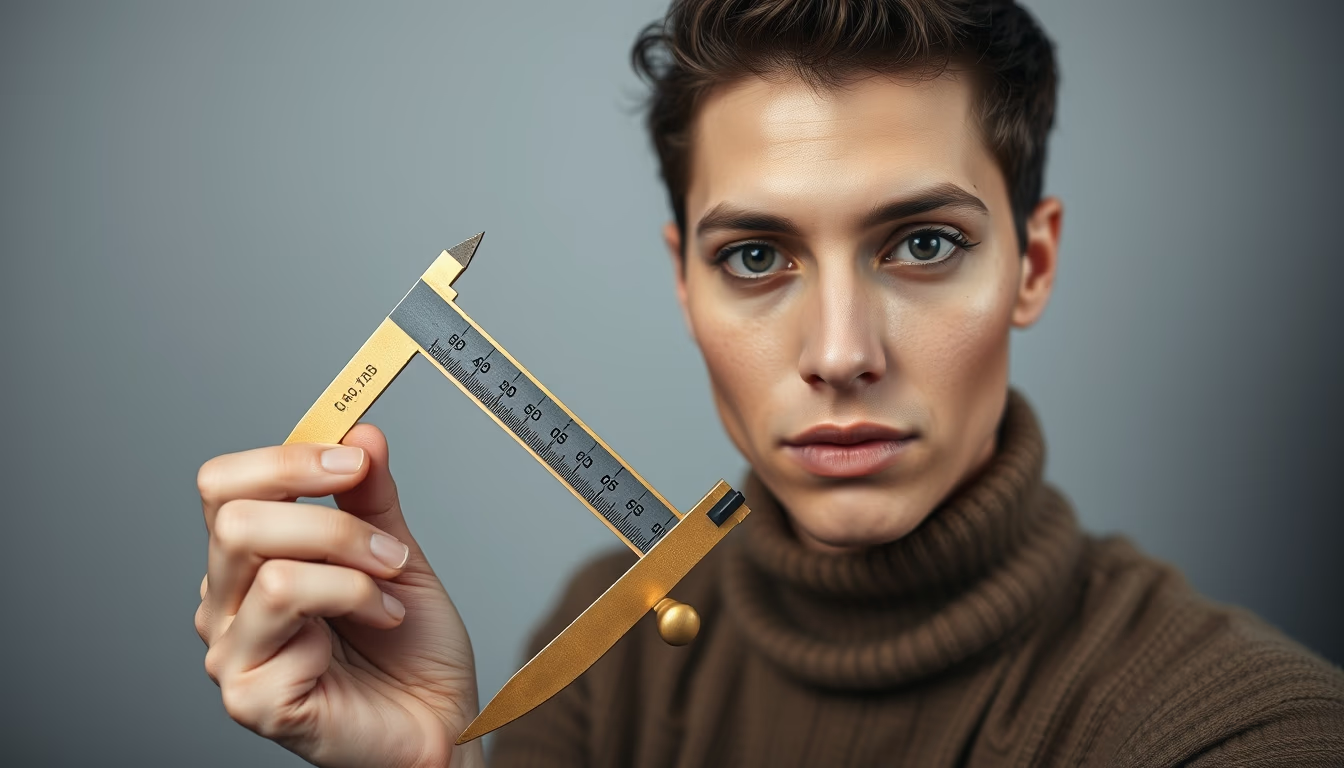
The brass vernier caliper is a precision measuring instrument, essential for engineering and metallurgy since the 17th century.
About this subject
The brass vernier caliper is a measuring tool that allows readings with precision up to 0.02 mm or 0.001 inch. Its invention is attributed to French mathematician Pierre Vernier, who in 1631 published the principle of the vernier scale, a system of two sliding scales that enhances reading accuracy. Before the advent of digital instruments, the vernier caliper was indispensable in machine shops, metrology laboratories, and the metallurgical industry.
The instrument consists of a main ruler with a fixed scale and a movable cursor containing the vernier scale. To measure an object, the user slides the cursor until the jaws touch the surfaces of the item. The reading is taken by combining the mark on the main scale with the coincident line on the vernier scale. Brass, the traditional material, offers corrosion resistance and dimensional stability, as well as a finish that makes engraved markings easy to read.
Despite the popularity of digital calipers, the analog vernier model is still valued by professionals for its durability and lack of battery dependency. In educational settings, it is used to teach metrology and precision concepts. In Brazil, the brass vernier caliper is common in technical courses in mechanics and engineering, serving as a symbol of the manual skill required before automation.
Interestingly, the term "vernier" is also used in other measuring devices, such as micrometers and theodolites. The vernier scale is not limited to lengths; it is applied to angle instruments like goniometers. The precision of these instruments contributed to advances during the Industrial Revolution, enabling the manufacture of interchangeable parts.
Frequently Asked Questions
How does a vernier caliper work?
The vernier caliper has two scales: the main fixed scale and the vernier scale on the sliding cursor. To measure, note the millimeters on the main scale before the vernier zero, then find which vernier line exactly aligns with a main scale line. That line indicates the tenths or hundredths of a millimeter.
Who invented the vernier?
The vernier scale principle was developed by French mathematician Pierre Vernier, who published it in 1631. Although similar instruments existed earlier, such as Pedro Nunes's nonius, the vernier scale became standard.
Why is brass used in vernier calipers?
Brass is corrosion-resistant, dimensionally stable, and allows for clear engraved scales. Its low thermal expansion coefficient helps maintain accuracy under moderate temperature changes.
Direct URL
https://pub-c7d6a6ea828543ac903a74a341ccb2e1.r2.dev/imagens/caliper-vernier-brass-documentary-photography-fresh15.avifHow to credit
Include a visible link back to UtilizAí. Copy one of the snippets below:
<a href="https://xn--utiliza-eza.com/en/midia/imagens/caliper-vernier-brass-documentary-photography-fresh15">Caliper vernier brass</a> by <a href="https://xn--utiliza-eza.com">UtilizAí</a>, licensed under <a href="https://creativecommons.org/licenses/by/4.0/">CC BY 4.0</a>.
[Caliper vernier brass](https://xn--utiliza-eza.com/en/midia/imagens/caliper-vernier-brass-documentary-photography-fresh15) by [UtilizAí](https://xn--utiliza-eza.com), CC BY 4.0
License: CC-BY-4.0