Caliper vernier brass
1344×768 · AVIF · CC BY 4.0
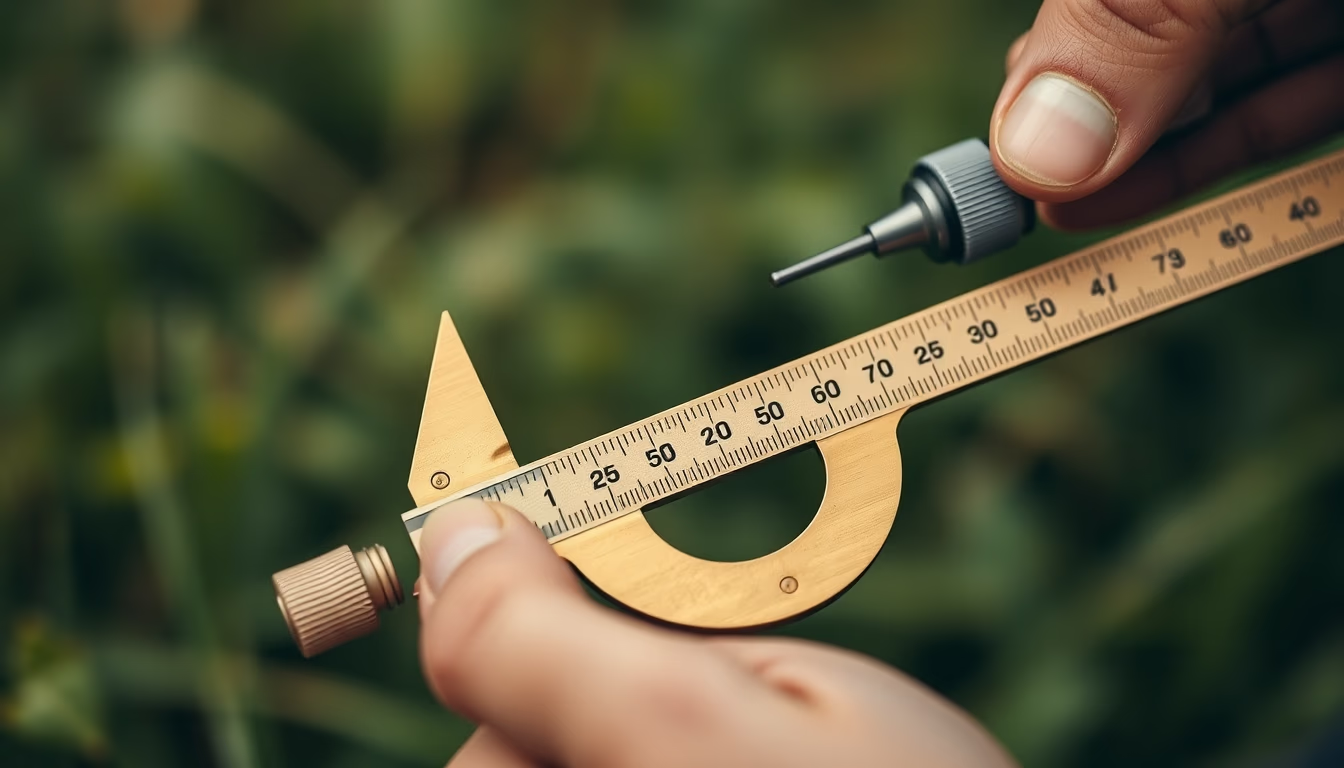
Brass vernier caliper, a precision measuring instrument used since the 17th century in mechanical engineering. A classic piece in antique tool collections.
About this subject
The vernier caliper, also known as a vernier scale caliper, was invented by French mathematician Pierre Vernier in 1631. Its primary function is to measure linear dimensions with high precision, typically to 0.02 mm or 0.001 inch. The instrument consists of a main graduated ruler (fixed scale) and a sliding cursor with an auxiliary scale (vernier), which allows reading fractions of the smallest division on the main scale. In antique versions, such as those made of brass, the construction was entirely metallic, with polished finishes and hand-engraved markings.
Throughout the 18th and 19th centuries, brass vernier calipers were widely used in mechanical workshops, forges, and metrology laboratories. Brass was the preferred material due to its corrosion resistance and ease of machining. Many surviving examples bear marks from European manufacturers such as Brown & Sharpe, Starrett, or Mitutoyo, which later switched to stainless steel. The vernier scale requires visual calculation: aligning a line on the vernier with a line on the main scale yields the precise measurement.
With the advent of digital calipers and low-cost electronics, analog brass models have declined in industrial use but have gained value as collectibles and educational tools. They illustrate fundamental principles of metrology and precision engineering. Collectors especially value pieces with clear engravings, smooth movement, and original patina. Proper maintenance includes cleaning with fine oil and storage in padded cases to prevent oxidation.
Interestingly, the term vernier also applies to other angular measuring instruments, such as protractors and goniometers. The principle is the same: a sliding cursor with a secondary scale increases reading resolution. In Brazil, the vernier caliper is mandatory in technical mechanics courses, becoming a symbol of handcrafted precision.
Frequently Asked Questions
What is a brass vernier caliper used for?
A brass vernier caliper is used to measure linear dimensions with high precision, such as thicknesses, internal and external diameters, and depths. Its vernier scale allows finer readings than a standard ruler.
How do you read a vernier caliper?
First read the value on the main scale where the zero of the vernier lies. Then find which line on the vernier aligns exactly with a line on the main scale. Add that value (in mm or inches) to the main scale reading.
What is the difference between analog and digital calipers?
Analog calipers use a vernier scale for manual reading, while digital calipers display the value on an electronic screen. Digital ones are faster and easier to read, but analog versions are more durable, battery-independent, and have historical appeal.
Direct URL
https://pub-c7d6a6ea828543ac903a74a341ccb2e1.r2.dev/imagens/caliper-vernier-brass-documentary-nature-style-fresh4.avifHow to credit
Include a visible link back to UtilizAí. Copy one of the snippets below:
<a href="https://xn--utiliza-eza.com/en/midia/imagens/caliper-vernier-brass-documentary-nature-style-fresh4">Caliper vernier brass</a> by <a href="https://xn--utiliza-eza.com">UtilizAí</a>, licensed under <a href="https://creativecommons.org/licenses/by/4.0/">CC BY 4.0</a>.
[Caliper vernier brass](https://xn--utiliza-eza.com/en/midia/imagens/caliper-vernier-brass-documentary-nature-style-fresh4) by [UtilizAí](https://xn--utiliza-eza.com), CC BY 4.0
License: CC-BY-4.0